
It's Our Republic—Let's Keep It
Liberty requires responsibility because tyranny requires complacency. The Founders knew it. We can't forget it. — Guest Opinion by Elijah Davidson
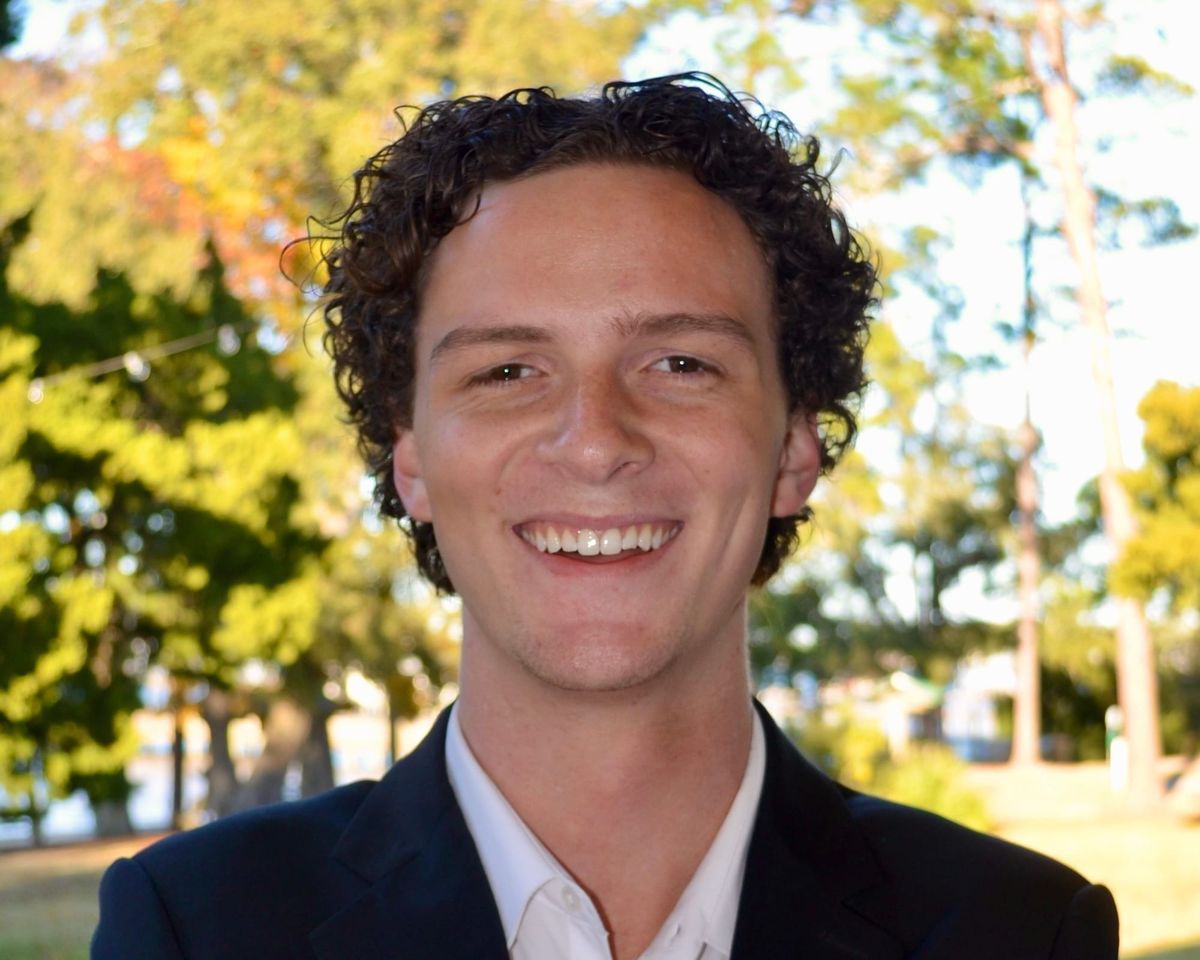
Guest Opinion by Elijah Davidson
America’s 250th birthday is a pretty obvious time for all of us Americans to stop and reflect on our nation’s history. One story I have thought about quite a bit over the past several months is the interaction between Benjamin Franklin and Philadelphia socialite Elizabeth Willing Powel, in which Mrs. Powel asked Franklin what kind of government had been created at the Constitutional Convention. He replied, “A Republic, madam, if you can keep it.” In that short sentence, Benjamin Franklin perfectly summarized the basic premise of the lowercase republican philosophy upon which America was founded: that liberty requires responsibility because tyranny requires complacency.
The Founders, because of their in-depth study of history, knew that tyranny—the arbitrary exercise of power over people by individuals, organizations, or governments that cannot be held accountable by those who are subject to that power—is the most serious threat to human prosperity and happiness. They also knew that tyranny can be perpetrated by private individuals, businesses, corporations, and organizations just as easily as it can be perpetrated by government officials and institutions. History proved to them, as it should to anyone with a basic understanding of it, that tyranny either causes or worsens the overwhelming majority of instances of human suffering.
All a person has to do to see this point proven accurate is to look at the ongoing humanitarian disaster in Venezuela following a series of earthquakes. Tens of thousands of people died needlessly because the country's infrastructure had been neglected. It was neglected because Venezuela’s leftist, dictatorial regime used the powers of government to enrich those within it instead of fulfilling two of the most basic functions of government: maintaining infrastructure and responding to natural disasters. They were able to do so because the regime, after receiving public support and making the public dependent upon the state for the basic necessities of life, took away the ability of the people it governed to effectively challenge, influence, replace, discipline, or restrain those in power.
If that situation isn’t convincing enough, one should also look at the massive government overreach on the part of federal and state government officials into the lives of citizens during the Covid-19 pandemic. While tyranny is not simply the interference of government into citizens' lives, that period and the actions taken by government were tyrannical because they were done without proper scrutiny. Concerned citizens were not given ample time, reasoning, or tools to scrutinize legislation and regulations that would have a profound, immediate impact on their livelihoods, their children’s education, and their daily lives.
Tyranny depends on citizens being indifferent to the problems their fellow citizens and wider society face, unwilling to devote the time, effort, and resources necessary to address them, and unconcerned with the well-being of others. It also depends on citizens becoming dependent upon those who exercise power over them for housing, clothing, food, protection, and medical care because people are naturally reluctant to confront those whom they believe can negatively affect their safety, standard of living, and quality of life. This point is perfectly summarized in the old adage, “Don't bite the hand that feeds you.”The fastest way for those attitudes and conditions to take hold is for people to think liberty is the right to pursue pleasure, entertainment, and comfort without regard for the responsibilities they owe to themselves, their families, their fellow citizens, and their country. When people come to view liberty in that way, they instinctively begin to put their own immediate desires over the obligations necessary to maintain their liberty. The more people prioritize pleasure, comfort, and entertainment, the less willing they are to address societal problems, the less concerned they are with the well-being of others, and the more dependent they become on institutions and individuals willing to assume responsibilities they have abandoned and weaponize that dependence for tyrannical purposes.
Comfort, entertainment, and pleasure are not incompatible with liberty; they are a key benefit of it. But when people think and act on the belief that they are the purpose of liberty rather than a secondary benefit of it, the door is pushed wide open to those who want to use people's emphasis on entertainment, comfort, and pleasure to take away their liberty.
Liberty is not the right to pursue one's desires without fulfilling basic responsibilities.
Liberty is the power to hold accountable—to influence, challenge, replace, discipline, or restrain—the people who interfere in or make decisions that affect one's life.
The Founders knew that principle was the basis of any fair and legitimate form of government. Governments that derive their legitimacy from force, wealth, expertise, tradition, privilege, or good intentions are not sustainable, legitimate, or fair. The only sustainable, legitimate, and fair formof government is one that derives its legitimacy from the consent of those it governs. That principle is perfectly summarized in the greatest statement of republican philosophy, the United States Declaration of Independence, which asserts that governments derive “their just powers from the consent of the governed.”
The intent of elections, the separation of powers, checks and balances, and the rule of law is to make sure that those who wield power remain accountable to those subject to that power. People do not have liberty if they cannot substantively replace or correct the people who govern them, and increasingly, that can be true even in a nation with checks and balances, separation of powers, free and fair elections, and the rule of law. Therefore, it is the responsibility—not just the right—of citizens to take whatever actions necessary to “alter or to abolish,” preferably alter, governments that have become tyrannical and therefore unsustainable, unfair, illegitimate, and destructive, and to establish new ones that they can effectively hold accountable.
The power to influence, challenge, replace, discipline, or restrain those who exercise power is the essence of liberty. The prosperity and stability of society depend on people understanding liberty in that context. The only way to maintain liberty in that context is for citizens to take responsibility for performing the actions required to maintain it.
That responsibility is more than speaking one's mind, protesting, criticizing those in power, or whining about problems while refusing to usethe time, effort, and resources at one's disposal to contribute positively to the lives of fellow citizens and society at large. Liberty is neither possible nor guaranteed if citizens prioritize their own pleasure, comfort, and entertainment over the obligations they have to themselves and each other.
The responsibility required to maintain liberty is that of using whatever time, effort, and resources one has to house, clothe, feed, and protect oneself and one's family to the best of one's ability; to work with one's fellow citizens, regardless of racial, religious, or class differences, to help other people who cannot do those things for themselves; and to participate in the civic decision-making processes through which society’s social, economic, and political questions and problems are addressed.
By fulfilling that tripartite civic responsibility, citizens do what they can to ensure that they remain free from dependence upon governmental bureaucracies for life’s basic necessities because they provide those necessities for themselves through their own efforts and, when unable to do so, rely upon their families, neighbors, and local communities, all of which tend to be more responsive, more trustworthy, and easier to challenge, influence, and hold accountable than distant bureaucracies. When citizens take part in the civic decision-making processes used to govern society, they also help insulate those processes from the disproportionate influence of wealthy individuals, corporations, special interests, and other organized groups trying to use their resources to acquire outsized influence over government through campaigning, lobbying, and other forms of advocacy. Fulfilling that responsibility also enables citizens to enjoy pleasure, comfort, and entertainment without putting their liberty at risk.
That fundamental and unbreakable connection between liberty and responsibility is the basic premise of republican thought. It is the reason the word republican, derived from the Latin phrase res publica (“the public thing” or “public affair”), is used to describe it. Republican thought understands the obvious fact that the only way to gain and maintain liberty is by citizens fulfilling certain obligations to themselves, their families, and their fellow citizens, thereby making liberty a common and public good rather than a solely an individual one.
Put simply, it is not legislation passed by Congress or a State Legislature, the speeches of politicians, a treaty signed by a skilled diplomat, the actions of a President, or the endeavors of a great statesman that sustain a republic, guarantee the liberty of a people, and prevent the evils of tyranny. It is the seemingly simple, self-sacrificing, everyday deeds of normal people, the jobs they get up and commute to every day, the meals they cook for a family in need, the hours they volunteer at their local church, food bank, or homeless shelter, the tip they add to the check at a restaurant, the time they spend in a voting booth, at a public forum, or in a committee hearing, the prayer they recite with their children before a meal, and the signature they inscribe on an enlistment paper that sustain a republic, guarantee the liberty of a people, and prevent the evils of tyranny.The more people recognize that their liberty depends on them taking responsibility, as citizens of this, the greatest nation on earth, to act, to do, to serve, and to think beyond their baser instincts, the better the next 250 years can be.
This is our republic. It's ours to keep. Let's keep it.
Elijah Davidson is a lifelong resident of South Baldwin County whose prior political experience includes leading the Turning Point USA chapter at Gulf Shores High School (which became the largest in the nation) and working for former Speaker of the House Newt Gingrich. He recently ran for Alabama House District 95.
Opinions do not reflect the views and opinions of ALPolitics.com. ALPolitics.com makes no claims nor assumes any responsibility for the information and opinions expressed above.