It’s Time to Give Alabamians a More Direct Role in the Legislative Process
“Citizens should have a clearly defined way to place issues they care about on the agenda”—Guest Opinion by Elijah Davidson

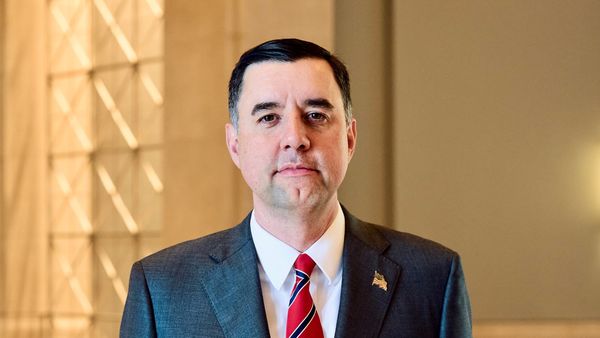
Guest Opinion by Elijah Davidson, candidate for Alabama House District 95
One of the most frustrating things I’ve encountered in this campaign is how disengaged many Alabamians are from state politics.
Door knocking on a regular basis has allowed me to meet people from all walks of life—from a grandmother in Elberta who has voted her entire life, to a former Gulf Shores High School classmate trying to save enough money just to move out of his parents’ house—but they share one worrying sentiment: voting doesn’t change anything.
Most of these conversations are extremely similar. Alabamians are not just disengaged from politics—most of them are completely disconnected from it.
A lot of people have told me point-blank that they don’t plan to vote because they don’t believe it changes anything. Others are surprised when I mention the May 19th election at all, often saying that they had no idea there was even an election happening in May. That kind of disconnect doesn’t come from nowhere.
That frustration is a direct result of decades of inaction by politicians who are heavily influenced by well-funded special interests like ALFA, Alabama Power, the Business Council, and others. When people feel that their leaders care more about helping special interests than they do about improving their daily lives, they eventually stop believing their votes matter at all.
Time and again, elected officials in Montgomery fail to act on ideas that are widely understood to be beneficial to normal, hardworking Alabamians. Take the recently finished 2026 Alabama legislative session, for example. In 2026, 41% of Alabama families reported to the United States Census Bureau that they were struggling to afford basic necessities like food, housing, and utilities. Considering that fact, any reasonable person would expect a serious focus on cost-of-living relief. Yet instead of eliminating the state grocery tax, which I have pointed out is affordable and relatively simple to do, the Legislature spent valuable and limited time on pointless, symbolic measures such as renaming the Gulf of Mexico.
Regardless of where one stands on that issue, it is fair to ask whether that was the best use of limited legislative time when so many Alabamians are feeling squeezed by the cost of living.
I say all of that to make a broader point: the problem is not only that Alabama politicians sometimes take the wrong actions — it is that they often fail to take the right ones at all.

That is why I believe it is time to give Alabama voters a more direct role in the legislative process. One of the best ways to do that in my opinion is by creating an indirect initiative process that allows citizens to propose legislation and require the Legislature to vote on it.
Here is how, in practice, such a process could work. First, engaged citizens would draft a proposed piece of legislation and begin collecting signatures from registered voters who support it. The main question in designing this part of the process would be how many signatures should be necessary. Some states set the bar relatively high. Maine requires a number of signatures equal to 10% of the voters in the last gubernatorial election. Other states, such as Ohio, set a lower threshold, closer to 3% of voters, depending on the type of initiative.
While the exact threshold is ultimately a policy decision that would be settled by broad public debate, the guiding principle should be balance: the threshold must be high enough to ensure substantial statewide support, but not so high that ordinary citizens are effectively shut out of the process.
Once the collected signatures are verified to meet the threshold and come from eligible Alabama voters, the initiative would be submitted to the Legislature in proper legislative language. At that point, lawmakers would be required to consider it and take a recorded vote. In some states, if the Legislature refuses to act on a public initiative, citizens can gather additional signatures to force the proposal onto the ballot for voters to decide directly at the next major election. Whether Alabama should include that second step is another question that can be decided by a broad debate.
While the details of any indirect initiative process should be worked out through a broad, inclusive, statewide conversation, the core idea is simple.
Citizens should have a clearly defined way to place issues they care about on the agenda—not just every four years, but throughout the entire legislative process. It is a way of guaranteeing that public priorities are not consistently ignored for no other reason than because they are inconvenient for those in office.
Some critics will undoubtedly argue that initiative processes undermine the principles of a republican form of government. I disagree. Those arguments clearly are based on a misunderstanding of what a republican system is meant to achieve. A representative democracy is not weakened when citizens have more opportunities to participate meaningfully between elections. In fact, when structured carefully with broad input, it can reinforce legitimacy by strengthening the connection between elected officials and their constituents.
Others point to implementation concerns or examples of bad policy in other states that have initiative processes. Those are fair concerns and should be debated seriously. But the existence of flaws in other systems is not a reason to outright reject a good idea that works the vast majority of the time—it is a reason to be more careful in designing it.
The question should not be whether Alabamians deserve to have a greater voice in the legislative process through initiatives, but rather how to structure those initiative processes in a way that is fair, responsible, and effective.
Doing so would create a structured, orderly framework for concerned constituents to elevate issues that matter to them, even when those issues are ignored by their elected officials. Most importantly, it would begin to address the much more fundamental problem I encounter again and again while door knocking: the belief that normal Alabamians are unable to change anything at all.
Restoring that sense of power is not insignificant. And I believe the best way to end good ol’ boy politics and begin rebuilding that trust is by empowering voters who have too often felt shut out and ignored.
22 year old Elijah Davidson is a lifelong resident of South Baldwin County whose prior political experience includes leading the Turning Point USA chapter at Gulf Shores High School (which became the largest in the nation) and working for former Speaker of the House Newt Gingrich.
Davidson describes his top priorities as affordability and lowering the cost of living for all Alabamians. He is also running to implement term limits, reduce State legislators’ salaries, combat “good ol’ boy” politics, protect South Baldwin County’s coastal environment from harmful development practices, and support young people who are trying to buy their first home.
Davidson will face incumbent Frances Holk-Jones and businessman Joe Freeman in the May 19 Republican primary.
For more information on Elijah Davidson and his campaign, visit davidsonfordistrict95.com or follow him on Facebook.
Opinions do not reflect the views and opinions of ALPolitics.com. ALPolitics.com makes no claims nor assumes any responsibility for the information and opinions expressed above.