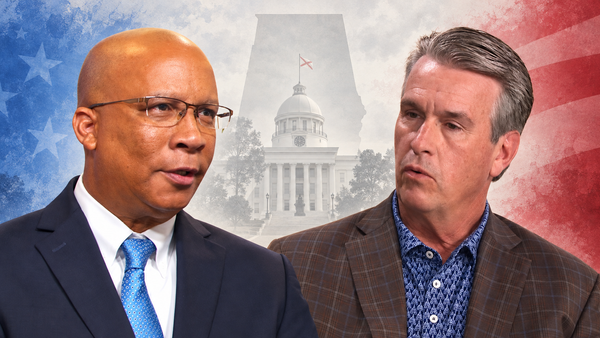
Ivey Names Four New PSC Commissioners
Four new PSC picks will join Alabama’s expanded utility board as critics keep warning that HB475 weakened real rate reform
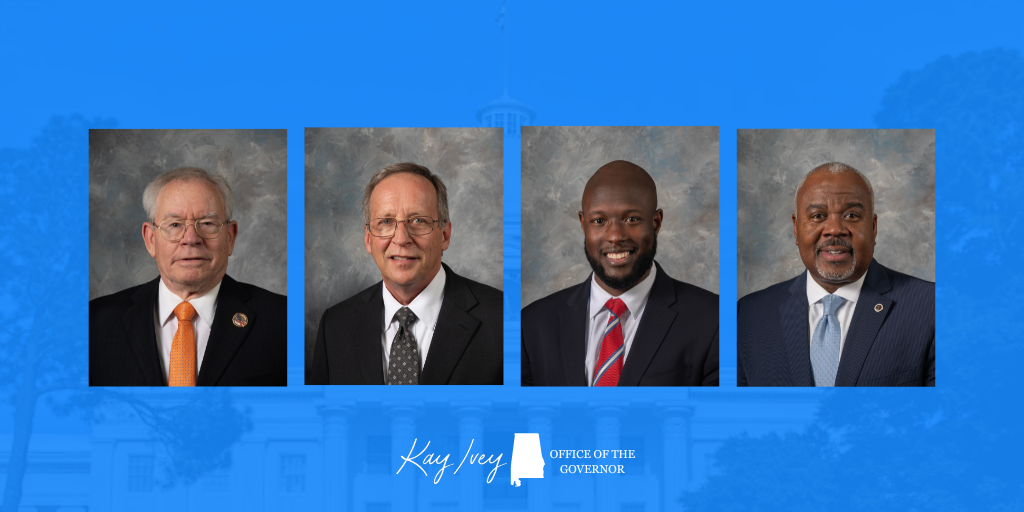
Governor Kay Ivey on Wednesday announced four new appointments to the Alabama Public Service Commission, filling seats created under the newly passed HB475.
Ivey named Ron Burgess, Fred Johnson, Demarcus Joiner and Dr. Quinton T. Ross Jr. to the expanded commission. Their terms begin January 18, 2027.
The new law expands the PSC and requires the governor to make the first four appointments. Legislative leaders from both parties submitted names, and Ivey was required to choose two from majority party lists and two from minority party lists.
“For Alabama to remain the best state in which to live, work and raise a family, we need good people serving in public office, including on our Public Service Commission,” Ivey said. “I am proud to tap these four experienced leaders to serve their fellow Alabamians in this capacity. I expect these individuals to serve with honesty and integrity.”
Ron Burgess, a retired three star general, most recently served as Executive Vice President at Auburn University, having held the post since May 2018. He first joined the university in 2012 as Senior Counsel for National Security Programs, Cyber Programs and Military Affairs. Burgess retired from the U.S. Army as the 17th Director of the Defense Intelligence Agency. Throughout his 38-year career in the U.S. Army, his exceptional leadership, knowledge and drive contributed to the success of countless missions and the security of U.S. intelligence.
Fred Johnson is an expert in rural telecommunications and electric distribution. After his more than 40-year career in the field, which included 23 years as Chief Executive Officer of Farmers Telecommunications, he served as a member of the board of directors for the National Cooperative Solutions Cooperation.
Demarcus Joiner is an Associate at Maynard Nexsen. He has prior experience working in public policy through his time at the University of Alabama System. Joiner is also a previous University of Alabama Student Government Association president.
Dr. Quinton T. Ross, Jr. currently serves as the 15th President of Alabama State University. Prior to leading ASU, Ross served in the Alabama State Senate and has more than two decades of experience as an educator both in K-12 and higher education.
The four will join PSC President Cynthia Almond, who was also appointed by Ivey. Commissioners Jeremy Oden and Chris Beeker III currently round out the PSC, but both were unsuccessful in their bids for reelection. Their replacements will be decided in the November 3 general election, and will also take office on January 18, 2026.
The appointments come after months of sharp debate over HB475. The bill was sold as utility reform, with backers pointing to a freeze on electric rates and broader PSC representation. Critics argued the final version stripped out the strongest parts of the original bill.
The original HB475, sponsored by Rep. Mack Butler (R-Rainbow City) would have required regular formal rate cases, public hearings with sworn testimony, review of utility profits and tighter limits on what costs utilities could pass on to ratepayers.
By final passage, many of those reforms had been removed or weakened. Butler himself voted against the final version.
“My name is on it, but it is definitely not my bill entirely,” Butler said during the debate. “At the current moment I cannot support the bill in its current form. The original agreement was to merge the two bills. But the better components of my bill are not currently in the legislation.”
Energy Alabama was even more blunt.
“We have reviewed the substitute and we are calling it what it is: HB 475 in name only,” the group said in April. “The provisions that would have delivered real rate relief — mandatory and regular rate cases, and limits to Alabama Power’s profits — have been hollowed out.”
After Ivey signed the bill, Energy Alabama said the fight was not over.
“She had the opportunity to send this bill back and demand the legislature pass something that actually lowers bills for Alabama Power customers. She refused. The people of Alabama deserved better, and we will not pretend otherwise.”
The group also warned the new commissioners directly.
“You must serve the interests of the ratepayers who have no choice but to pay whatever you allow.”
The Alabama Republican Assembly was equally candid in its condemnation of HB475.
“This isn't governance—it's surrender. HB475 has been reduced to mere bureaucratic changes, favoring monopoly utilities over working families. There are no meaningful rate reviews, profit limits, or restrictions on charging for corporate messaging. Oversight is weaker, bills will rise, and the PSC is now further removed from public accountability.”
The Assembly was clear about the effects of HB475, and who would (and would not) benefit from it.
“Governor Ivey has signed this sham into law; it will be yet another chapter in Alabama's sorry saga of putting corporate profits ahead of people. The real losers? The millions of Alabamians who are paying through the nose for power in the state.”
Supporters say HB475 freezes electric rates and gives more areas of Alabama a voice on the PSC. Opponents say the new structure gives too much power to appointed officials and not enough to voters or ratepayers.
Those questions will now follow the four appointees into office — assuming they are able to take their seats next January.
The overhaul is also facing a legal challenge. In May, Democratic PSC candidate Sheila McNeil filed a federal lawsuit against Governor Kay Ivey and Attorney General Steve Marshall, seeking to block implementation of HB475. McNeil argues that the law unlawfully changed the structure of the commission in the middle of an active election cycle after candidates had already qualified and begun campaigning. Her suit contends the measure violates constitutional due process and equal protection guarantees, as well as provisions of the Voting Rights Act. The complaint asks a federal court to halt appointments and other provisions of the law until the case can be fully heard. McNeil has also argued that the final version of HB475 transformed the office she sought into a fundamentally different position than the one voters and candidates understood when the 2026 election cycle began.
For Alabama families seeing high power bills, the test will be simple: whether the new PSC asks hard questions, demands real answers and remembers who is paying the bill.
Regardless, the people of Alabama will be watching.