
Less Taxes, More Results: What Tuberville’s Tax Plan Could Mean for Alabama Families
Opinion by Angela McClure

By Angela McClure
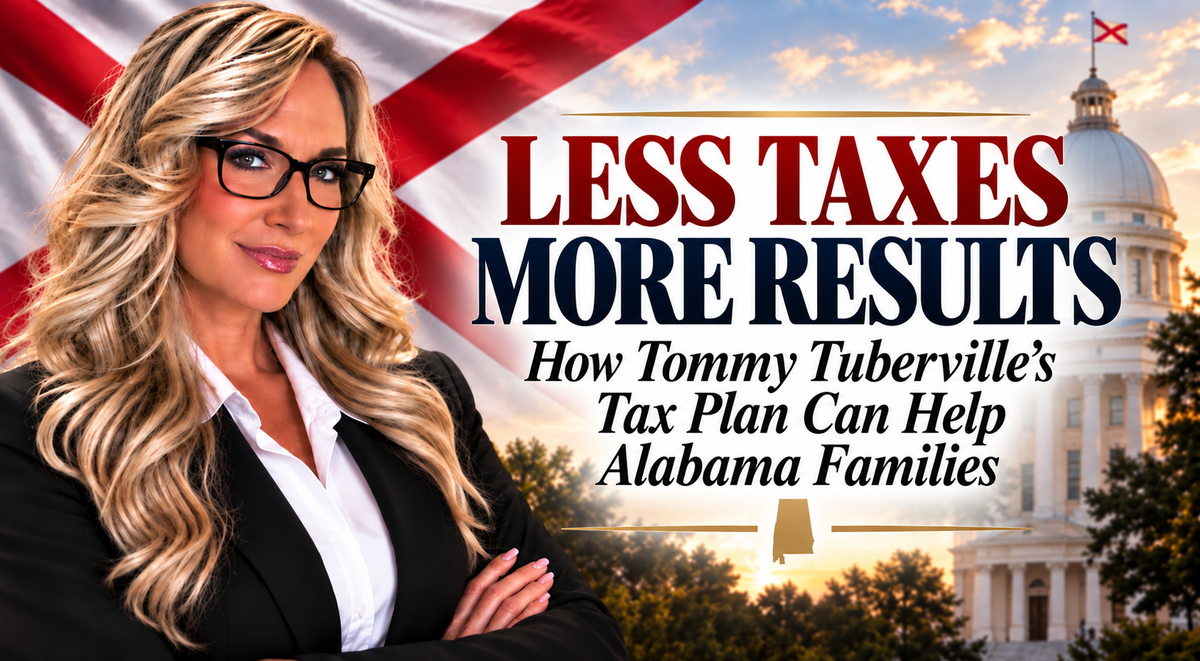
Tommy Tuberville has reduced part of his campaign for governor to four words: “Less taxes, more results.”
The slogan reflects his goal of allowing Alabama families, workers and businesses to keep more of the money they earn while improving the efficiency of state government.
Tuberville has pledged to eliminate Alabama’s remaining state sales tax on groceries. He has also discussed reducing income and property taxes as the economy grows, using a long-term approach focused on economic expansion, responsible budgeting and stronger government performance.
Alabama currently charges a 2% state sales tax on groceries. The Legislative Services Agency estimates that eliminating the tax would save consumers approximately $270 million annually.
Alabama Arise estimates that an average family of four would save approximately $250 to $300 per year.
For families managing grocery bills, housing costs and other expenses, those savings could provide meaningful relief. The benefit would reach senior citizens, working families, students and every Alabama resident who buys food.
The grocery-tax proposal is part of a broader vision of making Alabama more affordable and competitive.
Alabama’s individual income-tax rates range from 2% to 5%, with the highest rate applying to taxable income.
Reducing income taxes would allow Alabamians to retain more of every paycheck. Families could use that money for groceries, housing, education, savings or debt reduction. Businesses could benefit from a more competitive tax environment that encourages investment, expansion and job creation.
Income taxes also provide a significant share of state revenue. Alabama collected approximately $9.13 billion in income taxes during fiscal year 2025, accounting for about 52% of the $17.53 billion collected by the Department of Revenue. Sales taxes produced another $6.31 billion.
Those figures explain why Tuberville has described income-tax elimination as a long-term goal rather than an immediate promise.
“I would love to get rid of the state income tax,” Tuberville said, while emphasizing the need for a responsible approach. His proposed strategy includes growing the economy, reducing waste, fraud and abuse, and working with the Legislature to cut taxes as state finances allow.
Property taxes offer another potential area of relief.
Alabama’s state property-tax rate is 6.5 mills, while counties and municipalities impose additional millages. Property-tax revenue supports public schools, the General Fund and human resource programs.
Reducing property taxes could lower the cost of homeownership and help businesses expand. Homeowners could keep more of their income, while companies could direct savings toward hiring, equipment, construction and higher wages.
The challenge is ensuring that tax reductions do not weaken essential services. Income and property taxes support significant public responsibilities, so any reductions would require careful budgeting, economic growth and improved government efficiency.
That is the meaning behind “more results.”
Tuberville’s argument is that Alabama should encourage investment, reduce unnecessary spending and return more money to taxpayers as the economy strengthens.
If the state eliminates the grocery tax, families would receive immediate relief. Future reductions in income or property taxes could provide larger savings, allowing families and businesses to spend, save and invest more.
The debate is not whether Alabamians would benefit from paying less tax. They would.
The larger question is whether Alabama can reduce taxes while continuing to invest in education, infrastructure and other essential services.
That is where Tuberville’s promise of “Less taxes, more results” will ultimately be measured: lower costs for families, stronger opportunities for businesses and better value for every taxpayer dollar. The proof that it will be is in the numbers.
Opinions do not reflect the views and opinions of ALPolitics.com. ALPolitics.com makes no claims nor assumes any responsibility for the information and opinions expressed above.