Marshall, Allen ask SCOTUS for Relief in Redistricting Fight
Alabama AG Marshall, SecState Allen seek relief after high court ruling in Callais reshapes redistricting law across the South
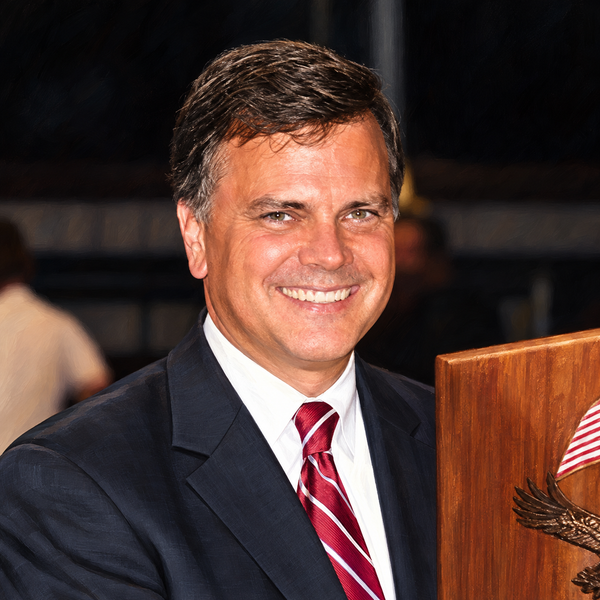
Alabama’s Attorney General Steve Marshall and Secretary of State Wes Allen are moving in step after a major U.S. Supreme Court ruling, each filing emergency motions tied to the State’s ongoing redistricting battle.
Allen and Marshall are both asking the High Court to revisit lower rulings that blocked Alabama’s congressional map. Their filings follow the Court’s recent decision in Louisiana v. Callais, a case that is already reshaping how States defend their maps under federal law.
Marshall filed three emergency motions seeking to lift injunctions tied to Alabama’s Congressional districts. Marshall filed motions in Allen v. Singleton, Allen v. Milligan, and Allen v. Caster, asking the Court to act quickly to vacate the injunctions so that Alabama may enjoy the “same opportunity as other States to use a lawfully enacted congressional map free of an injunction that cannot be reconciled with Section 2 of the Voting Rights Act.”
Allen, in a separate filing, asked the Court to move quickly and apply the same updated legal standard to the State’s case.
“The Supreme Court has now made clear that you cannot assume race and politics are the same thing, you have to actually show they’re separate,” Marshall said. “Because the lower court’s injunction cannot stand in light of the Supreme Court’s ruling, we have asked the court to lift the injunction. Alabama deserves the right to use its own maps, just like every other State.”
Allen echoed that urgency, pointing to the need for clarity ahead of future elections.
“The United States Supreme Court’s recent decision has made it clear that the legal landscape surrounding redistricting has changed,” Allen said. “Alabama deserves a timely resolution so that our State can move forward with certainty in our election processes.”

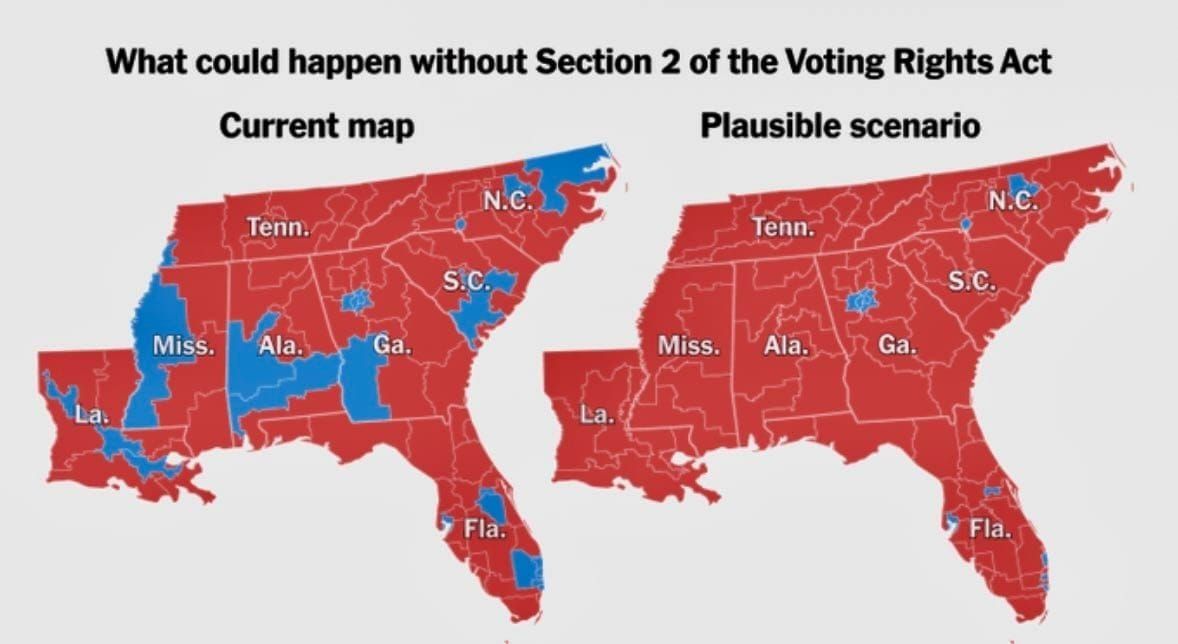
At the center of these filings is how courts interpret Section 2 of the Voting Rights Act. In Callais, the Supreme Court ruled that challengers must clearly separate racial intent from political strategy when claiming unlawful redistricting. If race and politics cannot be disentangled, the Court signaled, liability may not apply.
That shift is already sending ripples across the South.
In Louisiana, the ruling voided a newly drawn majority-Black congressional district, a move expected to improve Republican prospects in upcoming elections. Other States are now weighing similar changes. Tennessee leaders have floated new maps that could further favor Republicans, while lawmakers in Mississippi are preparing for a possible special session to revisit district lines.
In Alabama, the timing is especially significant. Courts had previously ordered new maps that created a second district where Black voters could elect a candidate of their choice. Those rulings stemmed from earlier decisions in cases like Allen v. Milligan, which found the State’s map likely violated federal law.
Now, State leaders argue the ground has shifted.
Recent reporting indicates Alabama officials are reassessing not only congressional maps, but also State legislative lines. A federal judge already ordered a redraw of a State Senate district centered in Montgomery. Meanwhile, questions remain about whether Governor Kay Ivey could call a special session if further changes are required. As of Wednesday, the Governor seemed disinclined to call a special session, saying the State is “not in position to have a special session at this time.”
Across the region, the Callais decision is opening the door to renewed legal fights over representation. Some see it as a tightening of federal oversight. Others view it as restoring States’ authority over political mapmaking.
For now, Alabama’s next move rests with the Supreme Court. Marshall and Allen are asking the justices to act quickly — lifting injunctions and revisiting prior rulings in light of Callais.
The outcome could shape not just Alabama’s map, but the balance of power in Southern States — and potentially the nation as a whole — as the next election cycle draws closer.