Marshall Defends Auburn Players' Right to Pray
Steve Marshall tells FFRF to withdraw demand letter, saying Auburn athletes and coaches retain First Amendment religious rights
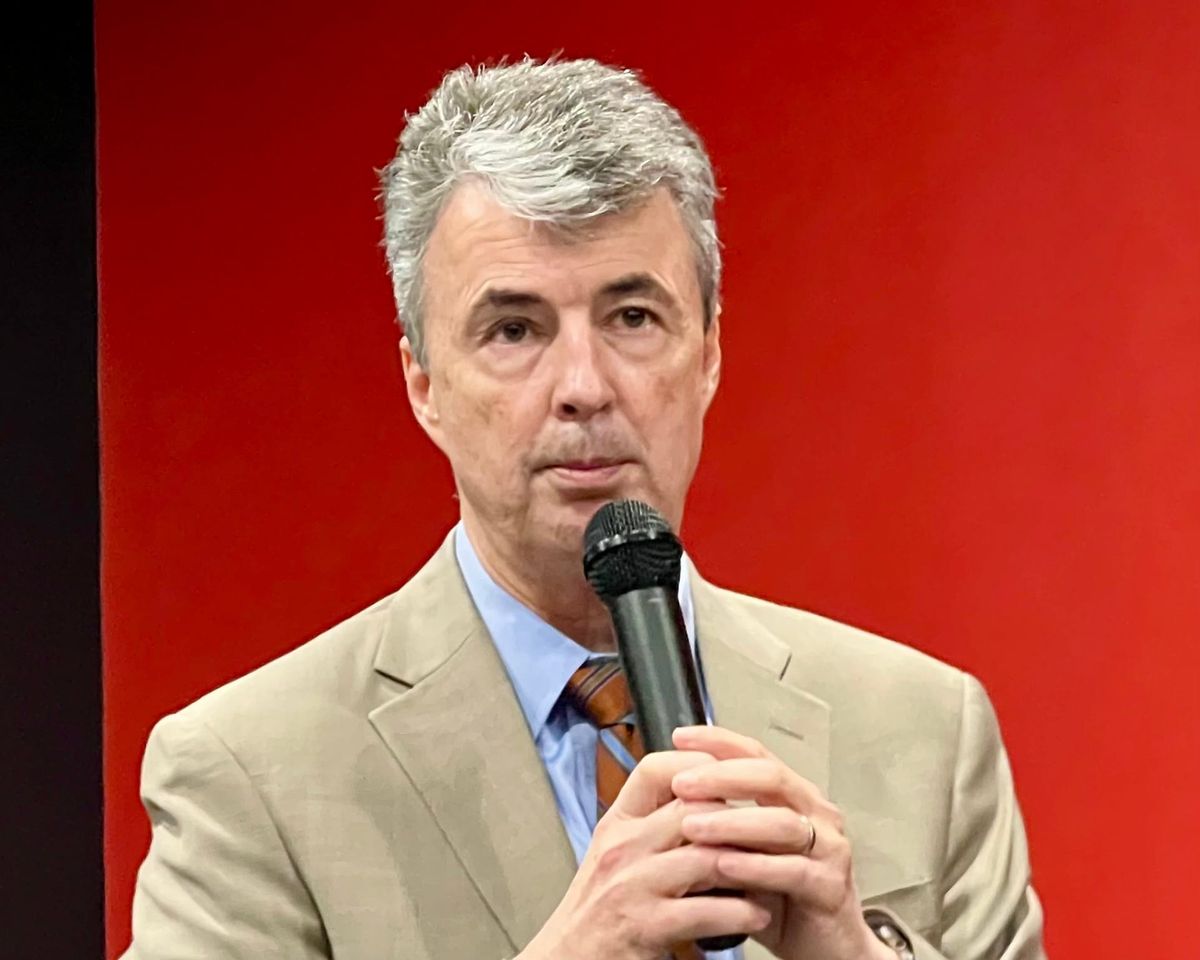
Attorney General Steve Marshall is pushing back against a national atheist legal group that threatened Auburn University over public displays of faith by members of its baseball program, arguing that the Constitution protects the religious rights of student-athletes and coaches.
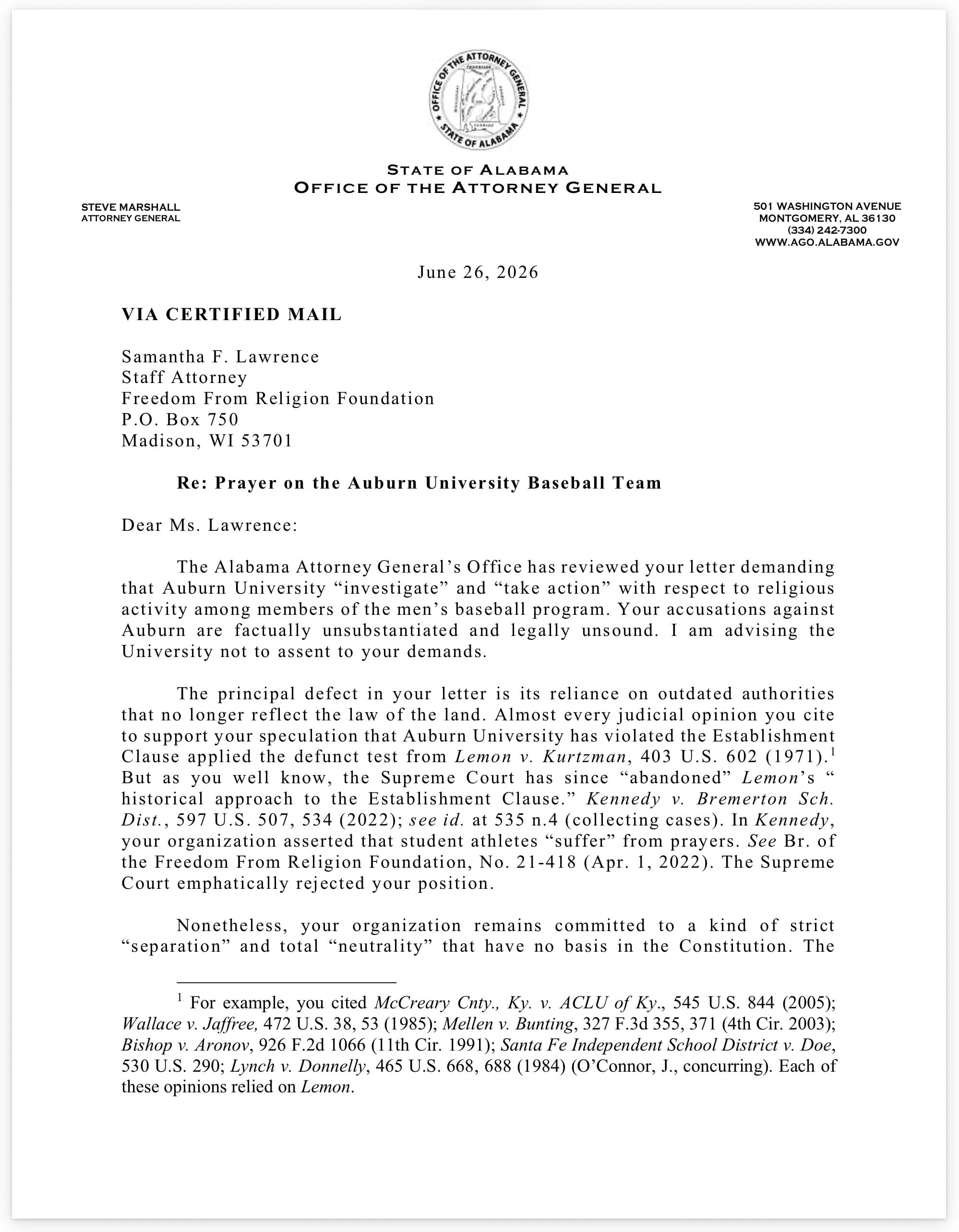
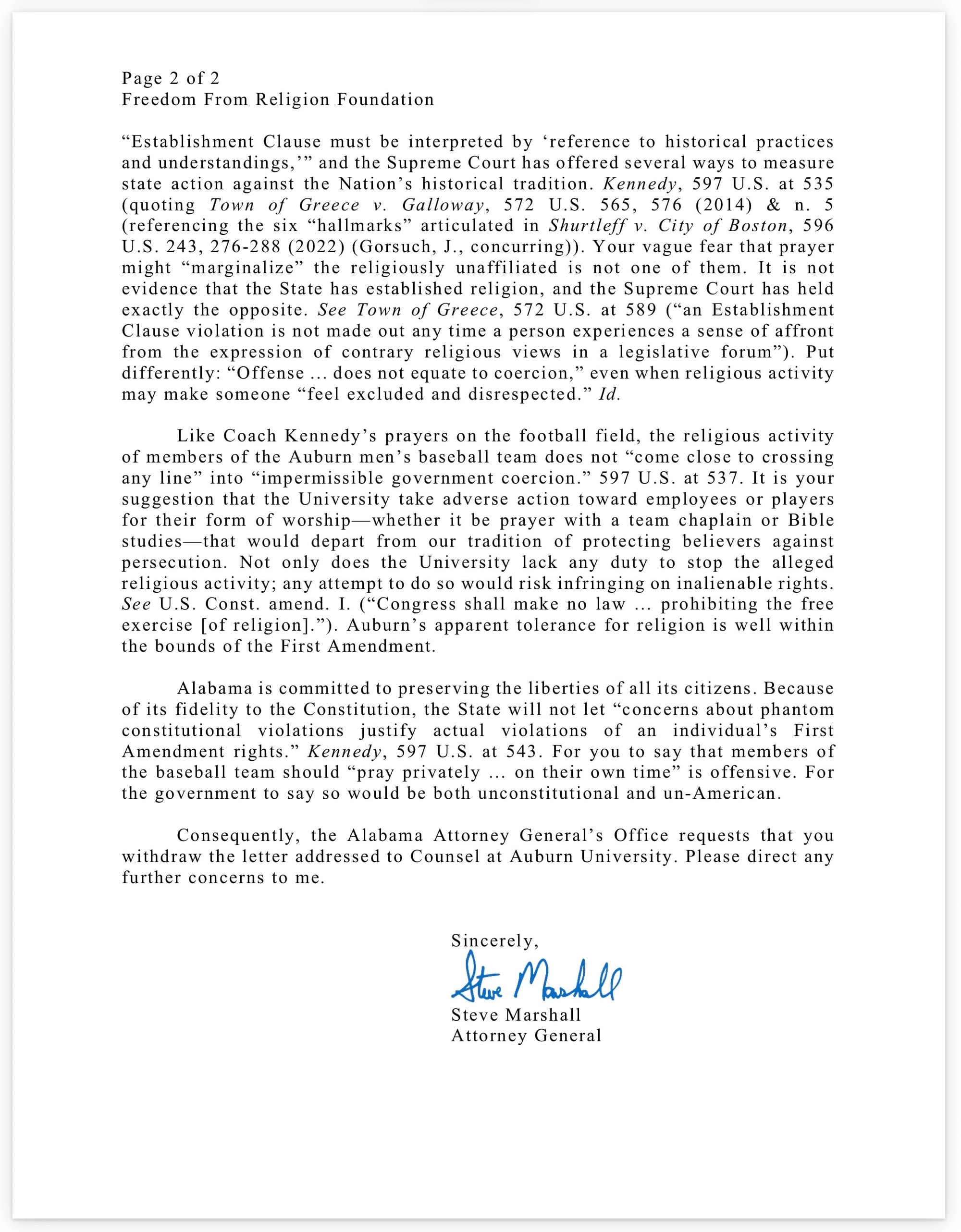
In a June 26 letter to the Freedom From Religion Foundation (FFRF), Marshall rejected the group's demand that Auburn prohibit its baseball chaplain from praying with players or allowing athletes to wear Christian messages and symbols during team activities. The Attorney General's Office released the letter publicly Monday alongside a statement urging Auburn and other Alabama schools not to yield to what Marshall called an unconstitutional demand.
"Freedom From Religion's latest crusade is a swing and a miss. Coaches and athletes don't lose their religious rights just because they attend a public school," Marshall said.
"The Supreme Court has been clear that the days of censoring employees and students to remove religion from public view are over. Auburn—and all Alabama schools—should know that the Attorney General's Office will stand with them in protecting the religious liberties of their employees and students. Do not surrender."
The dispute stems from a letter sent by the Wisconsin-based Freedom From Religion Foundation to Auburn University. According to Marshall's office, the organization threatened legal action unless the University ended the practice of its volunteer baseball chaplain leading team prayers and stopped players from displaying Christian expressions during practices.
Marshall's response relies heavily on recent U.S. Supreme Court precedent recognizing that public employees and students retain First Amendment protections for religious speech. His letter cites decisions including Kennedy v. Bremerton School District, in which the Court held that a high school football coach's postgame prayers were protected by the Constitution, and Tinker v. Des Moines Independent Community School District, which affirmed that students do not "shed their constitutional rights to freedom of speech or expression at the schoolhouse gate."
According to published reports referenced by Marshall's office, Auburn baseball chaplain Mason Maners has led Bible studies and prayed with members of the team. Maners, a former Auburn baseball player, suffered a broken neck while playing high school football before making a recovery that allowed him to continue his athletic career.
Marshall argued the Freedom From Religion Foundation failed to provide evidence that any player had been forced to participate in religious activity. He said the organization's claims rest instead on speculation that nonparticipants could feel excluded.
In one of the strongest passages of the letter, Marshall wrote:
"Alabama is committed to preserving the liberties of all its citizens. Because of its fidelity to the Constitution, the State will not let 'concerns about phantom constitutional violations justify actual violations of an individual's First Amendment rights.' For you to say that members of the baseball team should 'pray privately … on their own time' is offensive. For the government to say so would be both unconstitutional and un-American."
Marshall also disputed the FFRF's characterization of Auburn's baseball chaplain as a government employee, arguing the volunteer position does not transform private religious expression into state-sponsored speech. He further noted that participation in Bible studies or prayer must remain voluntary, but said voluntary religious activity is protected under the First Amendment.
The Attorney General concluded his letter by asking the Freedom From Religion Foundation to withdraw its demand and cease efforts to pressure Auburn University into restricting constitutionally protected religious expression.
The Attorney General’s letter is below: