
McDonald's AI Drive-Thru Raises Privacy Concerns
New AI ordering tests spark concern as demo features suggest facial ID and license plate tracking, raising questions over consent and data use
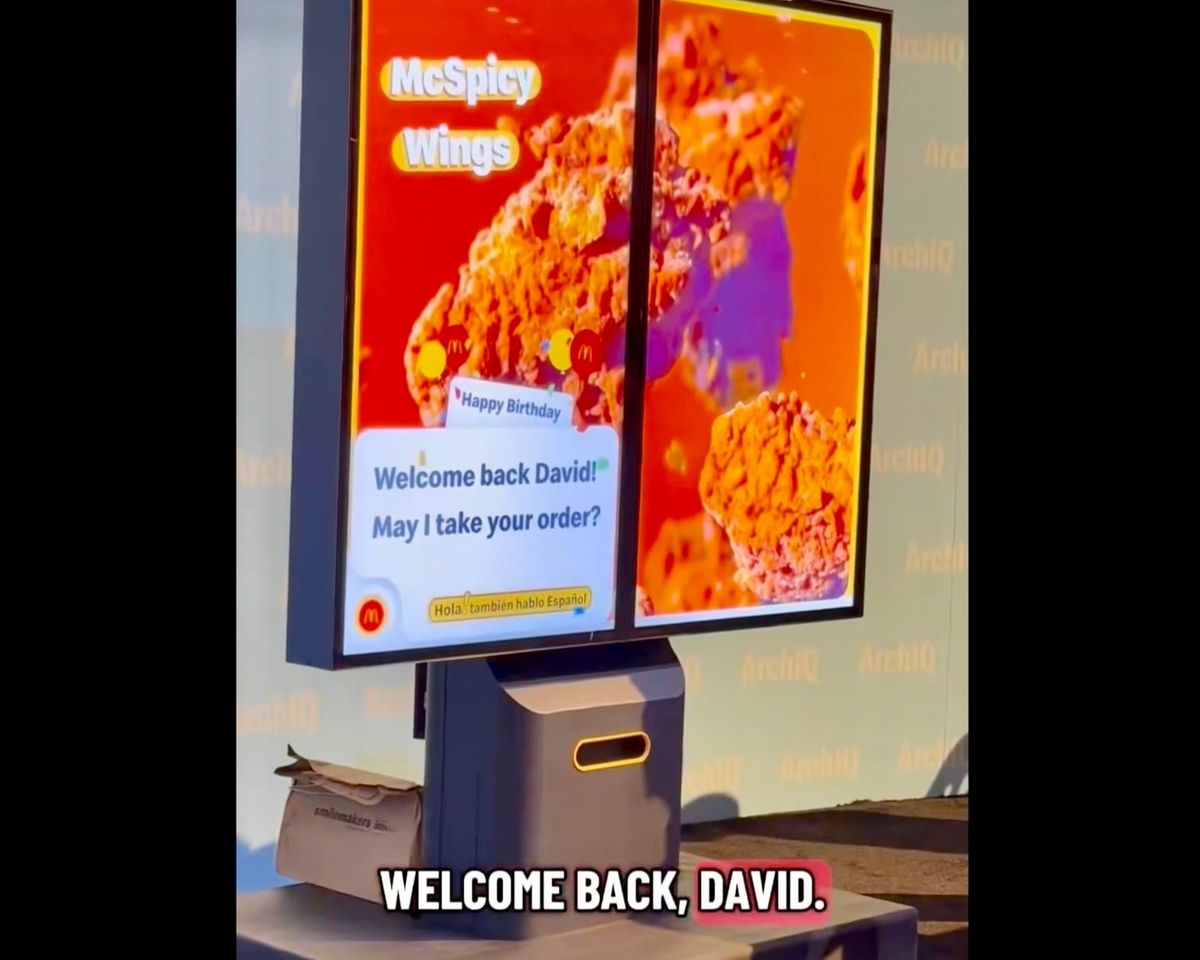
McDonald’s is drawing fresh scrutiny over its expanding use of artificial intelligence in drive-thru ordering, as new reports and demo footage highlight possible features that go far beyond simple voice ordering.
The company is testing a Google Cloud-powered AI platform known as ArchIQ, with a voice assistant nicknamed “Archy” in five U.S. locations. Early reports say the system has already handled over one million transactions, with much of the ordering process completed without human staff involvement.
But privacy concerns are growing fast.
Footage and commentary circulated by social media account @WallStreetApes point to demo concepts that include facial recognition to identify returning customers and recall past orders. The same material also highlights license plate scanning tools designed to link vehicles to purchase history, visit frequency, and customer behavior patterns.
If deployed at scale, these tools could shift fast-food ordering into a form of routine identity tracking. Facial data and license plate information are both considered sensitive identifiers, and privacy advocates note that such data cannot be easily changed if compromised in a breach.
The concerns also extend to how this data might be stored or shared. Critics have raised the possibility that aggregated or individual-level data could be used within broader digital ecosystems tied to large tech partners, including advertising or behavioral profiling systems.

There are also questions about consent. It is unclear whether customers would be given clear opt-in or opt-out choices for advanced identification features, or whether such systems could become embedded by default in drive-thru operations.
A McDonald’s franchisee cited in early reports suggested that current live tests are focused primarily on voice ordering and do not yet actively use facial recognition or license plate scanning. The more advanced features appear to be part of concept demonstrations rather than confirmed deployments.
Still, the direction of development is what has drawn attention.
Past AI experiments in fast-food ordering have already faced legal scrutiny, including lawsuits under Illinois’ Biometric Information Privacy Act (BIPA), which regulates the collection and use of biometric data such as voice and facial identifiers. Earlier reporting has also documented McDonald’s interest in AI-driven drive-thru systems dating back several years.
McDonald’s privacy policies generally state that audio and video data may be collected for order processing, safety, and system improvement, but the specifics around emerging AI features remain unclear and unevenly defined as the technology evolves.
For now, ArchIQ remains in limited testing. But the debate surrounding it is already broader than fast food. It centers on how much personal data customers are willing to trade for speed and convenience at the drive-thru window—and how visible that trade should be.
A demonstration clip of the Archy system may be seen at @WallStreetApes or below: