McNeil urges PSC safeguards for data center costs
Democratic PSC candidate Sheila McNeil says data centers should bear added grid costs as regulators weigh new contract rules
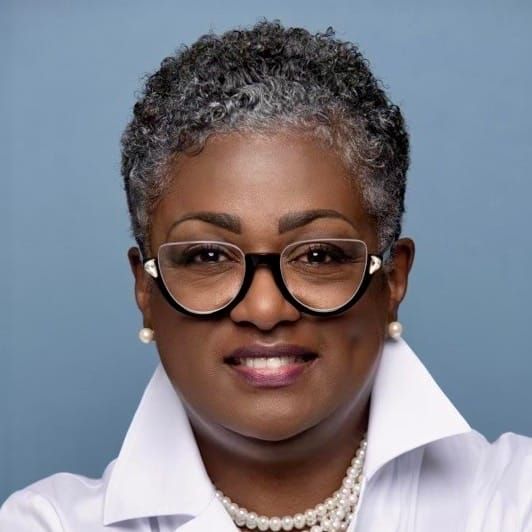
Alabama Public Service Commission candidate Sheila McNeil is calling for stronger safeguards to keep electric customers from bearing the cost of the State's fast-growing data center industry.
The Alabama PSC is now developing new rules for reviewing Alabama Power contracts with large-load data centers. The Commission opened Docket 33709 in July to develop procedures and standards for the review and approval of those contracts.
Reply comments, the last scheduled round of public input in the proceeding, are due Friday, Aug. 21. The new rules could help decide what financial safeguards must be in place before the PSC approves contracts that may require major investments in power plants, transmission lines, substations and other parts of the electric grid.
McNeil, the Democratic nominee for PSC Place 2, said the Commission should adopt firm rules to ensure that families and small businesses do not end up paying costs tied to new data centers.
Alabama has seen a surge in proposed data centers, some with power demands on the scale of large cities. Inside Climate News reported that the proposed Project Marvel campus in Bessemer alone could consume as much as 1,200 megawatts at full buildout. That would equal roughly a 10 percent increase in Alabama Power's Statewide electric demand.
“Alabama Power has said that data centers will pay the full cost of serving them,” McNeil said. “The PSC’s job is to verify that promise and make it enforceable. Alabama families should not be asked to take the risk while multi billion-dollar companies receive the benefit.”
McNeil said the guiding principle should be simple:
Growth should pay for growth.
Protections the PSC Should Adopt
McNeil is calling on the Commission to require:
- Data centers to pay every cost they create. That includes new generation, transmission, substations, connections and other infrastructure that would not be needed without the project.
- Protection if a project changes or fails. If a data center closes, relocates, uses less electricity than projected or never reaches full operation, existing customers should not inherit the unpaid costs.
- Make companies commit before construction begins. Before a utility builds expensive infrastructure for a data center, the company should agree to minimum payments, a long-term contract or other financial guarantees so existing customers are protected if the project changes or leaves.
- Proof that the benefits are real. Claims about jobs, tax revenue and benefits to other electric customers should be measurable and supported by evidence.
- Review of the full impact. The PSC should consider the long-term costs of each contract and the combined effect of multiple data centers on Alabama’s electric grid and customer bills.
- A public vote and continuing oversight. Contracts of this size should receive an affirmative vote from the Commission, followed by monitoring to determine whether the anticipated costs, electricity use and benefits match what actually occurs.
“Economic development can be good for Alabama, but a project is not a benefit to ratepayers if they are required to subsidize it,” McNeil said. “The companies creating extraordinary demand should bear the extraordinary costs.”
The issue has gained urgency as Alabama Power plans for sharp growth in electric demand. Alabama Power officials have described data centers as the “primary driver” of increased load forecasts.
The PSC's current proposal would allow Alabama Power to submit large-load contracts to Commission staff for review, while also providing the Alabama Attorney General with the same information. Under the process outlined by the PSC, a contract could be deemed approved if the Commission does not reject it within 60 days.
That provision gives added weight to McNeil's call for an affirmative public vote on contracts of this size.
Public Participation Should Be Easier
McNeil is also calling on the PSC to make its public-comment process easier to understand and use.
“Ratepayers should not need a lawyer or specialized regulatory knowledge to participate in decisions that could affect their electric bills for decades,” McNeil said. “The Commission should provide plain-language instructions, clear deadlines and a straightforward electronic process for public comments.”
Transparency is also directly at issue in the current proceeding.
Alabama Power submitted a heavily redacted contract involving a planned 300-megawatt Birmingham data center. Comments filed in Docket 33709 by Energy Alabama said the public version concealed the contract term, pricing components, financial security amount and parts of the minimum-billing formula.
Those terms could be key to deciding whether existing customers would be protected if a large data center failed to use as much electricity as planned or abandoned a project after the utility had already invested in infrastructure.
“Legitimate trade secrets can be protected without leaving the public completely in the dark,” McNeil said. “Alabamians deserve to know what protections were required and why the Commission determined that a contract serves the public interest.”
The recommendations are the PSC-focused portion of McNeil's Alabama Data Center Accountability Plan, or ADCAP.
The proposal calls for regional reviews of electricity and water needs, roads, emergency services, workforce demands and community impacts before major data center commitments are locked in.
“I am not against data centers. I am against approving them before Alabama knows what they will cost us,” McNeil said when announcing the broader plan. “We should welcome investment, technology and good jobs—but we cannot allow the costs of electricity, water, roads and other infrastructure to be shifted onto Alabama families and small businesses.”
“Alabama does not have to choose between innovation and accountability,” McNeil said. “We can welcome investment while protecting our communities and the people who already pay to maintain our electric system. But we need enforceable standards, public accountability and a plan.”
McNeil’s campaign has focused on utility costs, transparency, accountability and reliable infrastructure.
For more information on McNeil and her campaign, visit https://mcneilforpsc2.com.