
Millions Drop Obamacare After Subsidies End
ACA rolls fall as premiums rise, while federal officials point to billions in waste, fraud and abuse inside the program
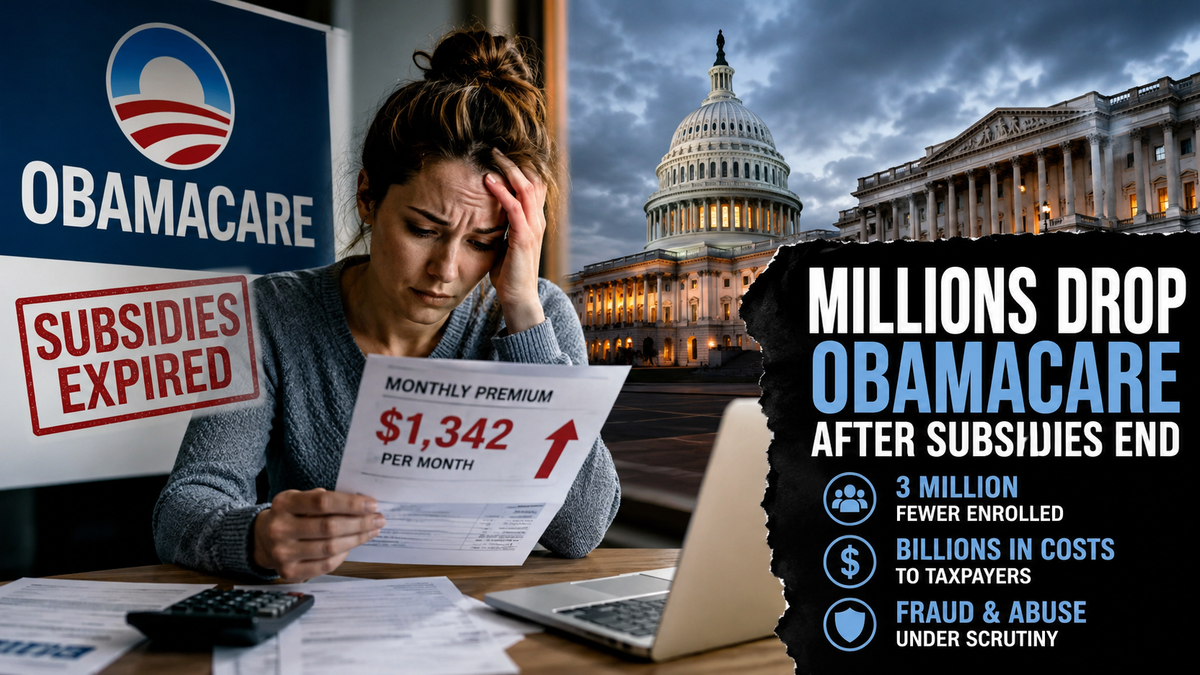
Millions of Americans have dropped Obamacare coverage after enhanced federal subsidies expired, driving up premiums and exposing fresh debate over the cost and integrity of the Affordable Care Act.
New federal data show ACA marketplace enrollment fell from 22.1 million people in 2025 to 19.2 million this year, a drop of about 3 million. The decline came after the Jan. 1 expiration of the enhanced premium tax credits first approved during the COVID era.
The Associated Press reported that many families faced double- or triple-digit premium hikes once the extra aid ended.
“We know that real people lost their health insurance coverage,” said Cynthia Cox, Vice President and Director of the ACA program at healthcare research nonprofit KFF. “This coverage loss happened at the same time millions of people faced double or even triple digit increases in their premium payments.”
The Biden-era subsidies made many plans free or nearly free for enrollees. But they came at a steep cost to taxpayers.
The Congressional Budget Office estimated that permanently extending the expanded premium tax credits would add $350 billion to federal deficits from 2026 through 2035. CBO’s February 2026 baseline also projected premium tax credits and related ACA spending at $117 billion in 2026 and $1.227 trillion from 2026 through 2036.
Without the enhanced subsidies, ACA exchange subsidies and related spending are still projected to cost $112 billion in 2026, down from $140 billion in 2025. That means the expired subsidies and related policy changes account for tens of billions in near-term savings, but the base Obamacare subsidy structure remains a major federal expense.
The Trump administration argues the drop in enrollment is not only about higher premiums. Officials say it also reflects a long-overdue cleanup of waste, fraud and abuse inside the exchanges.
The Centers for Medicare and Medicaid Services said it has moved to tighten income checks, stop improper enrollments and end subsidies for people who failed to file and reconcile prior tax credits. CMS said more than 550,000 enrollees had advance premium tax credits ended in 2025 after the agency found they were also enrolled in Medicaid or CHIP. CMS also said it removed subsidies from nearly 200,000 households that failed to file and reconcile prior credits.
CMS Administrator Dr. Mehmet Oz defended the crackdown.
“American taxpayers deserve to know their dollars are going only to people who truly qualify,” Oz said. “This rule strengthens eligibility checks, cracks down on abuse, and gives insurers more flexibility to offer affordable, consumer-focused coverage options.”
Officials have also raised alarm over reports that more than 1 million Obamacare enrollees lacked Social Security numbers. HHS Secretary Robert F. Kennedy Jr. and Oz called that a warning sign for fraud and said the prior system allowed brokers and bad actors to enroll people without proper checks.
“The Obamacare marketplace is plagued by fraud in large part because the Biden administration dismantled basic program integrity guardrails,” Kennedy said. “A partisan lawfare blocked the common sense efforts to protect taxpayers.”
CMS has also cited unauthorized enrollments and plan switches. In one enforcement action, CMS said subsidiaries of Speridian Technologies, including Benefitalign and TrueCoverage, misled consumers and failed to protect personal data from possible foreign access.
The fight over the subsidies now moves back to Congress. Democrats and some Republicans say the subsidy lapse made coverage too costly for working families, small business owners and gig workers. Conservatives argue the expired subsidies masked the true price of Obamacare while adding hundreds of billions to the deficit.
Obamacare now faces its sharpest test in years. The rolls are shrinking. The cost is still high. Washington is being forced to confront what critics have warned for years: Obamacare’s promise of cheap coverage depends on heavy federal spending, weak controls and a subsidy system that taxpayers are being asked to carry.
And those of us who were promised a “repeal and replace“ alternative to Obamacare nearly a decade ago? We’ll have to keep waiting.