National Alert Test Set Tuesday Amid Blackout Rumors
Alabama’s test starts at 1:20 p.m. Central. Recent flight and bank outages have fueled fears, but no link to a blackout is established.
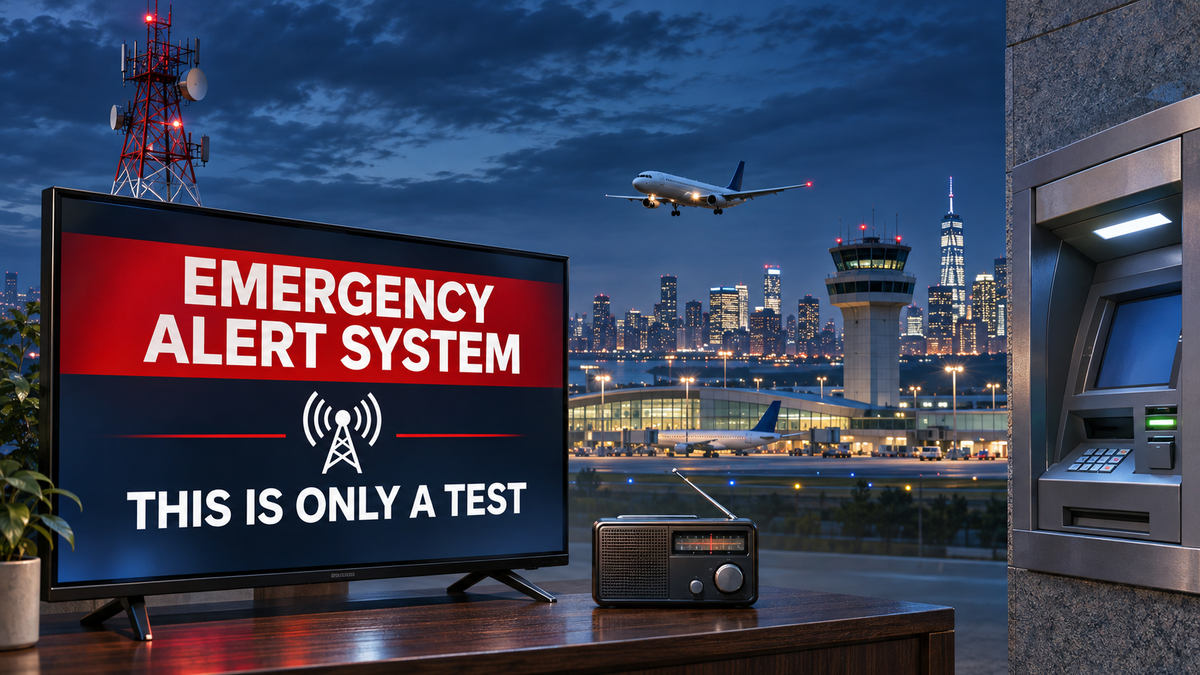
TL;DR: A national radio and television alert test is scheduled for Tuesday, Nov. 17, at 1:20 p.m. Central. Recent tech failures have stirred blackout claims, but no evidence links those outages to the test.
Alabama residents can expect a brief break in radio and television programs Tuesday, Nov. 17, when federal officials test the nation’s Emergency Alert System.
The test is scheduled for 1:20 PM Central (2:20 PM Eastern). It comes after days of flight disruptions, banking delays and a major Microsoft outage that have fueled online fears of a nationwide blackout.
Despite a plethora of internet rumors to the contrary, a link between those system failures and Tuesday’s test has not been established.
The Federal Emergency Management Agency and Federal Communications Commission will conduct the test, which should interrupt programs for about one minute, according to WBRC.
FEMA’s test guidance says cellphone alerts will not be part of this year’s exercise. The National Weather Service also says NOAA Weather Radios will not receive the message.
The alert system covers radio and TV stations, cable systems, satellite services and certain video providers. Viewers may see different screen displays, while the message may air in English, Spanish or both.
Federal law calls for a national test at least once every three years. The goal is to find faults before the system is needed in a real crisis. If severe weather or an actual emergency forces a delay, the backup date is Dec. 3. No public action is required for the test.
Claims that the test signals the start of a 90-day blackout have spread widely on social media over the past few days. Some posts point to recent outages as evidence of a “run up” to the blackout. Others cite the Pentagon’s FORTRESS America effort to help military bases keep running if outside power fails.
PolitiFact’s review found no evidence that a nationwide blackout is planned for Nov. 17. It also found that a viral video purporting to show President Donald Trump announcing a 90-day blackout had been altered.
The military’s push to prepare bases for a long loss of outside power is a readiness measure. It does not establish that such an outage is expected Tuesday.
Recent aviation problems have added to the unease.
The Federal Aviation Administration says its Nov. 13 ground stop followed a surge of data that made older network equipment unstable. Trouble spread through 17 of its 22 regional air traffic control centers.
The Agency said its initial review pointed to two sites, including one where its network provider had installed a new router. Isolating those sites stabilized the network. Flights resumed that evening, though the root-cause review continued.
The FAA reported no indication of a cyberattack or outside bad actor.
A separate United Airlines outage delayed departing flights Monday for roughly one hour and 40 minutes. The airline said it found no sign of a cyber-related cause.
Banking trouble followed a similar pattern of widespread concern and narrower findings.
Customers reported problems Monday with online accounts, payments and access to funds. Chase blamed a software bug in its own hardware and said there was no evidence it was cyber-related. Delays could affect customers at other banks when their payments involved Chase, according to Reuters.
NBC News reported that some customers had trouble withdrawing funds. Chase said transactions were posting normally Monday evening. Those reports do not establish a nationwide ATM shutdown.
Microsoft’s outage began Thursday and affected Outlook, Teams and other services. The company reported full recovery Saturday and said it was not aware of malicious activity, Reuters reported.
The cluster of failures raises fair questions about aging equipment, backup systems and how quickly firms explain service losses. Yet timing alone does not prove a common cause or connection between events.
For Alabama viewers and listeners, Tuesday’s announced event should only be a brief alert test. No solid evidence links it to a planned power cut, a nationwide ATM shutdown or a coordinated cyberattack.
Editor’s note: Alabamians routinely deal with fires, floods, storms, tornadoes, hurricanes, and the occasional blizzard. Please be prepared — because in Alabama, there’s no telling what we might have to deal with.
Remember, in a crisis or disaster, there are two kinds of people: the prepared and the screwed.
FEMA’s “Frequently Asked Questions About The Nationwide Emergency Alert System Test” fact sheet is attached below: