One in Three: The Affordability Crisis the Republican Supermajority Is Ignoring in State House District 4
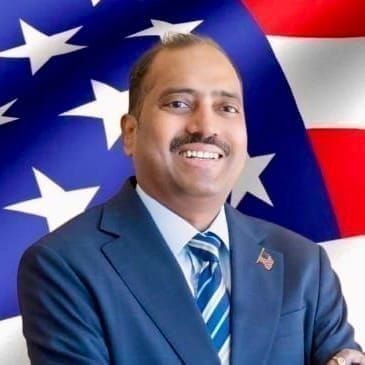
Guest Opinion by Hanu Karlapalem, Democratic Nominee, Alabama State House District 4
Guest Opinion by Hanu Karlapalem, Democratic Nominee, Alabama State House District 4
Drive through Morgan, Limestone, or Madison County and you'll see the signs of growth — new rooftops, new industry, new headlines about jobs coming to North Alabama. What you won't see, unless you go looking, is that one in three households in House District 4 can't actually afford to live here.
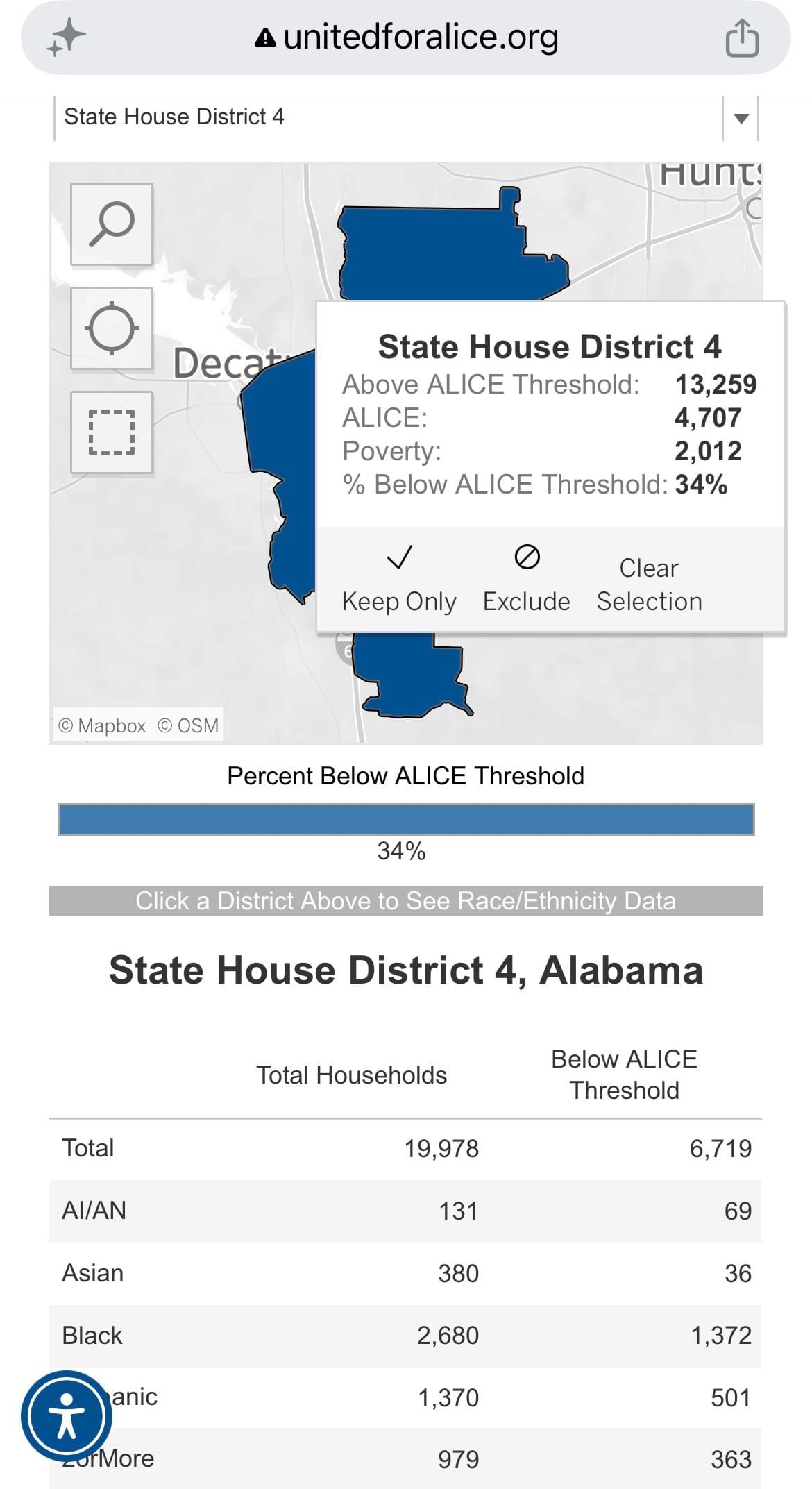
New district-level data from UNITED FOR ALICE — a research initiative tracking financial hardship beyond the federal poverty line — shows that 6,719 of the 19,978 households in HD4, or 34 percent, either fall below the poverty line or earn above it but still can't cover the true cost of housing, childcare, food, transportation, healthcare, and phone and internet access. These aren't people who are out of work. They're teachers. Police officers and firefighters. Retail staff. Health aides. Warehouse workers and skilled tradespeople — the people who keep this district running, priced out of the district they serve.

Editor’s note: ALICE (Asset Limited, Income Constrained, Employed) is a description of those households earning above the poverty level but below the basic cost of living in their communities.
When I first saw this number, I sat with it for a while. Thirty-four percent isn’t just a statistic — it’s thousands of families in Morgan, Limestone, and Madison counties making impossible choices every month. Honestly, it made me sad. It made me angry, too, that so many people are working hard and still falling short through no fault of their own.
This is a number that should stop us. It's also a number that gets misused, so let me be precise about what it says. Financial hardship in HD4 touches every community. Black households face it at a notably higher rate — 51 percent, compared to 31 percent for White households. But because White households make up the largest share of our district, they also make up the largest raw number of families struggling — roughly 4,556 of the 6,719 households below the ALICE threshold, or about 68 percent. Affordability is not a story about any one group. It's a story about this district.
Statewide, an estimated 45 percent of Alabama households fall below the ALICE threshold. HD4's 34 percent is lower than that average — and that's exactly the trap. A comparatively better-off district can still hide real, concentrated struggle in specific neighborhoods and precincts. The average tells you the district isn't in crisis. It doesn't tell you about the family two streets over deciding between the electric bill and the grocery bill this month.
I've spent 26 years building a life and a business in Madison. I know this district isn't poor. I also know it isn't as comfortable as the average suggests, and the people who represent us should be honest about that gap instead of pointing to overall growth numbers and calling it a day.
That's why my campaign is built around one governing test: does this policy make life more affordable for the families who live here? Lower costs. Stronger public schools. Real healthcare. Not slogans — a standard. Every vote, every bill, every dollar of public subsidy should have to answer to it.
This isn't happening in a vacuum. Just weeks ago, I sat through a "Legislative Update," hosted by the Athens-Limestone County Chamber of Commerce at Athens State University, that was less a conversation with constituents and more a stage for Parker Moore and his fellow Republican supermajority leaders to praise one another, with a moderator who helped carry the talking points along. Constituents were made to sit and listen. Not one bill was raised to address the affordability crisis. Not on groceries. Not on utilities. Not on wages. Not one word about the AI data centers already reshaping electricity costs and land use across this district. An hour of self-congratulation, and North Alabama families got nothing that addresses what's squeezing them.
We don’t need four more years of ignoring the constituents and their affordability crisis. House District 4 needs a representative who looks at the 34 percent and treats it as the emergency it is.
This is the problem. In a follow-up piece, I will lay out the pattern behind it — where the money has gone instead — and the solutions I’m running on to fix it.
Source: United For ALICE Legislative District Tool, unitedforalice.org/legislative-district-tool. ALICE Threshold 2024 / American Community Survey 2024.
Hanu Karlapalem is a Madison, Alabama resident of 26 years, small technology business owner, UAH M.S. graduate, and Life Member and former Second Vice President of the Limestone County NAACP. He has been on the frontlines fighting against hate and bigotry, for voting rights and freedoms, and to protect our democracy and the Constitution. He has been married for 31 years and has deep roots in the North Alabama community through civic, professional, and community service. He is the Democratic nominee for Alabama State House District 4 in the November 3, 2026, general election.
For more information: https://www.hanu4alabama.com