
Purdue Becomes First With AI Graduation Requirement
Purdue's new AI competency rule takes effect with this fall's freshmen, signaling a major shift in how colleges prepare students
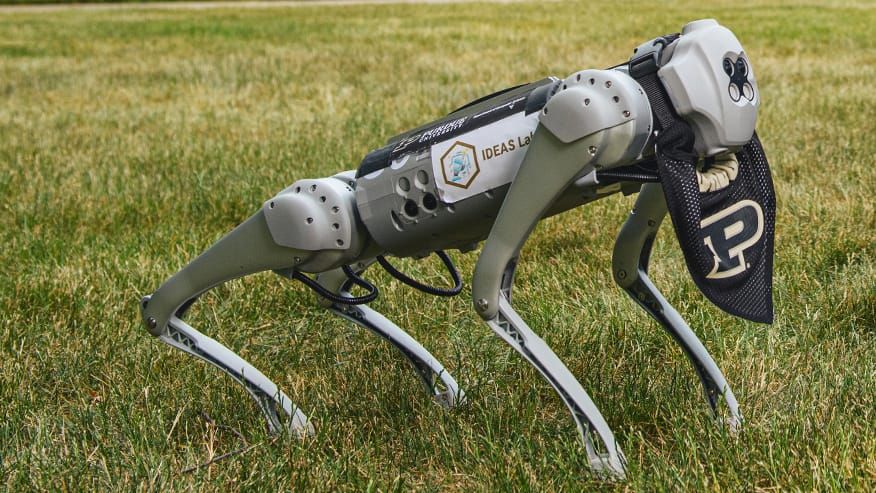
Purdue University is making history this fall as the first major university in the nation to require every incoming undergraduate student to demonstrate competency in artificial intelligence before graduating, a move that many in higher education believe will soon become the national standard.
Although the requirement officially takes effect with students entering Purdue this fall, the policy itself was approved by the university's Board of Trustees in December 2025 as part of the institution's sweeping AI@Purdue initiative. University leaders say the goal is not simply to teach students how to use today's AI tools, but to prepare graduates to work alongside rapidly evolving technologies throughout their careers.
The new "AI working competency" requirement applies to all new undergraduate students at Purdue's West Lafayette and Indianapolis campuses beginning with the Fall 2026 freshman class. Students already enrolled before that date are not required to complete the competency, though they will have access to the same educational resources.
Rather than requiring every student to take a single AI course, Purdue has adopted a discipline-specific model. Each academic college will determine what AI competency looks like within its own field, allowing engineering students, business majors, pharmacists, teachers, writers and scientists to develop AI skills directly relevant to their professions.
"The reach and pace of AI's impact to society, including many dimensions of higher education, means that we at Purdue must lean in and lean forward and do so across different functions at the university," Purdue President Mung Chiang said when announcing the initiative. "AI@Purdue strategic actions are part of the Purdue Computes strategic initiative, and will continue to be refreshed to advance the missions and impact of our university."
Under the program, students will be expected to understand how to use AI tools effectively, recognize their limitations, communicate transparently about AI use, and continue adapting as the technology evolves. Purdue says the competency emphasizes critical thinking as much as technical proficiency. (Office of Research)
To support the rollout, Purdue is launching more than 20 approved AI competency courses spanning disciplines from engineering and computer science to pharmacy, food science, literacy and human development. The university has also introduced AI boot camps and expanded partnerships with industry leaders, including Google, to provide students with hands-on experience using enterprise-grade AI tools.
University officials have repeatedly stressed that the requirement is designed to evolve over time rather than become a static graduation standard.
"The trustees have delegated authority to the provost, working with deans of all academic colleges, to develop and to review and update continuously, discipline-specific criteria and proficiency standards for a new campuswide 'artificial intelligence working competency' graduation requirement," Purdue said in announcing the policy.
The decision reflects a growing belief among educators and employers that AI literacy is becoming as essential as digital literacy became a generation ago. Instead of viewing AI as merely another software application, Purdue is treating it as a foundational workplace skill that graduates in nearly every profession will need to understand.
The policy has already attracted national attention since its approval last December. While some faculty members at universities around the country have questioned how AI instruction should be integrated into existing curricula, Purdue officials argue the competency is intended to strengthen—not replace—critical thinking, research skills and professional judgment.
Whether other universities adopt Purdue's exact model remains to be seen. However, few observers expect the university to remain alone for long.
Just as colleges gradually expanded requirements for computer literacy and digital technology over the past several decades, artificial intelligence is rapidly becoming embedded across nearly every profession. As employers increasingly expect graduates to understand both the capabilities and limitations of AI systems, Purdue's pioneering requirement may prove to be the first step in a broader transformation of higher education.