SCOTUS Strikes Down Campaign Finance Limits
High court rules party spending caps violate the First Amendment, expanding coordination between campaigns and political parties
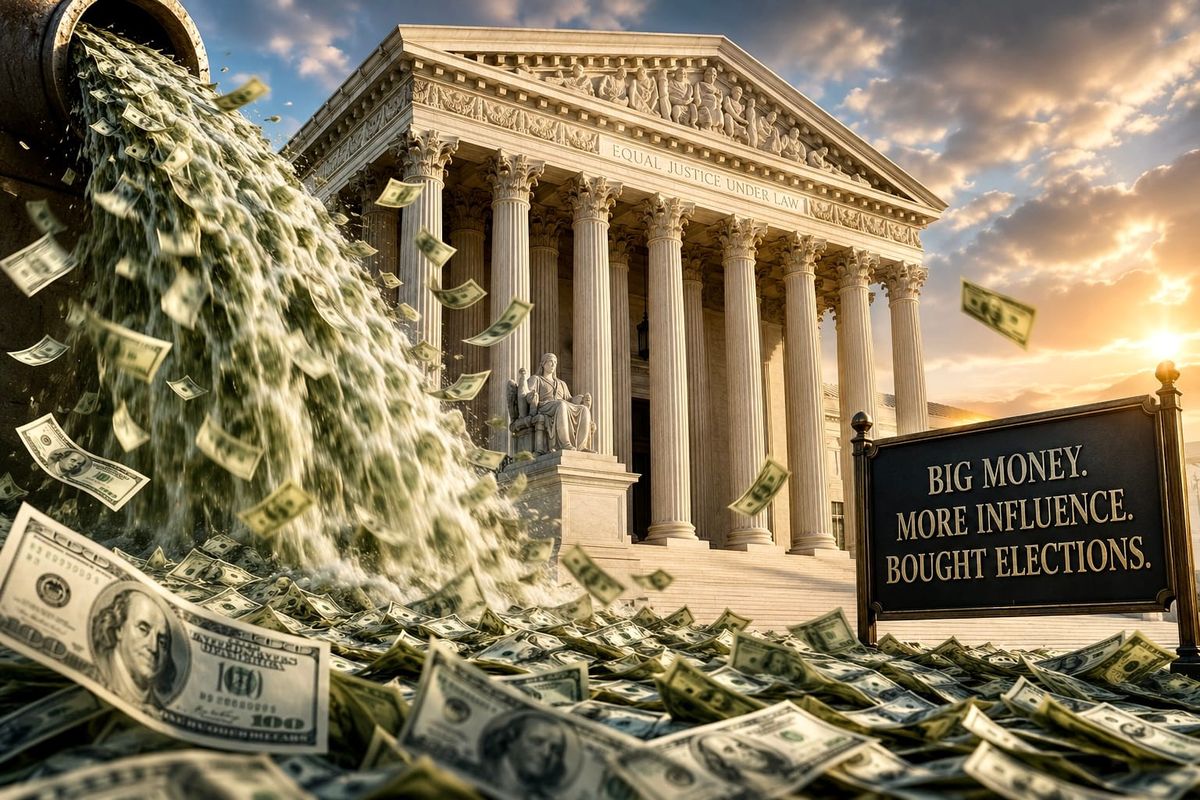
The U.S. Supreme Court has struck down federal limits on coordinated campaign spending between political parties and their candidates, ruling the restrictions violate the First Amendment and marking the latest in a series of decisions that have reshaped campaign finance law over the past two decades.
In a 6-3 decision issued Tuesday, the Court held that federal caps on coordinated expenditures by political parties cannot survive constitutional scrutiny. The ruling came in National Republican Senatorial Committee v. Federal Election Commission, a case brought by Vice President JD Vance, former Congressman Steve Chabot, the National Republican Senatorial Committee and the National Republican Congressional Committee.
Writing for the majority, Justice Brett Kavanaugh concluded that the restrictions infringe on protected political speech.
"Constitutional text, history and precedent establish that the political-party coordinated-expenditure limits violate the First Amendment."
The decision overturns the Court's 2001 ruling in FEC v. Colorado Republican Federal Campaign Committee, which had upheld limits on coordinated spending between political parties and their nominees. Kavanaugh wrote that subsequent First Amendment decisions have undermined the legal foundation of that earlier precedent.
According to analysis by SCOTUSblog, the federal law capped the amount national and State political parties could spend in coordination with their candidates each election cycle. Those limits varied by office and State population. The Court determined those restrictions imposed an unconstitutional burden on core political speech.
The Court's three liberal justices dissented.
Justice Elena Kagan argued the ruling removes an important safeguard against corruption by allowing wealthy donors to route additional money through party committees. She warned the decision "enables donors to bypass contribution limits and fosters corruption."
The ruling drew sharply different reactions from Republicans and Democrats.
President Donald Trump celebrated the decision on Truth Social, calling it:
"A BIG WIN FOR REPUBLICANS and, more importantly, The First Amendment!"

House Republican Campaign Chairman Richard Hudson and Senate Republican Conference Chairman Tim Scott issued a joint statement praising the decision.
"The Supreme Court made clear that the federal government has no authority to place arbitrary limits on how political parties support the candidates they nominate."
Democratic campaign committees countered that the ruling favors wealthy donors and weakens long-standing protections against undue political influence.
Campaign finance experts say the decision represents another significant step in the Supreme Court's decades-long expansion of First Amendment protections for political spending. The Court previously struck down restrictions on independent expenditures in Buckley v. Valeo (1976), corporate independent spending in Citizens United v. FEC (2010), and aggregate contribution limits in McCutcheon v. FEC (2014).
Unlike Citizens United, which dealt with independent expenditures made without candidate involvement, Tuesday's decision removes limits on spending coordinated directly between political parties and the candidates they nominate. Legal analysts expect the ruling to increase the role national and State party organizations play in financing federal campaigns ahead of the 2026 midterm elections.
The full ruling in NATIONAL REPUBLICAN SENATORIAL COMMITTEE ET AL. v. FEDERAL ELECTION COMMISSION ET AL. may be read at THIS LINK.