SCOTUS Upholds State Bans on Transgender Athletes in Girls' Sports
High Court backs State laws limiting girls' sports by biological sex, reinforcing Alabama's existing protections for female athletes
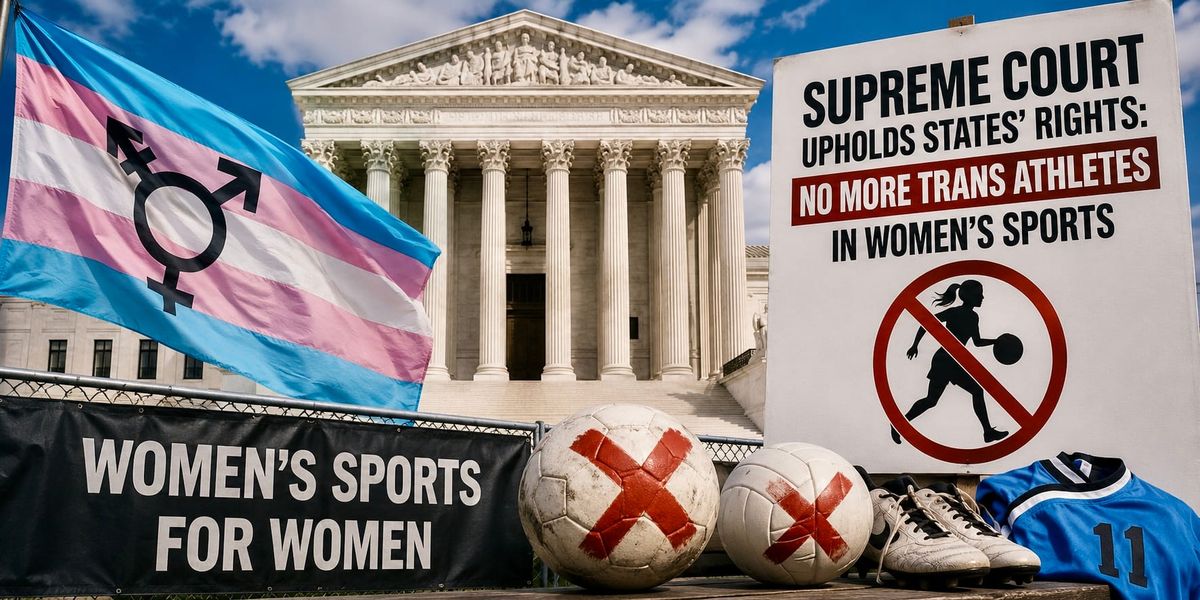
The U.S. Supreme Court handed supporters of women's sports a major legal victory Tuesday, ruling that States may restrict girls' and women's athletic teams to biological females without violating the U.S. Constitution or Title IX.
In a 6-3 decision, the Court upheld laws enacted by Idaho and West Virginia that require school athletic teams designated for females to be limited to biological girls and women. Writing for the majority, Justice Brett Kavanaugh concluded that Title IX permits schools to maintain separate athletic teams based on biological sex and that the States' laws satisfy constitutional equal protection requirements.
The ruling is expected to strengthen similar laws already on the books in more than half the States, including Alabama, where lawmakers approved one of the nation's earliest protections for girls' sports in 2021 before expanding those protections to public colleges and universities in 2023.
The decision resolves challenges to Idaho's Fairness in Women's Sports Act and West Virginia's Save Women's Sports Act, both of which had been blocked in part by lower courts after lawsuits brought by transgender students.
The Supreme Court reversed those rulings, holding that states have a legitimate interest in preserving fair athletic competition and maintaining separate sports teams based on biological sex.
Alabama lawmakers anticipated Tuesday's outcome years ago.
In 2021, Governor Kay Ivey signed House Bill 391, requiring K-12 public school athletes to compete according to their biological sex. Two years later, she signed House Bill 261, extending those requirements to public colleges and universities.
When signing the college athletics measure in 2023, Ivey declared:
"Look, if you are a biological male, you are not going to be competing in women's and girls' sports in Alabama. It's about fairness, plain and simple."
She also said at the time:
"We believe there are two genders: male and female, period. Girls deserve to compete fairly, without the threat of biological males dominating their sports."
Because Alabama's statutes already align with the constitutional framework endorsed Tuesday by the Supreme Court, State law is expected to remain unchanged.
Alabama's congressional delegation has consistently backed legislation restricting women's sports to biological females.
U.S. Senator Katie Britt has repeatedly argued that women's athletics should remain protected under Title IX.
Earlier this year, after Senate Democrats blocked federal legislation similar to Alabama's law, Britt said:
"I will continue fighting to ensure girls and women have the opportunity to compete safely and fairly."
In 2024, Britt joined more than 20 Republican senators in urging the NCAA to adopt policies limiting women's competition to biological females.
U.S. Sen. Tommy Tuberville has been among Congress' most outspoken advocates on the issue. He introduced federal legislation defining sex under Title IX according to biological sex at birth and has repeatedly argued that female athletes deserve a level playing field. His bill stalled in the Senate earlier this year despite support from Senate Republicans.
Alabama Attorney General Steve Marshall has likewise defended the State's sex-based laws in multiple legal disputes involving gender identity, arguing that Alabama has a compelling interest in protecting women's athletics and preserving legislative definitions of biological sex.
Tuesday's ruling is expected to influence ongoing litigation involving similar laws across the country.
According to the Court, Title IX's authorization for separate teams for males and females allows States to define eligibility according to biological sex without violating federal anti-discrimination law. The majority also concluded that the challenged laws satisfy the Equal Protection Clause because they advance legitimate governmental interests in fairness and athletic opportunity for female competitors.
The Court's three liberal justices dissented in part, arguing that the ruling improperly foreclosed claims brought by the student-athletes challenging the laws.
The decision marks one of the Supreme Court's most significant rulings involving transgender rights since its 2020 decision interpreting Title VII employment protections. It also represents another victory for States like Alabama that have enacted legislation distinguishing athletic participation by biological sex.
The Court’s ruling may be read in full at THIS LINK.