Strong Military Vetting Measure Passes House
House backs Rep. Dale Strong's TRUST Act amendment to bar military service by nationals of key U.S. adversaries
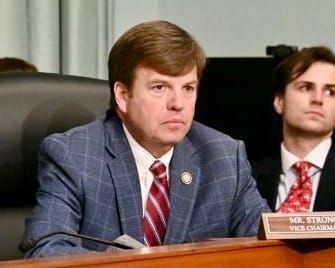
A national security measure championed by U.S. Representative Dale Strong (R-AL-05) cleared the House on Tuesday as part of the Fiscal Year 2027 National Defense Authorization Act (NDAA), advancing stricter limits on military service by foreign nationals from countries considered adversaries of the United States.
The House approved the FY2027 NDAA, H.R. 8800, on a largely party-line vote, sending the annual defense policy bill to the Senate for consideration. Included in the package was Strong's Targeted Restrictions Upholding Service Trustworthiness (TRUST) Act, which he introduced earlier this year to tighten military screening and enlistment standards for nationals of China, Russia, Iran and North Korea.
The TRUST Act addresses gaps in the Department of War's vetting process for foreign nationals seeking to serve in the U.S. Armed Forces.
"Foreign nationals from adversary countries such as China, Russia, Iran, and North Korea serving in our military pose a serious risk to our armed forces, including espionage, sabotage, and the compromise of sensitive military technologies. The TRUST Act closes these gaps, puts national security first, and ensures that the U.S. military, defense capabilities, and sensitive technologies are secure," Strong said.
The provision would:
- Ban the enlistment of foreign nationals from China, Russia, Iran and North Korea.
- Require officer candidates to have been free of citizenship in a covered nation for at least five years before receiving a commission.
- Direct the Department of War to identify current service members who are foreign nationals from those countries.
Strong said the measure is intended to reduce the risk of espionage and protect sensitive military programs from hostile foreign governments.
"Our adversaries are actively targeting our military technologies and capabilities. This measure will ensure our Armed Forces are secure, trusted, and committed to defending the United States," Strong said. "I am grateful to Chairman Mike Rogers for his support of my legislation and its inclusion in the NDAA, and I thank my colleagues for voting to pass this critical piece of legislation."
Strong first introduced the TRUST Act in May, arguing that existing law left the military vulnerable to infiltration by individuals with ties to governments hostile to the United States. The proposal was backed by House Armed Services Committee Chairman Mike Rogers (R-AL-03), whose committee incorporated the language into the FY2027 NDAA during its consideration of the defense bill.
The NDAA authorizes defense policy and programs for the coming fiscal year but must still be reconciled with the Senate's version before it can be sent to the President for his signature.