
The Tuberville Timeline
“Ya’ll know I love a good timeline” — Guest Opinion by Whitney Scapecchi
Guest Opinion by Whitney Scapecchi
I’ve seen a lot of debate over the last severaldays. I’ve also seen a lot of people in comment sections—whether on social media posts or under online news articles—either talking past each other or simply refusing to look at the entire picture.
AL.com, Lagniappe, and others have released some key pieces of information this week. Much of it wasn’t necessarily brand-new information by itself. The significance is that the recent reporting added dates, filings, and residency claims that allow a much clearer timeline to be built.
And y’all know I love a good timeline.
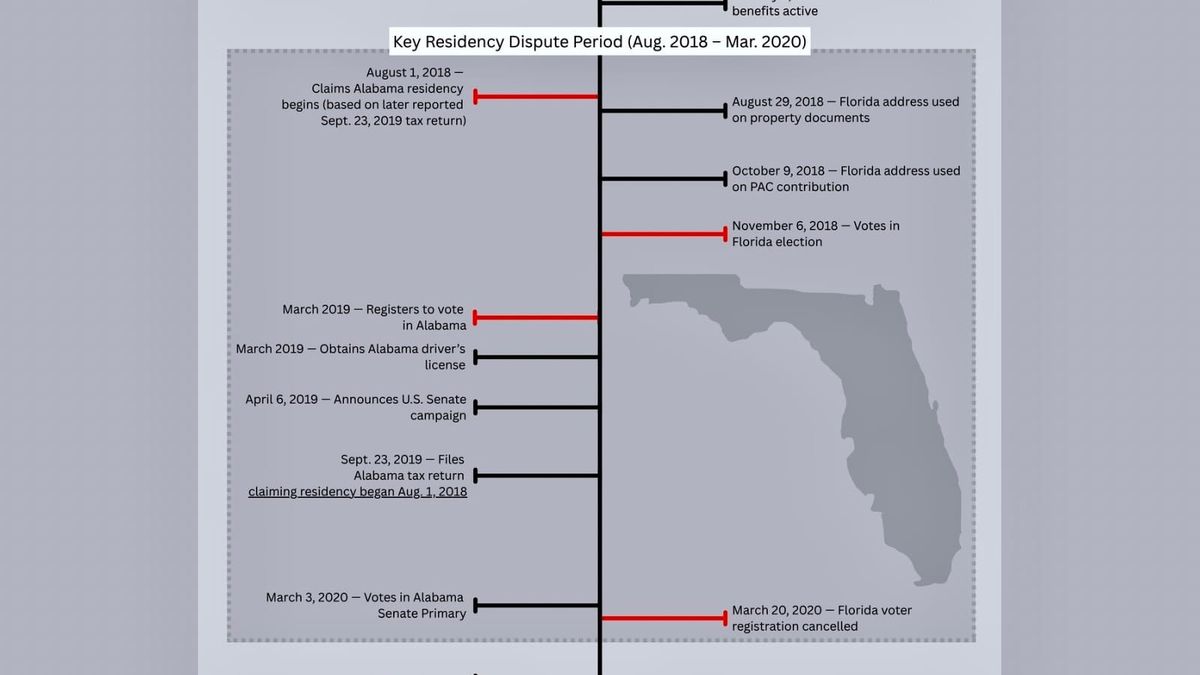
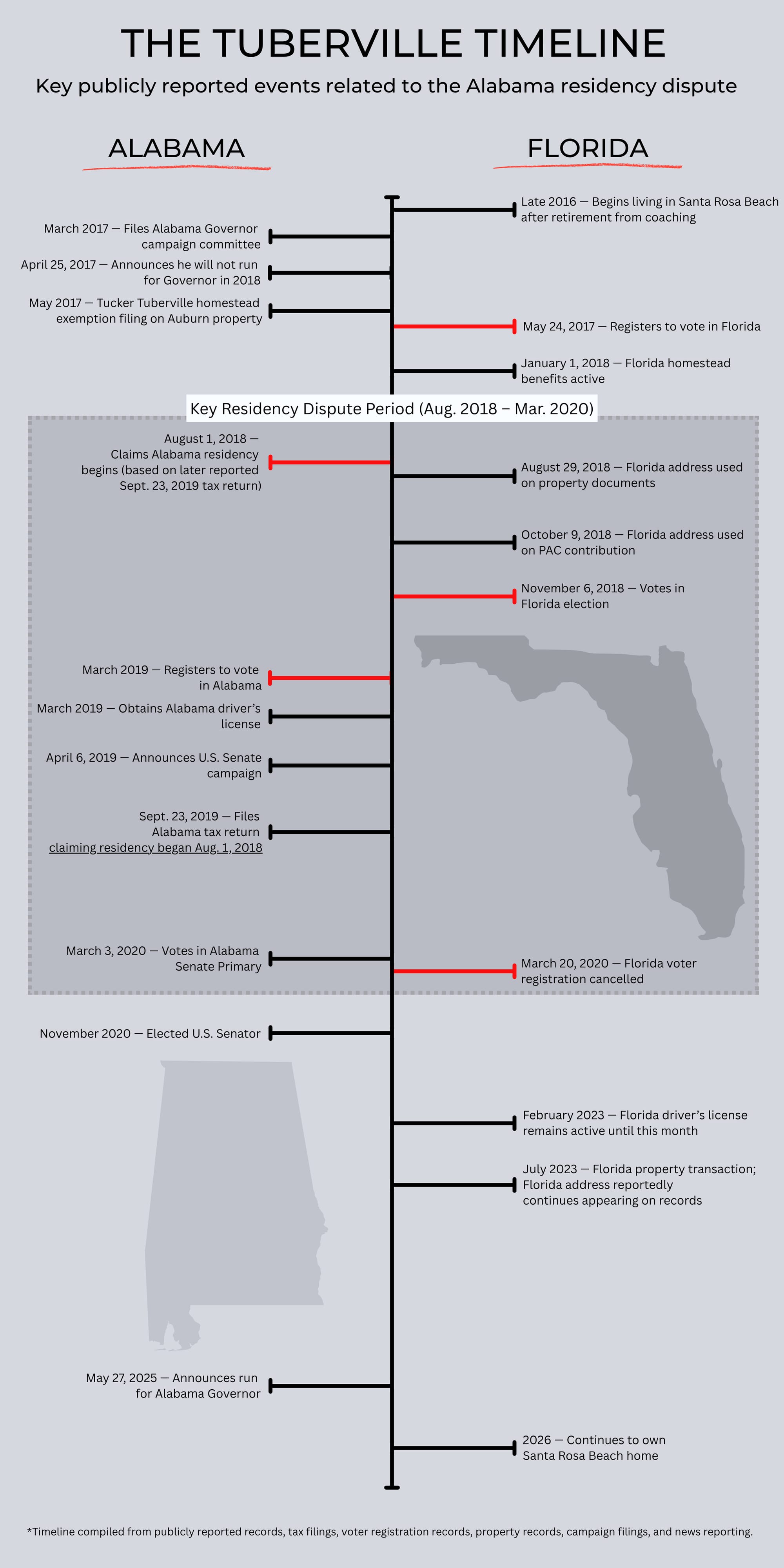
So I took the publicly reported records, tax filings, voter registration records, property records, campaign filings, and recent reporting and put them into one visual chronology. (See below)
To be clear, this graphic doesn’t tell anyone what conclusion to reach. It simply places publicly reported events in date order.
Sometimes a single document is the story. Sometimes the story is what happens when years of records are finally laid side-by-side and read from top to bottom.
I’ve already seen the response: “We already knew all of this.”
In many cases, that’s true. Most of these records didn’t suddenly appear this week. Many have been publicly available for years. What the recent reporting did was provide additional context, additional dates, and additional claims that allow those records to be viewed together rather than in isolation.

What struck me most while following the reporting wasn’t any single record. It was how often conversations seemed to focus on one date while ignoring another, or one document while overlooking the broader sequence of events.
That’s understandable. Most people don’t have the time to read every article, review every filing, or compare years of records side by side.
That’s exactly why timelines are useful.
They don’t replace reporting. They don’t answer legal questions. They don’t determine qualification or disqualification. What they do is organize information in a way that allows the public to see the sequence for themselves.
A voter registration record, a driver’s license record, a tax filing, or a property document can each tell part of a story on their own. When those records are viewed together in chronological order, however, they provide a broader picture of why questions are being asked and why this issue has become the subject of so much public debate.
Reasonable people can look at the same timeline and reach different conclusions. That’s their right.
My goal isn’t to tell anyone what to think about Tommy Tuberville, the residency challenge, or the outcome of the dispute. My goal is much simpler: put the dates in order, put the records in one place, and allow people to examine the chronology for themselves.
Then let the facts—and the timeline—speak.
The above was originally published on Facebook, and is reprinted here with the permission of the author.
Whitney Scapecchi is an investigative journalist and the founder of Southern Freedom Press, the written arm of Southern Freedom Society.
For more information on Scapecchi, follow her on Facebook.
Opinions do not reflect the views and opinions of ALPolitics.com. ALPolitics.com makes no claims nor assumes any responsibility for the information and opinions expressed above.