Trump Order Targets Transfer Portal, Eligibility Limits
Trump moves to rein in NCAA chaos with limits on transfers and eligibility, echoing Tommy Tuberville’s push for federal reform
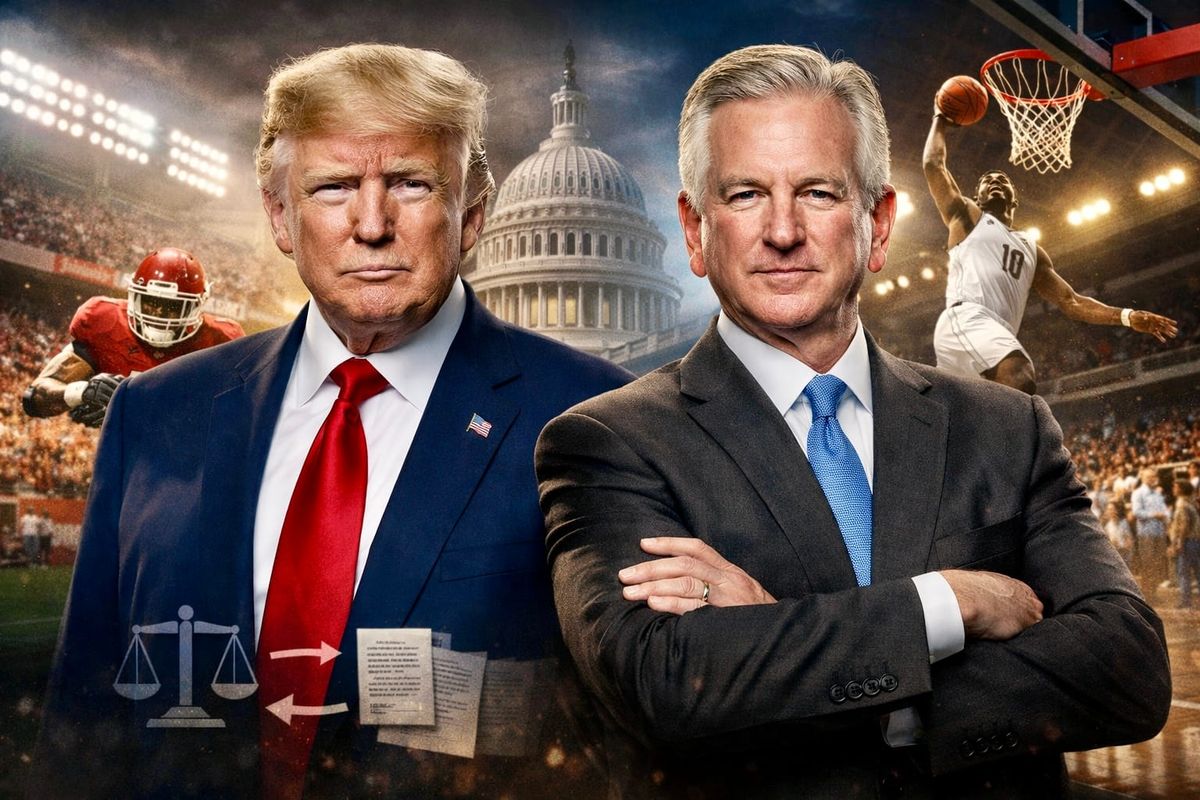
President Donald Trump has taken direct aim at the fast-moving world of college athletics, signing an Executive Order (EO) that seeks to impose new limits on how long athletes can compete and how often they can transfer.
The EO, announced Friday, directs the NCAA to adopt rules capping athletes at a five-year eligibility window and allowing only one transfer without penalty before graduation.
Under the proposal, schools that fail to comply could risk losing federal funding — an enforcement mechanism the administration has increasingly used in other policy areas.
In a White House statement, the administration framed the move as a necessary step to restore order to a system strained by rapid change.
“College sports cannot function without clear, agreed-upon rules concerning pay-for-play and player eligibility that can't be endlessly challenged in court,” the White House said.
The Order arrives at a time when college sports are still adjusting to the ripple effects of recent court rulings and the expansion of Name, Image, and Likeness (NIL) compensation.
Since a 2021 Supreme Court decision weakened the NCAA’s enforcement power, athletes have gained broad freedom to transfer and earn income. The result has been a surge in transfer portal activity and growing concerns from coaches and administrators about roster instability and competitive balance.
Trump’s Order attempts to reverse some of that momentum by tightening eligibility rules and limiting player movement—two of the most debated issues in the current landscape.
Still, legal experts have already raised concerns about whether the EO can withstand court challenges, with some predicting it could be ruled unenforceable.

The Order closely mirrors legislation recently introduced by U.S. Sen. Tommy Tuberville (R-AL), who has been outspoken about what he calls “chaos” in college sports.
“College athletics used to be about education, now it’s sadly all about making money,” said Sen. Tuberville. “We can’t be having 25-year-old ‘students’ who graduated three years ago still competing in the NCAA. With my bill, a student-athlete gets five years to get their education, compete, and then move on. We also have to make sure students are getting a good education, which won’t happen if they are transferring every year. I’m all for student-athletes making money, but we have to create some national guidelines as the current system is broken. I look forward to working with my colleagues to get this commonsense bill across the finish line.”
Tuberville’s bill seeks to bring federal structure to NIL deals and the transfer portal, with an emphasis on limiting frequent transfers and restoring stability to team rosters. In public remarks, he has argued the current system is unsustainable and undermines both programs and athletes.
“I’m sick of that,” Tuberville said of the current transfer environment, calling for stronger guardrails and national standards.
His proposal goes further than the EO in some areas, including broader NIL regulation and clearer federal preemption over State laws.
At their core, both efforts reflect a shared concern: that college athletics has moved too far, too fast.
Common ground includes:
- Limiting athlete transfers to restore roster stability
- Establishing clearer national eligibility standards
- Reining in NIL practices viewed as “pay-for-play”
- Calling for federal involvement after years of NCAA gridlock
Both Trump and Tuberville also argue that unchecked spending in football and basketball could threaten funding for Olympic and women’s sports — a concern echoed in the White House fact sheet.
The key difference between Trump’s EO and Tuberville’s bill lies in authority and durability.
Trump’s EO is an immediate directive, but one that relies on federal agencies and the NCAA to act — and one that may face swift legal challenges.
Tuberville’s bill, by contrast, would require congressional approval but could provide a more permanent framework if passed.
In short:
- Trump’s order is faster, but uncertain in court
- Tuberville’s bill is slower, but potentially more durable
The EO itself acknowledges that reality, urging Congress to step in with legislation to “seal the deal” on reforms already under discussion.
For now, the EO sends a clear signal: Washington is no longer content to let college sports regulate itself.
Whether that signal turns into lasting policy will depend less on executive action and more on whether Congress—after years of stalled efforts—can finally agree on a path forward.
The President’s Executive Order may be found at THIS LINK, with the Fact Sheet HERE.
Sen. Tuberville’s bill may be found at THIS LINK.