Trump Slashes Biden-Era Fuel Economy Mandates
New rules cut the 2031 fleet target from 50.4 mpg to 34.9 mpg as Trump rolls back another key part of Biden’s EV push
TL;DR: The Trump administration has sharply cut Biden-era fuel economy rules for cars and light trucks. The new standard calls for a fleetwide average of about 34.9 mpg by 2031, down from the 50.4 mpg projected under Biden’s rules. The administration says the move will cut the average price of a new vehicle by $1,300 and give buyers more choice. Critics say Americans will burn more gas and pay more at the pump over the life of their vehicles.
President Donald Trump has taken another large bite out of former President Joe Biden’s auto and electric vehicle agenda.
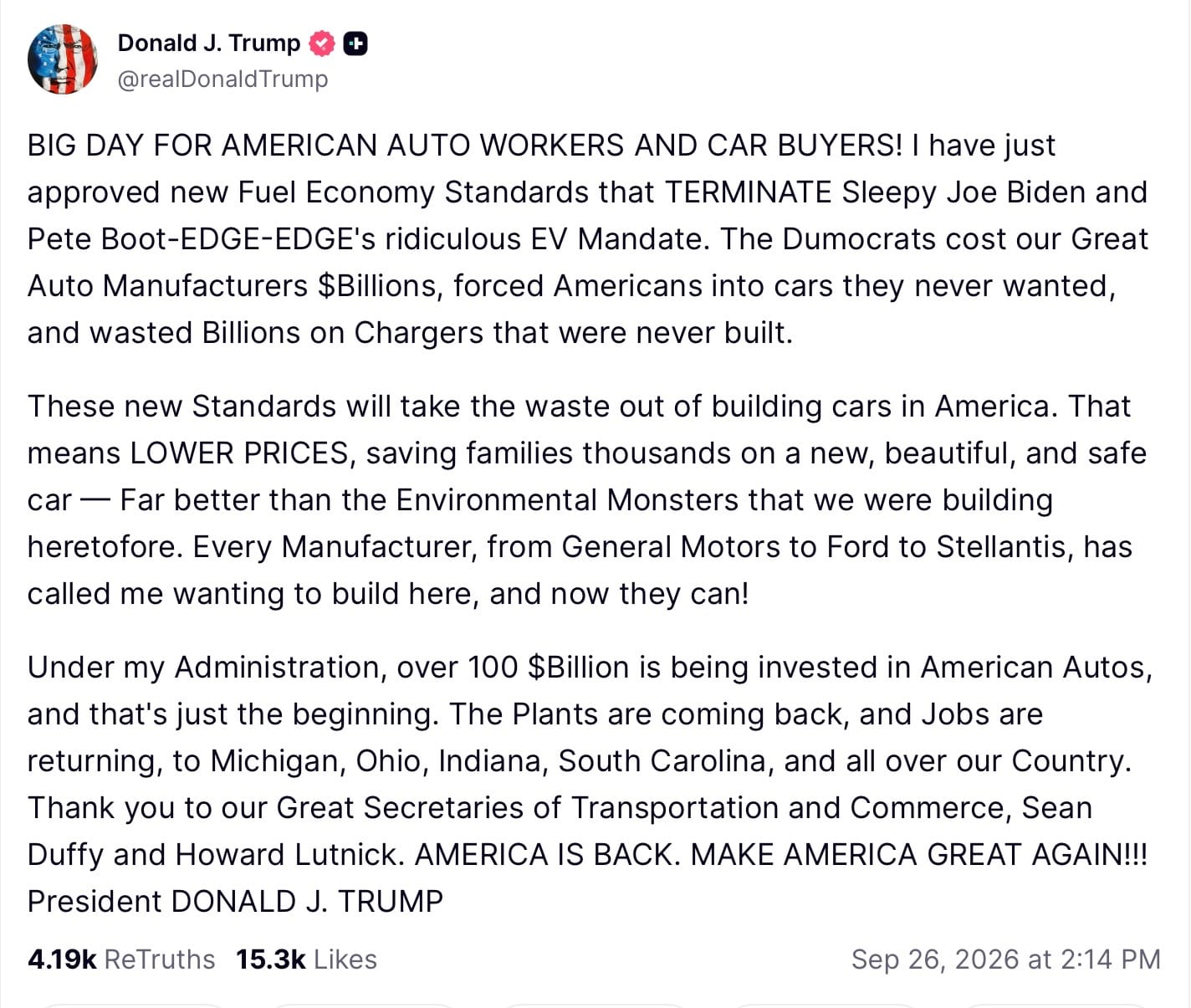
The Trump administration on Monday finalized new federal fuel economy standards that sharply reduce how fast automakers must improve gas mileage through the 2031 model year.
The move follows the administration’s announcement over the weekend that Trump had approved a major rollback of Biden-era vehicle standards.
Under the final rule, the federal government estimates the combined industry fleetwide average for passenger cars and light trucks will reach about 34.9 miles per gallon in model year 2031. Under the Biden-era rules, the projected figure was 50.4 mpg.
That is a major shift in federal auto policy.
The Biden administration had required fuel economy gains of 8% per year for passenger cars in model years 2024 and 2025 and 10% in 2026. Later standards called for further gains through 2031. Those rules were part of a broader federal effort to cut oil use and greenhouse gas emissions while pushing the auto market toward EVs.
In 2022, the Biden administration's National Highway Traffic Safety Administration said its standards would bring the industrywide fleet average to about 49 mpg as early as model year 2026.
Trump has taken a very different course.
The new rule, dubbed the “Freedom Means Affordable Cars” initiative by the administration, slows the required rise in fuel economy and gives automakers far more room to sell gas-powered cars, SUVs and pickups without relying as heavily on EVs to meet federal fleet targets.
“Thanks to President Trump’s leadership, we have finally ended the illegal mandate that forced automakers to produce more expensive electric vehicles that American families didn’t want,” Transportation Secretary Sean Duffy said when the rule was released.
Strictly speaking, Biden did not impose a federal rule requiring consumers to buy EVs or automakers to sell a fixed share of them. His administration instead used increasingly strict fuel economy and emissions standards that made EVs one way for manufacturers to meet fleetwide requirements. Biden also set a nonbinding goal for electric vehicles to make up half of new vehicle sales by 2030.
Trump and his officials have long called that broader policy an “EV mandate.”
The administration says relaxing the rules will make new cars cheaper.
According to the U.S. Department of Transportation, the final rule is expected to reduce the average cost of a new vehicle by about $1,300 and save Americans about $138 billion over the next five years. Those are administration estimates and depend on assumptions about vehicle prices, sales and other costs.
Automakers largely welcomed the change.
“NHTSA made the right call to better align fuel economy standards with the law and current market conditions,” Alliance for Automotive Innovation President John Bozzella said.
Bozzella said the Biden standards “effectively required a switchover to electric vehicles that was out of step with market realities and customer demand. Today’s final rule is an appropriate course correction.”
Ford, General Motors and Stellantis also issued statements welcoming the administration’s move or its goal of bringing federal standards closer to current market demand.
There is, however, another side to the math.
Looser mileage standards mean vehicles can burn more gasoline. Before the final rule was issued, the Transportation Department estimated its proposed rollback would result in roughly 100 billion additional gallons of fuel being consumed through 2050, about $185 billion in added fuel spending, and roughly a 5% increase in carbon dioxide emissions compared with the Biden standards.
Former Transportation Secretary Pete Buttigieg attacked the rollback on those grounds.
“Lowering standards will accelerate what [Trump] has already been doing: handing the clean tech future to China and forcing Americans to pay more at the pump,” Buttigieg said.
The timing makes that argument especially notable. Gasoline prices have risen sharply amid the war with Iran and disruptions to global oil supplies.
The fuel economy rollback is also only one piece of Trump’s broader reversal of Biden-era auto policy.
In February, the Environmental Protection Agency rescinded the 2009 greenhouse gas “endangerment finding” and repealed federal greenhouse gas standards for highway vehicles. The administration has also moved to delay other Biden-era vehicle pollution rules, while Congress and Trump have eliminated several federal policies that favored EV adoption.
For car buyers, the tradeoff is fairly clear.
Trump’s rule reduces the federal pressure on automakers to build ever more fuel-efficient fleets and gives them more freedom to keep producing the gas-powered trucks, SUVs and cars that remain popular with many buyers. The administration argues that means lower sticker prices and more consumer choice.
But less efficient vehicles also use more fuel. Whether buyers ultimately save money will depend not just on what they pay at the dealership, but on what gasoline costs during the years they own the vehicle.
For now, one thing is certain: Washington’s attempt to use fuel economy rules to force a shift toward electric vehicles — which most American’s don’t want — has been sharply scaled back.