UA DEI Official Caught in “Workaround” Claims
Undercover report alleges UA DEI staff described exploiting “holes” in Alabama’s SB129 ban to continue restricted programs
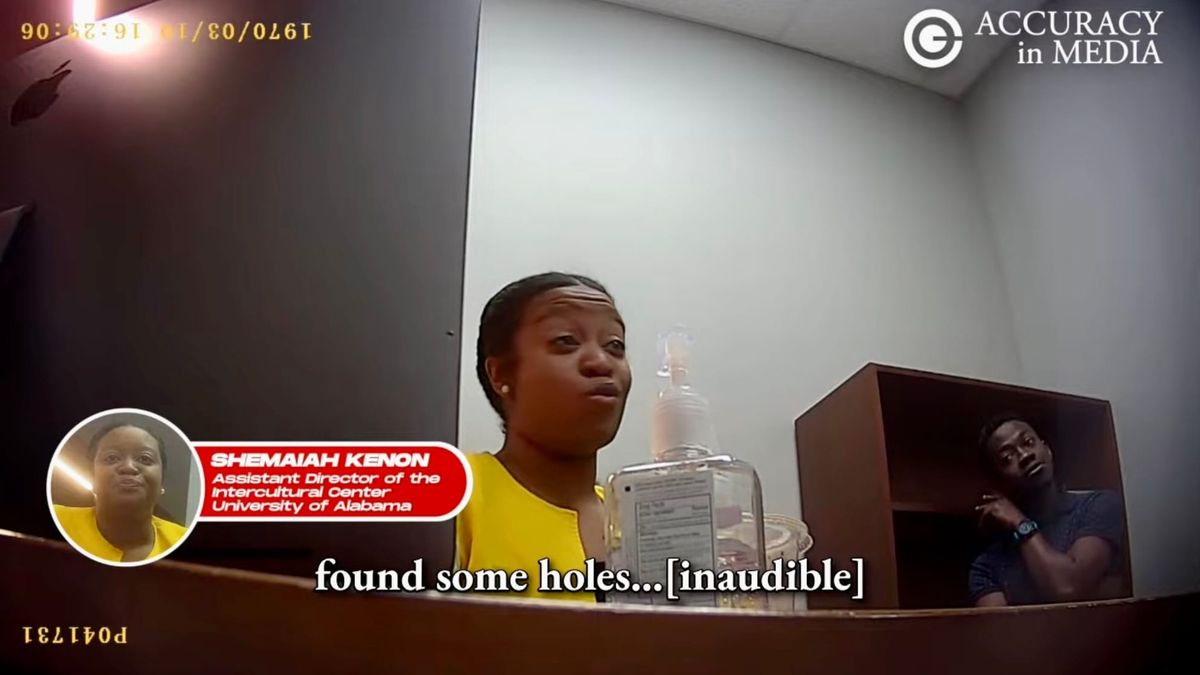
An undercover investigation released June 8, 2026, is putting new pressure on the University of Alabama, after a campus DEI official was recorded describing what the report characterizes as deliberate efforts to work around the State’s 2024 ban on diversity, equity, and inclusion programs.
The findings, published by Accuracy in Media (AIM), allege that DEI-related activity at the University may not have simply faded in response to Alabama’s SB129 law, but instead might have been reshaped in ways that preserve core functions while avoiding formal labels that would trigger enforcement.
SB129, signed into law in October 2024, prohibits public universities from maintaining DEI offices, funding DEI programs, or requiring DEI-related training. The law was designed to eliminate institutional favoritism and identity-based programming in State higher education. Critics, meanwhile, have argued it is broadly written and difficult to enforce in practice. The statute remains in effect while related legal challenges move through federal court, including ongoing litigation over its constitutionality and scope.
Against that backdrop, AIM’s undercover recordings claim to show how University staff adapted to circumvent both the letter and the spirit of SB129.
According to AIM’s report, an individual involved in DEI programming at the University of Alabama described navigating what they saw as weaknesses in the law’s structure. The official is quoted in the report as having “bragged about finding holes in the system” that allowed DEI-related work to continue in modified form, despite State restrictions.
The report further alleges that rather than halting DEI efforts outright, programs were being restructured and rebranded in ways that made them less visible to oversight. In another quoted passage cited by AIM, the official suggested that DEI work had not ended but had been adjusted in presentation, stating it was continuing “without calling it that anymore.”
The official can be heard on the video saying “When I read the draft of the bill, people were calling me like, ‘This is blasphemy.’ I said it’s actually stupid because I found some holes.” The official continued, stating “Most of our faculty and staff are progressive. It’s always the ones you least likely expect to be progressive.”
Taken together, the comments are presented by AIM as evidence that at least some University personnel viewed SB129 not as a hard stop on DEI activity, but as a compliance challenge to be managed through language shifts and administrative restructuring rather than full elimination of programs, as the University reported doing in 2024.
The investigation argues this approach undermines the intent of the law, even if it may operate within its technical boundaries. Critics of DEI programs have long warned that institutional frameworks can be re-labeled or absorbed into other offices while maintaining similar functions. AIM’s report claims the University of Alabama case fits that pattern, pointing to what it describes as continued DEI-adjacent activity under alternate naming structures.
The investigation reportedly occurred under the administration of previous University of Alabama President Stuart Bell, who is now under consideration to become the next President of the University of Florida. The AIM report concludes with a Call To Action, urging interested persons to “Take action at SaveUF.com, where you can send one message which goes to each of the trustees of the University of Florida. It will also go to Alabama’s Attorney General.”
The report points out that, “For Alabama taxpayers and lawmakers who believed DEI had been removed from public universities, these comments tell a different story. Now, as Stuart Bell seeks the Presidency of the University of Florida, Floridians should examine the culture that flourished under his leadership in Alabama—and ask whether they want the same approach imported into their University system.”
AIM, which has conducted similar undercover investigations at public universities nationwide, says its goal is to test whether institutions are complying not just with the letter of State law, but with its intended purpose. In this case, the group frames the recorded remarks as evidence of internal acknowledgment that compliance is being achieved through semantic adjustments rather than structural change.
The University of Alabama has not issued a detailed public response addressing the specific recordings or claims highlighted in the June 8 report. As of this writing, the allegations remain unverified beyond the materials released by AIM, and no court has ruled on the specific conduct described in the investigation. Additionally the report does not specify when the undercover video was made, but AIM has informed ALPolitics.com that the video was made in November, 2024.
Still, the report is likely to intensify scrutiny of how SB129 is being implemented across Alabama’s public university system, particularly as lawmakers and legal challengers continue to debate whether institutions are fully complying with the law or adapting around it.
Alabama’s Senate Bill 129 (SB129), enacted in 2024, prohibits DEI offices, DEI programming, and mandatory DEI-related training within public universities and State agencies. The law also restricts instruction and institutional activity tied to what it defines as “divisive concepts,” a term that has been central to ongoing legal and political debate over the statute’s reach.
Since taking effect in October 2024, SB129 has forced public institutions across Alabama to re-evaluate student programs, hiring structures, and administrative offices to ensure compliance. Universities have been required to discontinue or restructure initiatives that could be interpreted as falling under the law’s DEI restrictions.
The statute is currently being challenged in federal court in Simon v. Ivey, where plaintiffs—including faculty members, students, and civil rights organizations—argue that SB129 violates First and Fourteenth Amendment protections. They contend the law is overly vague and creates uncertainty about what types of speech, teaching, and programming are permitted in public universities.
In 2025, a federal court declined to issue a preliminary injunction that would have temporarily blocked enforcement of SB129 while litigation proceeds, meaning the law remains active during ongoing judicial review.
As a result, Alabama’s public universities continue operating under SB129’s restrictions, even as courts have yet to deliver a final ruling on its constitutionality.
The AIM undercover video may be seen on YouTube and below: