Alabama, Kentucky Urge SCOTUS to Hear Florida DEI Case
A 13-State brief backs Florida’s classroom limits as Alabama defends its own DEI ban before the 11th Circuit
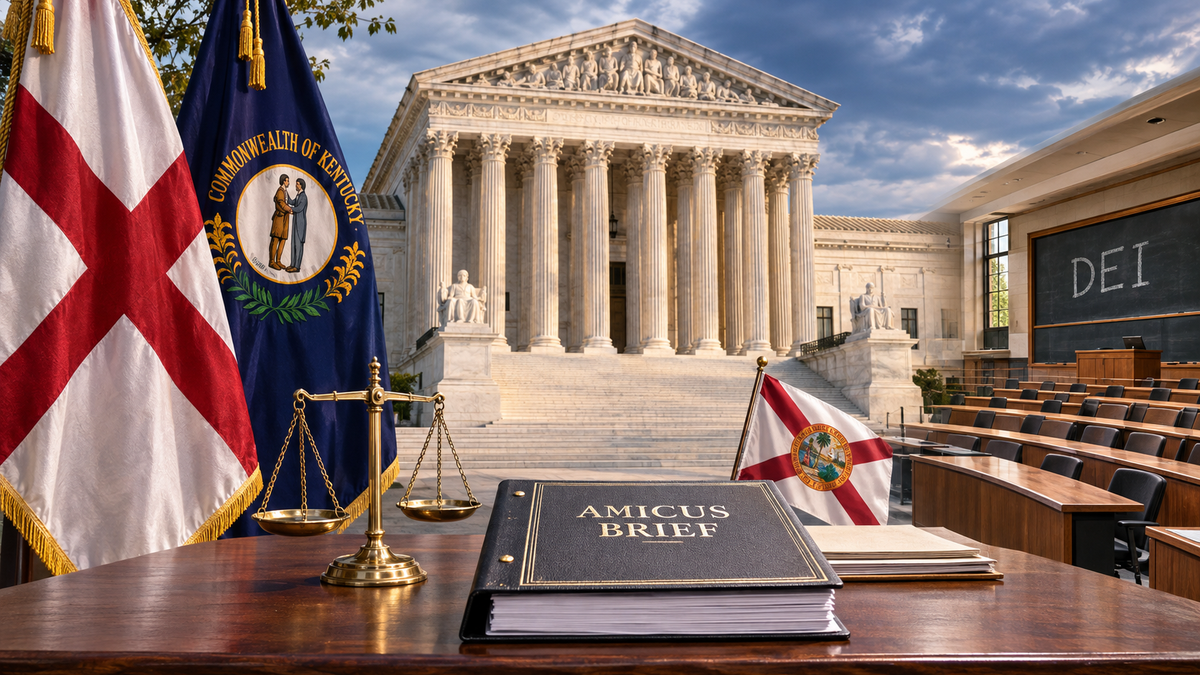
TL;DR: Alabama and Kentucky are leading 13 States in asking the Supreme Court to review a ruling blocking Florida’s limits on race- and sex-based teaching at public universities. The dispute could shape Alabama’s defense of its own anti-DEI law, which remains in effect during its ongoing appeal.
Alabama is taking its fight over DEI in public universities to the U.S. Supreme Court, joining Kentucky to lead a 13-State brief backing Florida’s limits on what professors may promote in class.
Attorney General Steve Marshall announced the effort Nov. 10. The States’ brief, filed Nov. 9, asks the justices to hear Florida Board of Governors v. Pernell and reject the lower court’s view of professors’ First Amendment rights.
Alabama has a direct stake in the Florida case. Its own anti-DEI law faces a challenge before the same appeals court — the 11th Circuit — that blocked Florida’s classroom restrictions.
“Academic freedom is a vital principle, but not a trump card,” Marshall said in the brief.
The Florida case concerns the State’s Individual Freedom Act, often called the Stop WOKE Act. It bars public university instruction that promotes or compels belief in eight listed concepts about race, sex and related traits. Among them are claims that one race or sex is morally superior, or that people are inherently racist or sexist because of those traits.
The law allows discussion of those concepts within a broader course when taught in an objective way without endorsement. Its reach extends beyond forcing a student to agree: it also restricts what instructors may themselves promote.
On July 7, the 11th U.S. Circuit Court of Appeals upheld a preliminary injunction against the challenged provisions. The majority found the professors were likely to succeed on their First Amendment claims. It rejected Florida’s argument that paying professors gives the State full control over their classroom speech.
The court still recognized the power of universities to set course content and enforce sound teaching standards. It found Florida’s broad ban on certain viewpoints went further than that.
Alabama and Kentucky argue the court drew the wrong line.
Their brief relies on Garcetti v. Ceballos, the 2006 Supreme Court ruling that generally excludes public employees’ official-duty speech from First Amendment protection. That ruling left open how the rule applies to scholarship and teaching.
The States want that question answered. They contend professors should face the same rule as other public workers when speaking as part of their jobs. They also argue that State laws and campus policies can protect academic freedom without treating it as a distinct federal right for professors’ official speech.
Kentucky Attorney General Russell Coleman joined Marshall in leading the filing. Arkansas, Georgia, Idaho, Indiana, Iowa, Kansas, Louisiana, Montana, Nebraska, South Carolina and Texas also signed onto the brief.
In Alabama, the dispute centers on Senate Bill 129, which took effect Oct. 1, 2024. It bars covered public entities from sponsoring DEI programs or maintaining offices that promote them. It also limits compelled assent to listed divisive concepts.
The law includes an exception for teaching or discussing those concepts as part of a larger academic course, provided instructors do not compel assent with their views. It also permits discipline, including dismissal, for employees who violate the act.
As ALPolitics.com reported, State officials sought dismissal of the challenge in March 2025, arguing the plaintiffs lacked standing and had not shown a breach of their rights.
The case, Simon v. Ivey, includes faculty, students and the Alabama State Conference of the NAACP. After a district court denied preliminary relief, the plaintiffs appealed. The Legal Defense Fund says their claims include viewpoint-based censorship, vague language and harm to student groups. The law remains in force while the case proceeds.
A separate issue is whether universities have found ways to work around the ban.
ALPolitics.com’s June report covered Accuracy in Media’s undercover work alleging that University of Alabama personnel preserved DEI work through changes in names and structure. AIM told ALPolitics.com that their hidden camera video footage was recorded in November 2024. The report noted that the allegations had not been verified beyond AIM’s materials and that no court had ruled on the conduct described.
In a later ALPolitics.com interview, AIM President Adam Guillette argued that Alabama’s law was too weak and urged a Florida-style ban on promoting identity politics.
The Supreme Court has yet to agree to hear Florida’s appeal. Its docket gives the professors until Jan. 8, 2027, to respond.
For Alabama, the stakes reach beyond just the DEI label. The cases directly address how far a State may go in directing classroom speech at the universities its taxpayers support — and where the First Amendment draws the limit on that direction.