
Alabama Power-Fenn Church Fight Heads to State High Court
Alabama Power is asking the Alabama Supreme Court to overturn an order keeping crews off a Shelby County landowner’s property
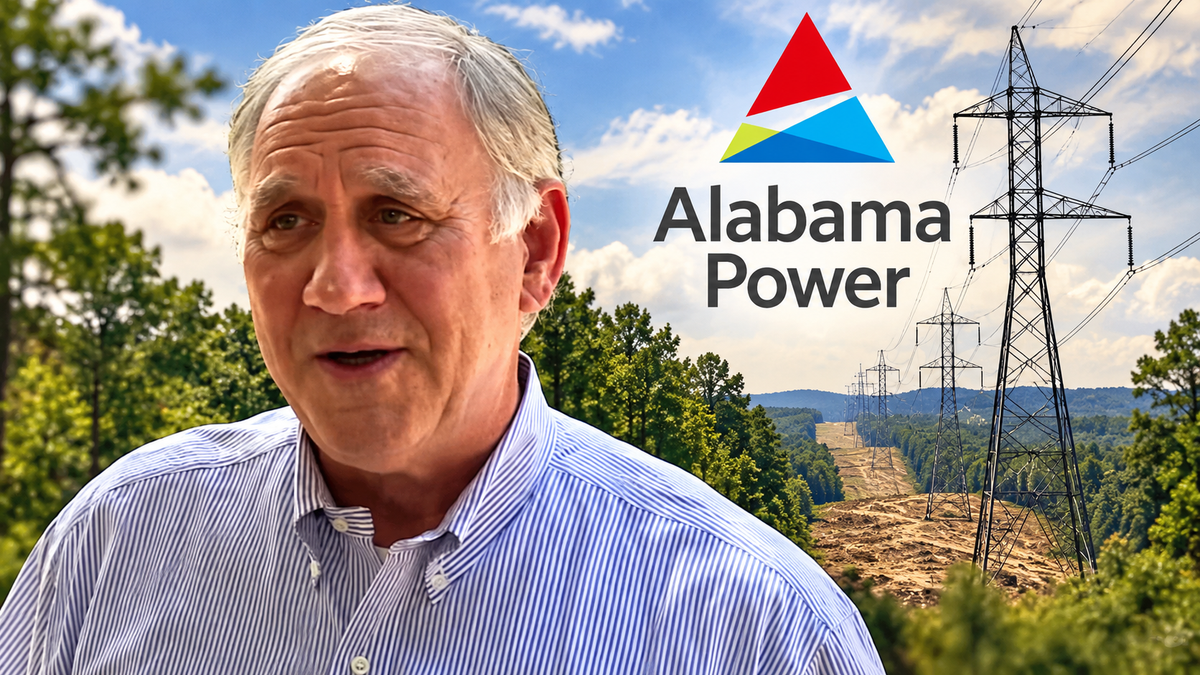
TL;DR: Alabama Power has appealed to the Alabama Supreme Court after a Shelby County judge blocked the utility from entering Fenn Church’s property while his challenge to a transmission-line condemnation moves forward. The utility says state law gives it the right to enter after paying the condemnation award and posting bond. Church argues the route threatens his home, privacy and land.
A bitter eminent-domain fight between Alabama Power and Shelby County landowner Fenn Church is headed to the Alabama Supreme Court.
The utility filed an appeal Thursday challenging a preliminary injunction that bars its crews from entering Church’s property while the larger condemnation case plays out.
ABC 33/40 reported that Alabama Power is asking the State’s high court to overturn the order issued Sept. 22 by Shelby County Circuit Judge Jonathan Spann.
The appeal does not yet decide the larger question of whether Alabama Power may ultimately condemn the easement. Instead, the immediate fight is over whether the company can enter Church’s land and begin work before his challenge to the condemnation is resolved.
Spann issued the injunction after a two-day hearing. The order requires Church to post a $10,000 bond and prevents Alabama Power from entering his property unless the court later allows it.
The judge found Church had shown a likelihood of success on claims that Alabama Power’s route selection was “arbitrary and capricious.” The court also found that allowing work to begin before the case was resolved could cause Church immediate and irreparable harm.
The dispute involves Church’s more than 400 acres near Calera, where he is building a retirement home.
Alabama Power wants a 125-foot-wide transmission right-of-way across portions of the property, along with access easements using existing roads. The route would cross Buxahatchee Creek and areas Church says contain wetlands, wildlife habitat and old-growth trees. ABC 33/40 previously reported that Church has pushed the utility to use alternate routes that he says would do less damage to his property.
“This is my home, this is where I live, this is where I come and go every day to work and I come home and I just want to be left alone, I just want peace,” Church told ABC 33/40 in August.
Alabama Power argues Spann went beyond his authority when he stopped the company from entering the land.
Before taking the case to the Supreme Court, the utility filed an emergency motion asking Spann to reconsider or stay his order. Alabama Power argued that State condemnation law gives it the right to enter property after a probate court condemnation award has been paid and the required bond posted.
The company also argues Church can be compensated with money if he ultimately proves he is owed more for the taking.
Alabama Power says the Church property represents only about 0.55 miles of a roughly 74-mile, $248 million transmission project running from Autaugaville to East Pelham. The company says the new 230-kilovolt line is needed to relieve overloaded parts of its grid, improve the movement of power between the Montgomery and Birmingham areas and give the system more flexibility.
The utility says it needs access to Church’s land soon to keep the project on track for completion in May 2027.
In its motion seeking to overturn the injunction, Alabama Power warned that the delay affects more than the company.
“The delay to Alabama Power's work on this important public service project is damage, not only to Alabama Power, but also to its customers,” the filing states.
Church’s argument centers on a much different question: what happens if Alabama Power clears the land before a court decides whether the route and condemnation were lawful?
Church has challenged the taking on several grounds. His attorneys have argued that Alabama Power’s route was arbitrary, that the company moved too quickly from its final offer to condemnation proceedings, and that its appraisal failed to properly account for the loss in value to the rest of his property. Church received his final offer on May 26 — the same day Alabama Power filed its condemnation action.
Church was served the next day.
Spann’s injunction leaves those broader issues for further litigation. For now, it preserves the property largely as it stands while the courts sort out who is right.
That question is now before the Alabama Supreme Court.
The case could have importance beyond one stretch of land in Shelby County. At issue in the appeal is how far a utility’s right of entry extends after a condemnation award and whether a circuit judge can halt that entry while the landowner challenges the taking.
For Church, the practical stakes are more immediate. Alabama Power wants to keep a major grid project moving. Church wants the courts to decide whether the company has the right to cut through his land before the trees come down.
Until the Alabama Supreme Court acts, Spann’s injunction keeps Alabama Power crews off the property.