Alabama Schools Could Lose 800 Funded Teaching Units
Enrollment falls by nearly 12,000 as school leaders weigh staffing cuts and candidates clash over the CHOOSE Act

TL;DR: Alabama public schools could lose State funding for about 800 positions after a sharp enrollment drop. The CHOOSE Act may explain part of the decline, but State officials say it does not account for the full loss.
Alabama public schools could lose State funding for about 800 teaching units after enrollment fell by nearly 12,000 students this fall, putting school budgets and staffing under pressure.
State Superintendent Eric Mackey shared the preliminary figures during the State Board of Education’s Oct. 8 work session. Enrollment stands at roughly 702,000 students, down from about 714,000 last school year, WSFA reported. Districts still have time to correct errors before the counts become final.
The projected funding loss does not mean 800 teachers will be laid off. Districts may cover some positions with local money or absorb reductions through vacancies. Others could face staff cuts, or be compelled to take other measures.
Alabama’s Foundation Program ties much of its staffing support to enrollment. This fall’s decline would affect funding for the 2027–28 school year. The positions at risk include teachers and support staff, such as counselors and assistant principals.
Smaller systems could feel the loss most sharply. Richard Franklin, President of Birmingham’s American Federation of Teachers Local 2115, pointed to Midfield, Fairfield and Tarrant as districts with fewer local resources to fill gaps in State funding.
“Overcrowded classrooms. You could also, at some point, see pupil funds cut,” Franklin told ABC 33/40. He blamed State policies, including the CHOOSE Act, for some of the strain while also noting population losses in urban areas.
The cause of the Statewide decline remains unsettled. Mackey has cited fewer births, families moving and shifts toward private schools or home education. Kindergarten alone lost about 2,700 to 2,800 students, Alabama Daily News reported.
The CHOOSE Act may explain some departures, but Mackey said its numbers do not come close to explaining the full drop. Revenue Department data obtained by Alabama Daily News showed that 4,096 students who attended public schools last year received CHOOSE Act awards this year. Of those, 2,655 had activated their awards. Those figures do not count families who left without State aid, and activated awards are not a complete tally of students leaving public schools.
Signed by Governor Kay Ivey in 2024, the CHOOSE Act provides education savings accounts for approved expenses. Awards can reach $7,000 per student at a participating school or $2,000 per homeschooled student, with a $4,000 family cap for home education.
As ALPolitics.com reported when the program launched, roughly 23,000 students were approved for its first school year, unlocking more than $124 million in aid.
The program has since grown. More than 34,000 students were approved for over $174 million in accounts for 2026–27, following applications covering nearly 49,000 students. New applicants remain subject to an income limit this school year. That limit ends for the 2027–28 school year, opening applications to families at all income levels.
The enrollment warning comes amid a sharp campaign divide over school choice.
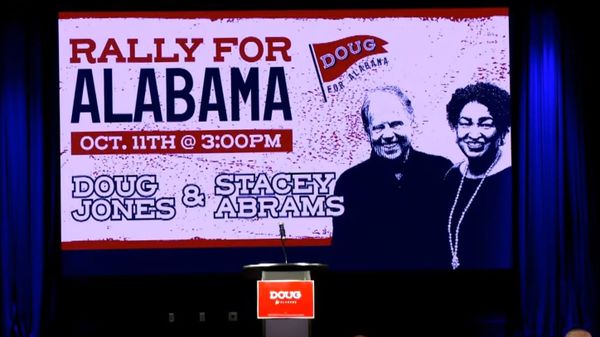
Democratic gubernatorial nominee Doug Jones wants to stop new applications and phase out the CHOOSE Act while protecting students already using it. He argues that private schools control admissions, calling the program “a private school choice,” rather than a true choice for parents, the Alabama Reflector reported.
Democratic Lieutenant Governor nominee Phillip Ensler has also attacked the program.
“It’s a government handout that drains public schools of resources and mostly benefits families who can already afford private school,” Ensler said, according to the Alabama Political Reporter.
In a more recent podcast interview, Ensler called for income limits on private school aid, arguing that taxpayers should not subsidize tuition for wealthy families, ALPolitics.com reported.
Republican gubernatorial nominee Sen. Tommy Tuberville supports expanding the program.
“The CHOOSE Act is pretty simple, and I can’t believe anybody would be against it,” Tuberville said in an interview cited by the Alabama Reflector. He did not specify how he would expand it.
Other Republicans have defended parental choice while urging care with costs. House education budget Chairman Danny Garrett (R-Trussville) argues that public education funding has continued to grow alongside the CHOOSE Act. Senate education budget Chairman Arthur Orr (R-Decatur) says further expansion should proceed gradually as revenues allow.
For school districts, the immediate question is how many funded positions they can afford to keep. State officials are still checking enrollment records and tracing where students have gone. The final district counts will show which communities face the largest losses — and where fewer students could lead to fewer staff.
And the CHOOSE Act will almost certainly be a topic of discussion in the next legislative session.