Alabama Takes Abortion Shield-Law Fight to Supreme Court
Alabama joins Louisiana and Arkansas in a major test of whether blue-State shield laws can block enforcement of abortion bans
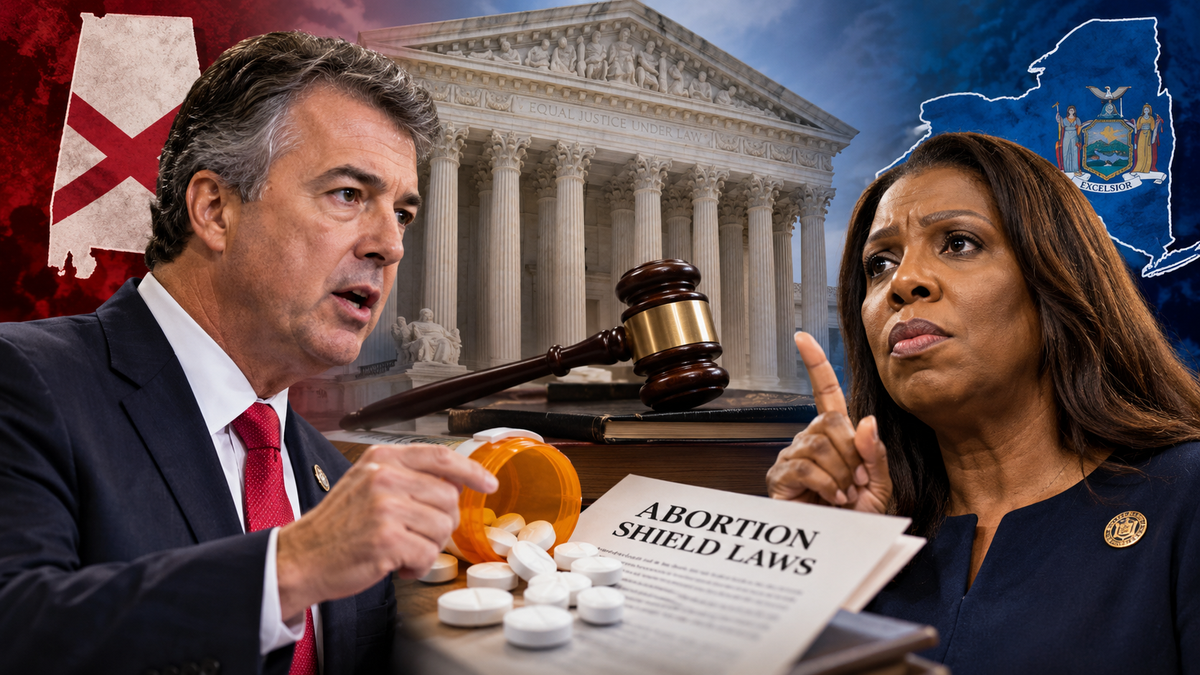
TL;DR: Alabama, Louisiana and Arkansas have asked the U.S. Supreme Court to strike down abortion shield laws in New York, California and Massachusetts. The States say the laws protect out-of-state providers who mail abortion pills into States where abortion is banned and then block those States from enforcing their laws. The same three States separately sued 30 providers and groups accused of taking part in the mail-order abortion network. New York says the lawsuit is an attempt to impose Red-State abortion bans on doctors providing legal care in Blue States.
Alabama has joined Louisiana and Arkansas in asking the U.S. Supreme Court to strike down abortion “shield laws” in New York, California and Massachusetts, setting up a major post-Dobbs fight over State power and abortion pills shipped across State lines.
The three Republican-led States filed the case directly with the Supreme Court on Sept. 30. They argue that the shield laws allow abortion providers in other States to prescribe and mail abortion drugs into States where abortion is banned, while blocking those States from enforcing their own laws.
According to the Alabama Attorney General’s Office, the laws restrict cooperation with out-of-State law enforcement, limit extradition, block some out-of-State judgments and subpoenas, and protect providers who prescribe abortion drugs by telehealth and send them into States such as Alabama.
Alabama Attorney General Steve Marshall called the system a direct attack on Alabama’s right to set its own abortion policy.
“Alabama's pro-life laws exist to protect mothers and their children. This is a coordinated scheme by bad actors from out of State to defy Alabama law and harm people in our State. These drugs are dangerous for women who take them, and these companies knowingly break our laws and brag about it in their advertising. If State sovereignty means anything, it means Alabama cannot be forced to accept the death of unborn children and the harm it causes to mothers because someone outside our borders disagrees with our choice to protect life,” Marshall said.
The dispute stems from a new legal landscape created after the Supreme Court overturned Roe v. Wade in Dobbs v. Jackson Women’s Health Organization in 2022.
Alabama now bars abortion except when an attending physician finds it necessary to prevent a serious health risk to the mother. That prohibition is set out in the State’s Human Life Protection Act (enacted in 2019).
But abortion pills prescribed by providers in other States have created a new enforcement problem.
In their Supreme Court complaint, Alabama, Louisiana and Arkansas cite data from the Society of Family Planning estimating that about 700 abortions per month were occurring in Alabama despite the ban, along with about 1,000 per month in Louisiana and 300 in Arkansas. The States say those abortions result from drugs sent from outside their borders.
The underlying #WeCount report found that nearly 15,000 abortions per month nationwide were being provided under shield laws by December 2025. In States with total abortion bans, the group reported that nearly all abortions taking place within those States were provided through telehealth under shield laws.
The three States argue that this turns the logic of Dobbs on its head. Their complaint argues that New York, California and Massachusetts are not merely setting abortion policy within their own borders, but helping providers defeat the laws of other States.
The lawsuit asks the Supreme Court to find that the shield laws violate the Constitution’s Full Faith and Credit Clause, the equal-sovereignty doctrine, federal common law on public nuisance and the Dormant Commerce Clause. The States also want the justices to bar officials in the three defendant States from enforcing the shield laws.
Because this is a dispute between States, Alabama and its partners filed the case under the Supreme Court’s original jurisdiction. The justices must first decide whether to allow the States to file their complaint and proceed with the case.
The States are also going after the abortion-pill network itself.
In a separate 100-page federal complaint filed in the Western District of Louisiana, Alabama, Louisiana and Arkansas sued 30 individuals and groups they accuse of taking part in a coordinated system to advertise, prescribe, sell and ship abortion drugs into States where the procedure is banned.
The suit alleges that some groups use online questionnaires to prescribe the drugs and then ship them from outside the State. It also accuses defendants of making false or misleading claims about the drugs’ safety and risks and of telling women who seek emergency care after taking the pills to say they suffered a miscarriage. Those are, naturally, allegations in the complaint and have not been proven in court.
The States want the conduct declared a public nuisance and are seeking an injunction, damages, civil and statutory penalties, attorneys’ fees and costs.
The safety of mifepristone (the “abortion pill”) is also contested politically and in court. The FDA says the drug is safe when used as directed under its approved conditions and says its reviews have not found new safety concerns. The agency is conducting another safety study and said earlier this year that it would consider changes to its safeguards if the evidence warrants them.
The Supreme Court has already been drawn into that fight. In May, the justices stayed a lower-court order that would have tightened federal restrictions on mifepristone while related litigation continues. Justices Clarence Thomas and Samuel Alito dissented.
New York Attorney General Letitia James quickly rejected Alabama and the other States’ argument.
“Louisiana, Alabama, and Arkansas are asking the Supreme Court to let them impose their abortion bans on New York and punish our doctors for providing legal health care,” James said in a statement.
“New York has always been a safe haven for reproductive freedom. It was true before Roe, it has been true since Dobbs, and it will remain true long after this lawsuit inevitably fails. I will fight with everything in my power to defend our shield law and protect every provider and patient who depends on it.”
These suits cut to the core of a dispute that Dobbs did not settle.
Alabama says Dobbs restored its authority to prohibit abortion within Alabama and that another State cannot effectively nullify that law by protecting providers who send abortion drugs across State lines. New York and other shield-law States argue that their providers are acting lawfully under their own laws and should not be punished for care protected in their home States.
The Supreme Court complaint could force the justices to decide where one State’s sovereignty ends and another’s begins in the age of telehealth and mail-order abortion drugs.
For Alabama, the answer could determine whether its abortion ban can be enforced against an abortion system that increasingly operates from hundreds or even thousands of miles outside the State.
However the justices rule, their decision will ripple across not just the telehealth debate, but potentially affect multiple other issues of inter-State sovereignty.