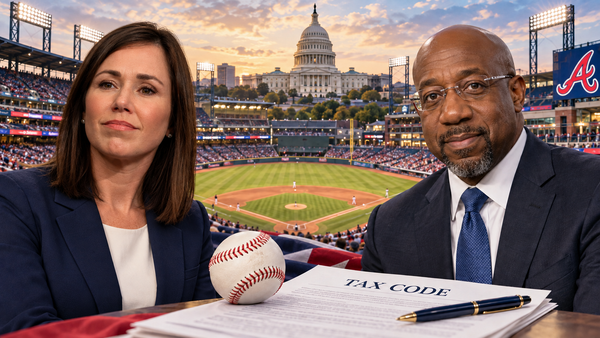
Alabama’s Untreated Sports Addiction, and How It Can Affect Our Politics
Guest Opinion by Samuel Barrett

Guest Opinion by Samuel Barrett
At the time I write this, we are a week away from the primary elections here in Alabama, as well as in numerous other states. During election season, it is common to see billboards, be handed pamphlets and cards, and hear commercials alerting the public to the important issues of the day while attempting to convince people that certain candidates are the best choices to address them. It is happening now, and it will happen again as November approaches. Just as often as you see those political advertisements, you will hear someone complain about how annoyed they are by them and how they cannot wait for the election to be over.
The everyday person, at the sight or sound of someone putting themselves out there and subjecting themselves to scrutiny in an effort to improve people’s lives, becomes irritated by the very notion.
However, during the fall in most other years, when those same billboards, TV ads, and pamphlets promote sports teams and athletes—which have little impact on the everyday person beyond entertainment—few people seem annoyed at all. In fact, many Alabamians cannot get enough of it.
You are more likely to hear “War Eagle” or “Roll Tide” exchanged between two strangers than you are to hear a meaningful discussion about finances or politics between family members or friends.
This is obviously a major issue in our state, yet it is rarely discussed. Few people are willing to criticize Alabama’s tendency toward distraction over productivity for fear of ridicule from sports-obsessed fans who know more about college athletes they have never met than they do about their own children.
I do not feel the same fear. I cannot bring myself to be intimidated by a man wearing another man’s last name on the back of his shirt. If anything, perhaps those men should be intimidated by people secure enough in themselves that they do not need to live vicariously through strangers’ success in order to feel successful.
Before I go further, I will admit that I have a sports background myself. In high school, I played baseball and filmed for the football team. That team won a state championship, and I still have the ring sitting on a shelf beside my desk as I write this. While in college, I took two gap semesters to attend the Wendelstedt Umpire School in Florida in 2021 and 2022, and I recently attended again for the school’s final year in January. I have umpired summer collegiate baseball and high school baseball at a high level. In fact, I performed well enough at the school this year that the Frontier League—an independent professional league and MLB partner league—placed me on its reserve list and is sending me to Palm Springs, California, in June to umpire there for a month.
I have also written two books about baseball: the first chronicling my experiences in 2021 at umpire school and in the summer league to which I was assigned, and the second being a historical research project. I attended the MLB game at Rickwood Field in Birmingham in June 2024, and might attend the Minor League Birmingham Barons game at Rickwood Field on May 27 as well, when they play a single game in a turn-back-the-clock style environment.
So, I am not some bitter kid who lacked athletic ability and was bullied by jocks in school. I generally got along well with everyone.
But I always understood that the intense emotional investment many children and adults place into sports—whether it is parents placing unhealthy pressure on young children, high school athletes surrendering to the politics of recruitment culture, or adults devoting countless hours each week to watching strangers throw balls, run fast, and jump high while allowing their moods to rise and fall based on those performances—is not what sports are supposed to be about.
As I grew older, I saw more and more of this behavior, and my disagreement with it only intensified.
Once again, if you ask someone deeply involved in what I call the “sports industrial complex” about statistics, uniform numbers, schedules, or historical trivia surrounding a football or soccer team, they can often answer immediately and in great detail.

Ask that same person about expanding Medicaid, processed chemicals in fast food, foreign affairs affecting everyday costs, or candidates running for office…
…they may need a moment, if they can answer at all.
All of this is rather absurd, especially when you witness people engage in activities such as purchasing season tickets to watch strangers perform every week, referring to a favorite team as “we,” or wearing another man’s name across their back.
Why not use that ticket money to improve yourself rather than watching other men improve themselves? Why not spend more time with your family and refer to them as “we”? Why not wear your own name proudly because you have built a meaningful life attached to it?
The answer, like many things in the modern world, may be by design.
So, for those who obsess over sports to avoid politics, your obsession is itself connected to politics.
You may have heard the phrase “bread and circuses.” If not, let us look at the full quote: “Give them bread and circuses and they will never revolt.” This phrase is attributed to the Roman poet Juvenal. Fittingly, “Juvenal” resembles the word “juvenile,” because many of the habits associated with sports obsession can appear immature.
Historically, “bread and circuses” referred to a governing strategy: keep people minimally comfortable while distracting them with entertainment so they do not challenge those in power.
Industrialist Henry Ford once famously said, “It is well enough that people of the nation do not understand our banking and monetary system, for if they did, I believe there would be a revolution before tomorrow morning.”
The idea is simple: if people are distracted enough, they may pay less attention to how power operates.
Here is an example relevant to Alabama:
Last summer, the “Big, Beautiful Bill” was passed and signed into law. Among many other provisions, critics argue that the legislation expanded funding for technologies associated with surveillance and data collection. One of the public supporters of the bill was Senator Tommy Tuberville, who praised it while discussing his gubernatorial campaign.
Yet few people seemed concerned about those implications.
Why?
Because Tuberville already possessed widespread popularity and name recognition.
And how did he acquire that recognition?
Football.
Tuberville coached football at Auburn University during the early 2000s, and in Alabama, that alone carries tremendous cultural influence.
But coaching a sport is still entertainment. It is not the same as inventing life-changing technology, healing the sick, or solving society’s deepest problems.
Yet many people treat sports figures with extraordinary admiration.
If Alabama ranks so poorly in education, we must consider this: Maybe stop giving the intelligent scholars who come out of high school chump change to go to a community college, and stop giving the low-scoring athletes who tend to be disruptive in class, only care about doing well on the field, and neglect the entire point of schooling in the first place – education – every dime paid for to attend a prestigious university. There have even been instances of athletes who are illiterate and were given the easiest classes so they could more easily achieve the minimum grades going on to our nation’s best campuses.
Affirmative action and DEI on the basis of sports.
The common counterargument is that sports generate revenue. But if schools prioritize entertainment revenue over education itself, that raises legitimate questions about the mission of education.
To be clear, this is not an attack on students who struggle academically. Schools themselves often overemphasize athletics—hosting pep rallies during instructional time, investing heavily in athletic facilities, and placing sports culture at the center of student life.
At my high school, some classroom walls had cracks large enough to see into adjacent rooms. Yet athletic field upgrades still received priority funding.
Students deserve better than being taught that athletics are their only path toward success. They deserve an education that equips them to contribute meaningfully to society. They deserve better than to be treated as pawns that are let out onto the field or court to entertain the masses and fill the pockets of the rich owners.
Wait, having young, strong men exert themselves on a field while the rich men yield the profit? Convincing them that they are only smart enough to work under them and capable of nothing else?
Sounds like slavery, doesn’t it? Especially when you remember that most football and basketball players are black.
Therefore, if we want to combat racism, fleeing from sports addiction will help there too.
Not every athlete buys fully into the sports machine, however. Take Sandy Koufax, perhaps the greatest left-handed pitcher in baseball history. After achieving enormous success with the Los Angeles Dodgers, he retired at age 30 because of concerns about long-term damage to his arm. Koufax also maintained perspective about the role of athletes in society. In his autobiography, he wrote:
“I do not think the ballplayer is of an extraordinary importance in our national life. We do not heal the sick or bring peace and comfort to a troubled world. All we do is to provide a few hours of diversion to the people who want to come to the park, and a sort of conflict to those who identify their fortunes with ours through the season…by its nature, it is a brief, self-liquidating life. It is a temporary life, really, a period between the time of our youth and the beginning of our lifetime career.”
To this day, while he lives his normal life, he makes very few public appearances as a former athlete.
Of course, enjoying sports occasionally as entertainment is not inherently harmful. Attending games can be fun. Playing sports can provide exercise, friendships, discipline, and life lessons.
But there is a difference between enjoyment and obsession.
When people allow sports to dominate their emotions, finances, identities, relationships, and political decisions, the balance has likely gone too far.
It also becomes problematic when voters make political decisions primarily because a candidate once coached football.
Tommy Tuberville is not automatically qualified to be governor simply because he coached football.
If you want to support him, that is your decision. But voters should carefully research every candidate and determine what they truly believe that person will do for Alabama and for their lives.
I encourage anyone considering voting primarily on sports fame to research all candidates thoroughly. The office of governor is too important to be treated lightly.
Alabama can do better. It begins with us.
I believe in this state. I believe we can rise above mediocrity and improve our standing.
But doing so will require breaking free from unhealthy obsession, misplaced idolatry, and distraction.
If that happens, Alabama could become freer, wiser, and more prosperous than many people currently imagine.
And honestly, that possibility is exciting to think about.
Samuel Barrett is 25 years old and has written two baseball books but is now turning his attention to state politics and matters he feels are important in his home state of Alabama. He was born in Northport on November 3, 2000, so he will be celebrating his 26th birthday this year by voting and encouraging others to vote on Election Day. After short stints in Fayette and Decatur, he has resided in Phenix City since 2005. Barrett can be reached at rsbarrett00@gmail.com.
Opinions do not reflect the views and opinions of ALPolitics.com. ALPolitics.com makes no claims nor assumes any responsibility for the information and opinions expressed above.