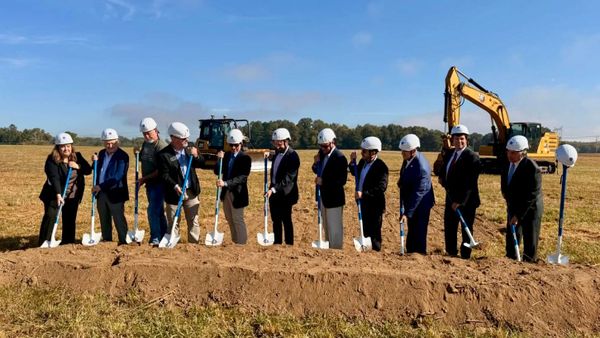
Army Chief Calls Anniston Depot Vital to Readiness
Acting Army Secretary Adam Telle praises depot workers as the Alabama post builds on 85 years of service to the nation
TL;DR: Acting Army Secretary Adam Telle called Anniston Army Depot critical to national defense during an Oct. 23 visit. The Alabama post has grown from a World War II ammunition depot into a major center for repairing combat vehicles and weapons.
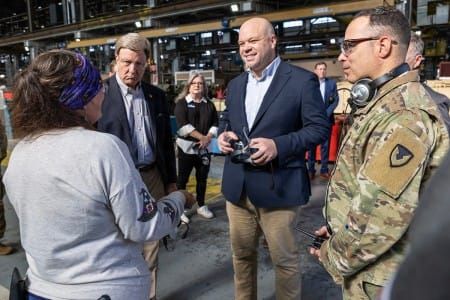
Acting Army Secretary Adam R. Telle called Anniston Army Depot essential to military readiness during an Oct. 23 visit, crediting its workers with keeping soldiers equipped for combat.
U.S. Representative Mike Rogers (R-AL-03) Chairman of the House Armed Services Committee, joined Telle at the northeast Alabama post.
“Anniston Army Depot represents a cornerstone of our national defense and a vital part of our Army organic industrial base,” Telle said.
He stressed the link between skilled work on the depot’s shop floors and the Army’s strength in the field. Telle also credited Rogers and his committee with supporting the facilities, equipment upgrades and resources needed to sustain that work.
The depot repairs and upgrades combat vehicles, artillery and small arms. Its civilian workforce rebuilds worn equipment and key parts, helping return weapons and vehicles to service for American and allied forces.
Depot Commander Col. Charles Moore said workers understand how their jobs affect readiness. He said the command remains focused on giving them the tools and resources needed to meet the Army’s demands.
That mission has roots stretching back to the months before the United States entered World War II.
The post was formally named Anniston Ordnance Depot on Oct. 14, 1941, less than two months before the attack on Pearl Harbor. Its first role was to store and ship ammunition, according to the depot’s official history. Combat vehicle repair became part of its mission in the early 1950s.
The Army had acquired an initial 10,640-acre tract for the post. Later purchases expanded it to 15,319 acres. Early buildings included ammunition storage bunkers, warehouses and offices, the Army’s 80th anniversary history recounts.
In 1962, the post became Anniston Army Depot under Army Materiel Command. A 1.2-mile test track also went into service that year, allowing rebuilt combat vehicles to undergo demanding checks before returning to duty.
The depot began repairing and overhauling M1 Abrams tanks in the mid-1980s. Base closure decisions in 1995 brought added work on artillery and light combat vehicles, further expanding its role in the Army’s repair network.
Anniston also held a separate Cold War mission: storing and maintaining chemical weapons. That work began in 1963. Destruction of the chemical munitions was completed in August 2011.
Eighty-five years after its founding, Anniston’s mission reaches well beyond ammunition storage. Telle’s visit placed the focus on the people who carry it out — and on the Army’s need to keep their skills, tools and facilities ready for the next demand.