Paper Straws Score Worse on Cancer-Linked Impact, Study Finds
A South Korean study puts paper straws’ cancer-related impact at 6.33 times plastic’s, but it does not measure users’ cancer risk
TL;DR: A South Korean study found paper straws had 6.33 times the modeled cancer-related impact of plastic straws across their life cycle. The findings challenge claims that paper is always greener, but do not show that using paper straws raises a person’s cancer risk sixfold. It does appear that President Trump’s reversal of Biden’s plastic straw ban was a prudent act.
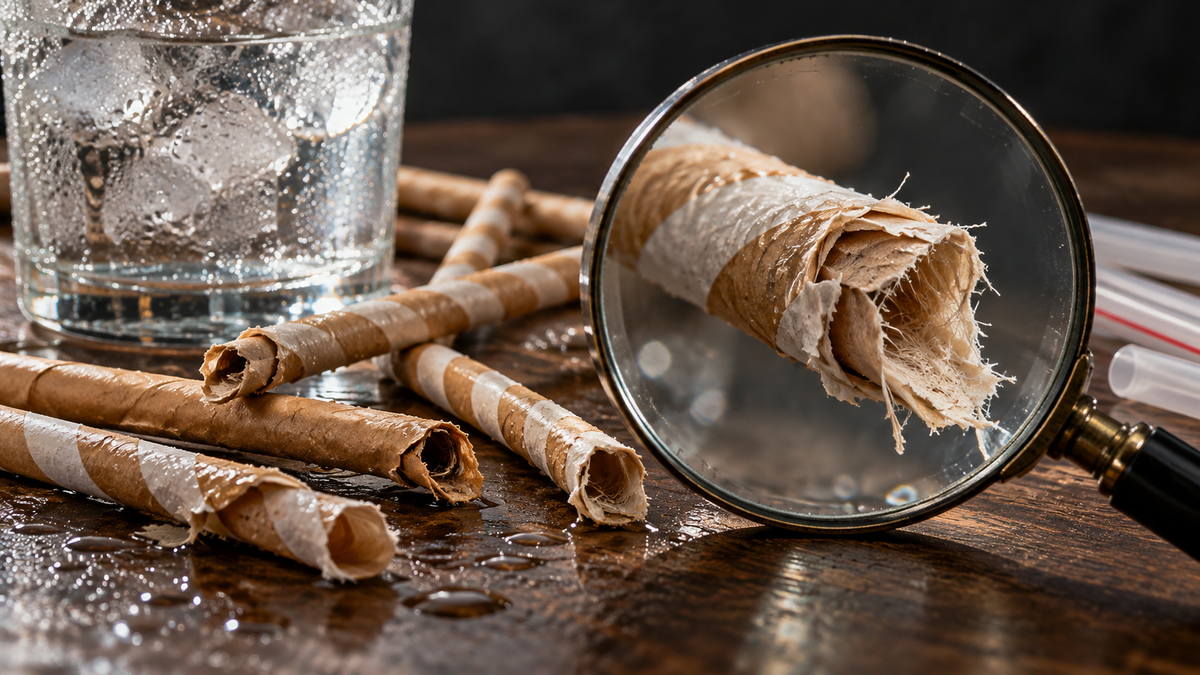
Paper straws, widely sold to the public as a “greener” choice, scored worse than plastic on a cancer-related measure in a South Korean government study. The finding raises fresh questions about the push to replace one throwaway product with another.
Before you rush out to burn those horrible soggy paper straws: The study did not find that people who drink through paper straws face six times the cancer risk.
According to The Korea Herald, paper straws scored 6.33 times higher than standard plastic straws on a measure of potential cancer-related harm tied to their full life cycle. That includes raw materials, production, use and disposal. It is a modeled impact score, not a count of cancer cases among straw users.
South Korea’s Ministry of Climate, Energy and Environment commissioned the study. Lawmaker Kim Wi-sang disclosed the findings Oct. 21. Researchers compared four materials across 16 health and environmental categories: standard plastic, paper, biodegradable plastic and bio-based polyethylene.
Paper’s poor showing went beyond the cancer-related score.
Health Chosun reported that paper straws had 2.04 times plastic’s impact on acidification, 1.62 times its fine-particle impact and 2.23 times its ozone-depletion impact. Acidification refers to pollution that can make soil and water more acidic.
Other substitutes also scored higher on the cancer-related measure. Biodegradable plastic reached 3.34 times the score for standard plastic. Bio-based polyethylene reached 16.18 times that score. Though made from plant-based sources such as sugarcane, bio-based polyethylene does not biodegrade.
Overall, conventional plastic straws had the smallest impact across 10 of the 16 categories studies, including climate change, acidification, particulate matter and human toxicity.
The findings challenge the idea that a plant-based label alone proves a product is better for the environment. They also give policymakers reason to weigh the full costs of a substitute before promoting a switch.
Separate research has raised questions about chemicals in some paper straws.
A 2023 study by University of Antwerp researchers tested 39 straw brands sold in Belgium. It found PFAS more often in plant-based materials, including paper and bamboo. No PFAS were found in the stainless-steel straws tested.
It should be noted that these findings only concern chemicals found in products. They do not establish a sixfold increase in cancer risk from drinking through paper straws, nor should they be treated as the source of the South Korean study’s life-cycle score.
The South Korean researchers’ broader recommendation was to reduce the use of disposable products, rather than focus restrictions solely on certain materials.
For businesses and public officials, that leaves a practical question: Does replacing plastic with paper cut harm across the product’s full life, or simply move that harm elsewhere?
And for those on the Left who lost their alleged minds when President Trump signed his Executive Order reversing Biden’s plastic straw ban? It looks like their moral superiority held up about as well as wet cardboard.
Maybe next time they’ll actually see if a substitute is effective (and actually better) before asking the entire world to suck it up?
Somehow, we doubt that will ever happen.