Boykin: County Commissions Shape Daily Life in Alabama
Julian Boykin’s most recent Civics 101 episode explains how County officials affect roads, taxes, elections, law enforcement, other services that touch every Alabama family
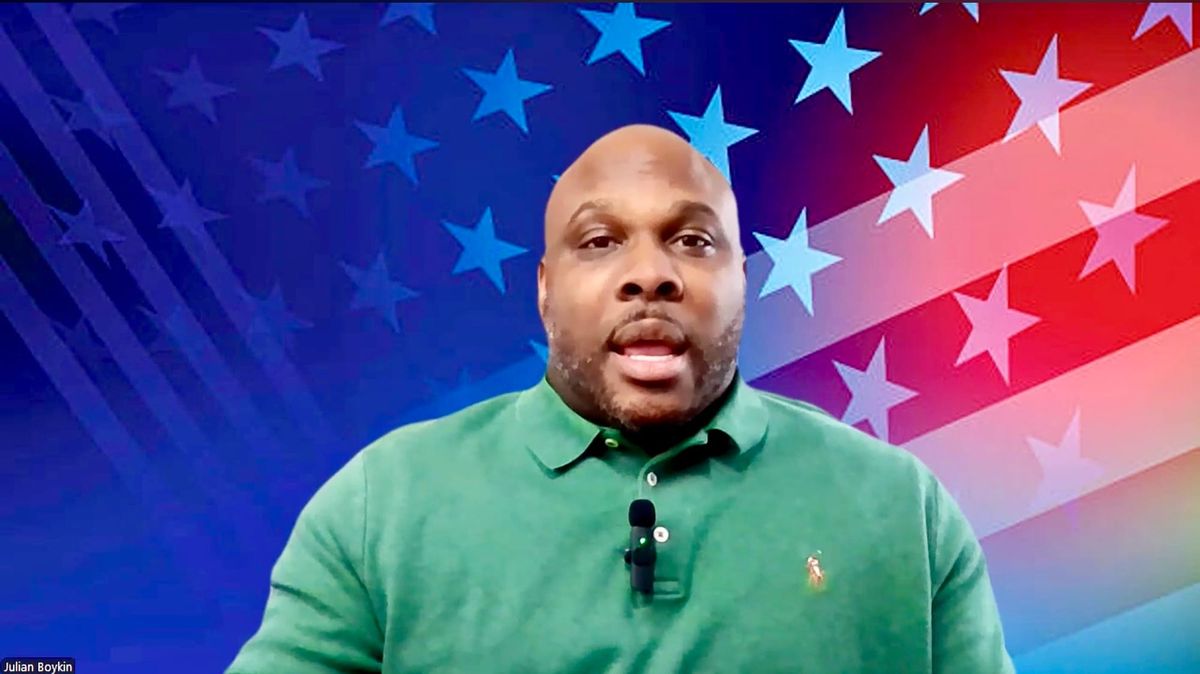
County government may not receive the same attention as the governor's office or city hall, but it has a direct impact on the daily lives of millions of Alabamians.
That is the message of the latest installment in Julian Boykin's Civics 101 video series, which examines the role of Alabama's County governments and encourages voters to learn what local officials actually do before casting a ballot.

Boykin explains that many residents know who their Mayor is, but fewer understand the duties of County government. Yet for people who live outside city limits — and even many who live inside municipalities — County officials oversee services that affect public safety, transportation, taxes, elections, and property records.
At the center of County government is the County Commission, which Boykin describes as the County's "board of directors." Commissioners adopt budgets, maintain County roads and bridges, oversee County departments, and pass ordinances within the authority granted by State law. Those decisions often determine how local tax dollars are spent and what public services residents receive. Alabama County Commissions also carry out many responsibilities assigned by the Legislature.
The video also reviews the duties of several constitutional County offices.
The Sheriff serves as the County's chief law enforcement officer, overseeing patrol operations, managing the County jail, providing courthouse security, and carrying out other public safety responsibilities established under Alabama law.
The Probate Judge performs a unique mix of judicial and administrative duties. Those duties include issuing marriage licenses, handling wills and estates, maintaining property records, and, in many Alabama counties, administering elections.
The Tax Assessor and Tax Collector also play essential roles. Together, those offices determine taxable property values and collect property taxes that help support schools, County government, and other public services.
Boykin argues that understanding those responsibilities should change how voters evaluate candidates. Rather than relying on campaign slogans or personality alone, he encourages citizens to consider whether a candidate's experience and priorities match the actual duties of the office.
He cautions voters not to judge candidates solely by an "elevator pitch," but instead to compare their qualifications with the responsibilities they would assume if elected. Doing so, he says, helps voters choose leaders whose decisions align with their own family values and community priorities.
The presentation concludes with a broader call for civic engagement. Boykin encourages Alabamians to become involved in local government, attend public meetings, learn how County offices operate, and remain informed between elections.
His central message is that strong communities begin with informed citizens. Understanding County government, he says, is one of the first steps toward building a better future for the next generation.
The full podcast may be seen on YouTube and below.
Julian Boykin is a strategic community leader in Hartselle, Alabama, with deep expertise in procurement, program management, and civic innovation. He holds an MBA from the Florida Institute of Technology, an M.S. in Acquisition and Contract Management, a B.S. in Business Management from Jackson State University, is PMP and CISM certified, and is completing a Doctorate in Business Administration. In federal service he served as a Senior Contract Specialist and Program Manager overseeing multi‑billion‑dollar acquisition portfolios. He founded Acquisition Consulting Experts, LLC and co‑founded a community‑focused banking initiative working to establish the Heritage Cooperative Federal Credit Union. His civic leadership includes board and leadership roles with the Morgan County Regional Airport Board, Hartselle for Tomorrow Foundation, 100 Black Men of Greater Huntsville, and several other organizations. He speaks on civic leadership, procurement, and community development and is available for interviews.
Opinions do not reflect the views and opinions of ALPolitics.com. ALPolitics.com makes no claims nor assumes any responsibility for the information and opinions expressed above.