Ensler Lays Out Agenda in Lieutenant Governor Race
Democratic nominee Phillip Ensler discusses taxes, school choice, utility rates, crime, Medicaid and data centers ahead of Nov. 3 election
Alabama Democratic Lieutenant Governor nominee Phillip Ensler laid out a broad policy agenda during a recent podcast interview, calling for tax relief, changes to the State’s school choice program, Medicaid expansion and a pause on new data centers.
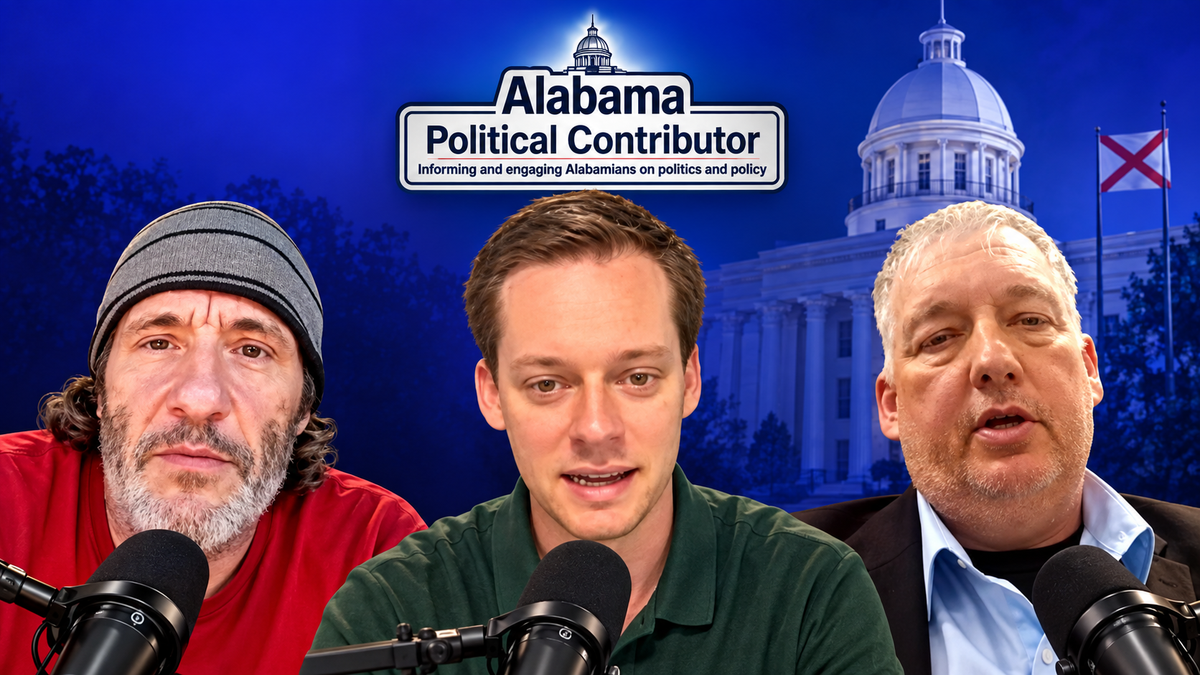
Ensler, a State representative from Montgomery, joined BCS State of Alabama podcast hosts Christopher M. Peeks and Brandon Moseley for a wide-ranging discussion on Alabama’s budget, education, crime, energy costs and economic growth.
The interview comes as Ensler prepares to face Republican nominee John Wahl in the Nov. 3 general election. Wahl, the former Chairman of the Alabama Republican Party, won the GOP nomination after defeating Secretary of State Wes Allen in the June runoff.
One of the first issues was Alabama’s General Fund budget and the prospect of flat revenue growth.
Ensler said Alabama should look at ways to put more money back into the hands of working families. His proposals include ending the State sales tax on groceries and bringing back Alabama’s tax break for overtime pay.
He also supports creating a State lottery. His published campaign positions call for lottery revenue to help pay for State needs while also providing financial relief to working families and farmers.
Education produced another clear policy divide.
Ensler discussed Alabama’s CHOOSE Act, which provides education savings accounts that families can use for private school tuition and other approved education costs.
Ensler said he favors income limits on private school aid, arguing that State funds should not subsidize private tuition for wealthy families. He placed a larger focus on public schools.
His broader education platform opposes using public funds for private school tuition and supports universal pre-K and lottery-funded higher education scholarships.
Ensler also criticized changes to the Alabama Public Service Commission and raised concerns about utility costs.
He called for greater transparency in the process used to set rates and oversee utilities.
Energy costs have become increasingly tied to the debate over data centers. The issue has also reached Washington, where lawmakers have debated whether large data centers should shoulder more of the cost of new power infrastructure rather than passing those costs to other customers.
Public safety was another major part of the interview.
Ensler pointed to his work on Alabama’s ban on Glock switches — devices that can convert semiautomatic handguns into weapons capable of automatic fire.
The Montgomery Democrat pushed the issue for several years before Alabama enacted a State ban. The measure drew bipartisan support and gave State and local prosecutors another way to pursue cases involving the devices, which were already illegal under federal law.
Ensler also discussed the use of multi-agency crime suppression units in Montgomery and the need for law enforcement agencies to work together to address violent crime.
On health care, Ensler backed expanding Medicaid in Alabama.
He framed expansion as one way to help struggling rural hospitals remain open and improve access to care in parts of the State where hospitals and health providers face financial strain.
Medicaid expansion has also emerged as an issue in the Democratic Statewide campaign this fall. Ensler and Democratic gubernatorial nominee Doug Jones have raised the issue during campaign appearances around the State.
Perhaps one of Ensler’s strongest positions involves Alabama’s fast-growing data center industry.
Ensler called for a moratorium on new data center projects while State leaders develop stronger rules covering their impact on power, water, local communities and other resources.
Earlier this year, Ensler called for a pause on existing and future projects until Alabama develops a more rigorous review process with greater public input and transparency.
His position in the Lieutenant Governor race is that a moratorium would give lawmakers time to create such a process and protections for electric customers.
The interview also touched on artificial intelligence. Ensler said Alabama schools need to prepare students to use AI and understand a changing economy rather than treating the technology as something that can simply be ignored.
He also discussed the effect new technology and economic shifts could have on Alabama’s traditional industries, including agriculture and timber.
Ensler closed by discussing the office he hopes to win.
Alabama’s Lieutenant Governor serves as President of the State Senate, can cast tie-breaking votes and succeeds the Governor if the Governor’s office becomes vacant. But much of the office’s former power over the Senate was transferred to the President Pro Tempore more than two decades ago.
Ensler said he would seek a more active role, using the Statewide office as something closer to an executive post rather than limiting himself to presiding over the Senate.
That would largely depend on how Ensler chose to use the visibility and platform of the office, since many of the policies discussed in the interview would still require action by the Legislature, Governor or other State agencies.
Ensler and Wahl will meet on the Statewide ballot on Nov. 3.
For more information on Ensler and his campaign, visit https://phillipensler.com.
The full podcast may be seen on YouTube and below: