Federal Court Blocks Alabama’s 2023 Map
Three-judge panel says Alabama’s 2023 congressional map likely violated the Constitution and Voting Rights Act

A federal three-judge panel on Tuesday blocked Alabama from using its 2023 congressional map in the 2026 elections, ruling that the State’s plan was likely tainted by intentional racial discrimination against Black voters.
The court ordered Alabama to continue using the court-drawn congressional map adopted for the 2024 elections, rejecting the Legislature’s attempt to restore the 2023 plan after the recent U.S. Supreme Court decision in Louisiana v. Callais.
In a sharply worded 102-page order (attached below), the panel wrote, “Ultimately, we cannot see our way clear to requiring Alabamians to cast their votes in the 2026 elections under a districting plan tainted by intentional race-based discrimination.”
The ruling marks yet another chapter in Alabama’s long-running redistricting fight, which began after the State’s 2021 congressional map was challenged under Section 2 of the Voting Rights Act. In 2023, the U.S. Supreme Court upheld lower court findings that Alabama likely diluted Black voting strength by maintaining only one majority-Black congressional district despite the state’s large Black population. Allen v. Milligan.
After that ruling, Alabama lawmakers adopted a new map in 2023. But the federal court later found that plan still failed to create a second district where Black voters could elect a candidate of their choice. A court-appointed “Special Master” then drew a replacement map used during the 2024 election cycle.

Under that court-drawn map, Alabama elected Democrat Shomari Figures in Congressional District 2, giving Democrats two congressional seats in Alabama for the first time in years.
The Supreme Court’s April ruling in Callais weakened portions of the Voting Rights Act framework and briefly reopened the door for Alabama Republicans to revive the 2023 map. Governor Kay Ivey called a special legislative session earlier this month, and State officials prepared for new congressional primaries under the disputed lines.
Tuesday’s ruling halted that effort.
The panel concluded that Alabama lawmakers intentionally refused to create a lawful second opportunity district even after courts ordered them to do so. Judges said the Legislature “made a calculated, purposeful decision to refuse to provide the remedy for discriminatory vote dilution.” The court also rejected claims that politics — rather than race — drove the map drawing process. According to the judges, “this enormous record contains no evidence of a partisan motive.”
The court further found that continuing to use the Special Master map would create less confusion for voters and election officials than attempting another rapid Statewide district change ahead of August special primaries.
Alabama Attorney General Steve Marshall quickly signaled the state would appeal.
Governor Ivey issued a statement supporting that move.
“Alabama’s redistricting battle continues after federal judges temporarily blocked use of our 2023 congressional map,” Ivey said. “I fully support Attorney General Marshall appealing this unsurprising decision to the U.S. Supreme Court, and I remain hopeful they will allow Alabama to move forward with our August 11 Special Primary Election. I will continue to say: Alabama knows our State, our people and our districts best.”
U.S. Rep. Barry Moore (R-AL-01) criticized the ruling on social media, saying, “The people of Alabama deserve fair representation, not activist judges rewriting our Constitution to impose Washington politics on our state. This latest ruling against Alabama’s congressional map is another example of unelected bureaucrats trying to override the will of Alabama voters and punish our state for standing its ground.…The Supreme Court has already spoken on the importance of respecting the Constitution and the role of the states, and it’s critical these principles are upheld consistently and decisively moving forward.”
Meanwhile, U.S. Rep. Terri Sewell (D-AL-07) praised the court’s decision.
“This decision is a victory for fair representation and a powerful rebuke of Alabama’s continued efforts to silence Black voters,” Sewell said. “Once again, a federal court confirmed what we have said all along: Alabama’s 2023 congressional map was intentionally designed to discriminate against Black voters and dilute our political power.”
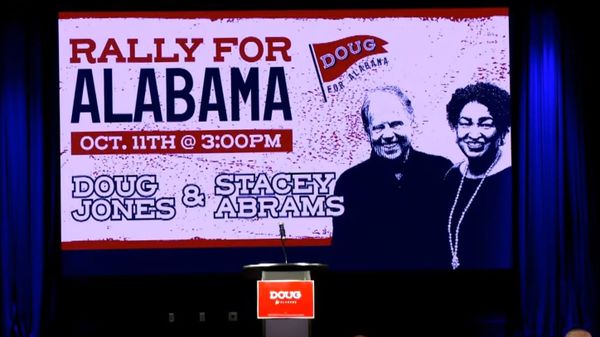
Former U.S. Sen. Doug Jones also weighed in, writing on social media, “A federal court took the first step today in restoring order and fairness to Alabama’s congressional maps. But this fight is not over by any stretch so we have have to continue to make our voices heard.”
The ruling leaves Alabama’s current court-drawn congressional districts in place for now as another appeal to the U.S. Supreme Court is a virtual certainty.