Marshall Seeks Input on Alabama App Store Age Checks
Comments are due Jan. 8 as Alabama weighs how app stores should check users’ ages and what personal data they should keep
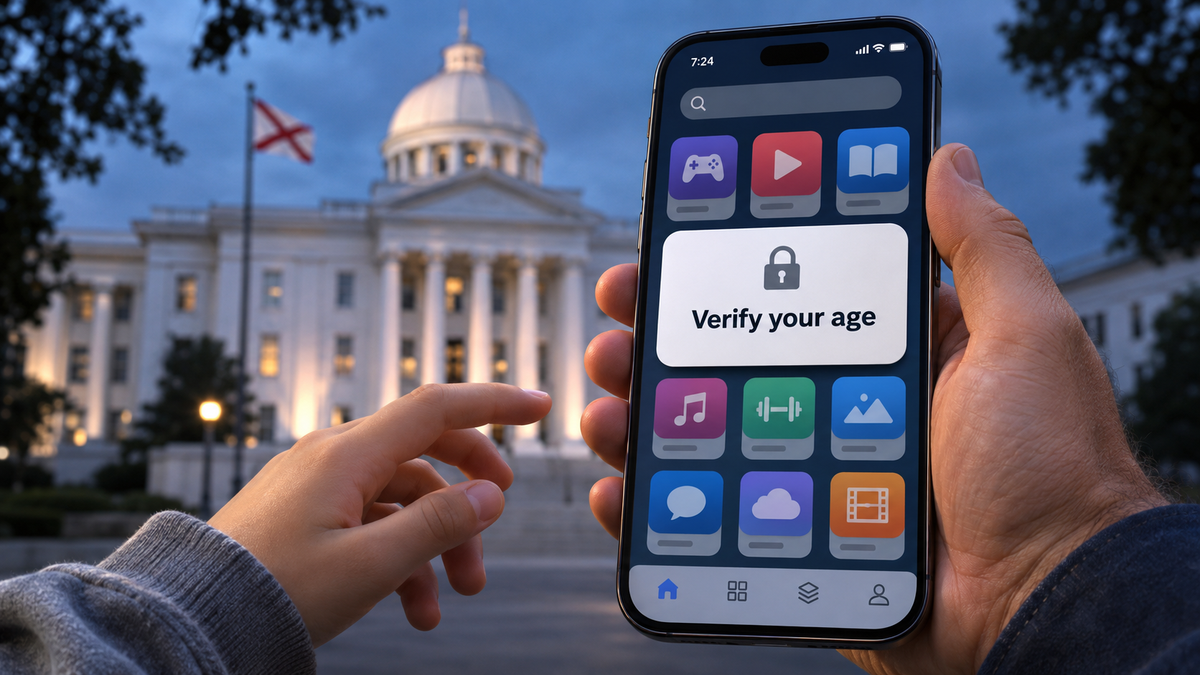
TL;DR — Attorney General Steve Marshall wants public input on Alabama’s new app store age checks. The law takes effect Jan. 1 and covers adults as well as children, raising privacy and free speech concerns similar to those surrounding Alabama’s Meta and TikTok settlements.
Alabama Attorney General Steve Marshall on Thursday asked parents, children, privacy advocates and tech firms to weigh in on how app stores should verify users’ ages under a new State law. The Alabama App Store Accountability Act takes effect Jan. 1, 2027. Comments are due Jan. 8, a week later.
“Parents deserve tools that work, and these rules will help ensure that,” Marshall said in the announcement.
The office’s Request for Information asks how accurate age checks are, what they cost and how easily minors can get around them. It also asks what data each method collects and keeps, whether people with disabilities can use it and how little data companies need to keep for an audit. The office expects most stores to use commercial methods that draw on information gathered in the normal course of opening or using an account, along with a parent or guardian’s Statement for minors. Stores can also use a system that meets the rules Marshall’s office adopts.
Gov. Kay Ivey signed House Bill 161 on Feb. 17. The bill, led by Rep. Chris Sells (R-Greenville), cleared the Senate 35–0 and won final House approval 102–0. Alabama became the fourth State to pass such a law, after Texas, Utah and Louisiana, according to Loeb & Loeb.
Under the enrolled law, app stores must verify whether Alabama users are under 13, 13–15, 16–17 or 18 and older. Minors generally need verified parental consent to download an app or make an in-app purchase. Certain changes to an app, such as a change to its age rating, can trigger a new consent request. The law also reaches certain pre-installed apps and gives stores until fall 2027 to check older accounts covered by the transition period.
The law limits the personal data a store can collect and process to what it needs to check age, get consent or keep compliance records. It requires encryption when stores send personal data used for age checks. Developers get access to users’ age brackets and, for minors, whether a parent has granted consent. The method a store chooses will help determine how much identifying data users have to provide.
The App Store bill has raised significant privacy and First Amendment concerns, debate beganning before this year’s bill passed. As ALPolitics.com reported, a 2025 version stalled in a House committee. At that hearing, NetChoice representative Justin Hill warned that tying access to news and social media apps to proof of identity could chill lawful speech. He also questioned how stores would establish that an adult had the right to give consent for a particular child. Sells argued that parents needed better tools to protect children on their phones.
A similar Texas law offers a look at one possible way those arguments could play out in court. A federal judge initially blocked it after finding it likely violated the First Amendment. The Fifth Circuit later stayed the injunction, allowing Texas to enforce the law during the appeal. In July, the U.S. Supreme Court declined to lift that stay, according to the Computer & Communications Industry Association’s case tracker. Those orders address enforcement of the Texas law during litigation. Alabama’s law raises its own question about how far the State can go in making age checks a condition of access to apps that carry lawful speech.
Alabama’s multiState Meta settlement guarantees the State more than $117 million over 10 years and requires stronger age checks on Facebook and Instagram. Reclaim The Net reported that the checks reach existing adult accounts, that the agreement contemplates government ID checks and facial age estimates, and that Meta must improve its ability to match accounts it believes belong to the same person. The outlet warned that those steps could make it harder to keep separate accounts private or use a service under a pseudonym.
Alabama’s separate TikTok deal calls for stronger age checks, efforts to link accounts believed to belong to the same user and monitoring for signs that users have evaded an age check. It also calls for encryption and generally requires data gathered solely to establish age to be queued for deletion once it is no longer needed for that purpose. Reclaim The Net’s TikTok analysis warned that adults could face added scrutiny as TikTok works out which accounts belong to teens.
NetChoice has raised a related First Amendment concern about the lawsuits behind such deals. It argues that when States use settlements to set time limits or dictate how platforms recommend posts, they can shape when users see lawful speech and what they see. For Alabama’s app store rules, the immediate question is what proof an age check should require and how long the company should keep it.
Anyone may respond to some or all of the questions. Written comments can be uploaded as PDFs through the Attorney General’s response form by Jan. 8, 2027.