McFeeters Seeks to Void Tuberville GOP Win
GOP candidate Ken McFeeters contests Tommy Tuberville’s nomination, arguing the Senator fails Alabama’s residency rule

Republican gubernatorial candidate Ken McFeeters is asking the Alabama Republican Party to throw out U.S. Senator Tommy Tuberville’s primary victory, arguing the former Auburn football coach does not meet the State’s constitutional residency rules for Governor.
McFeeters, who finished a distant second in Alabama’s May 19 Republican primary, filed a formal contest with the Alabama Republican Party on May 27. The filing asks party leaders to declare Tuberville ineligible, void his nomination and certify McFeeters as the next eligible Republican candidate.
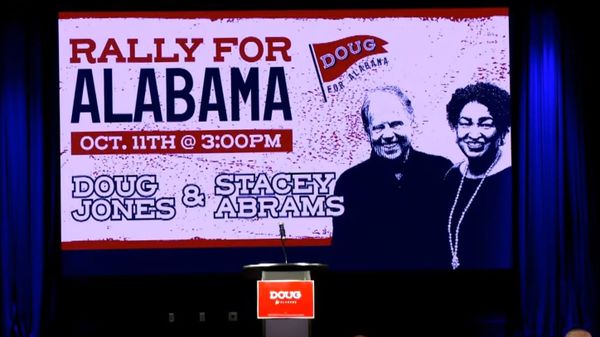
Tuberville dominated the GOP primary with 421,754 votes, or more than 85 percent of the vote. McFeeters received 47,166 votes, while Oxford businessman Will Santivasci earned 24,456 votes. Tuberville is now set for a November matchup with former U.S. Sen. Doug Jones, who won the Democratic primary with roughly 78 percent support. Tuberville defeated Jones in Alabama’s 2020 U.S. Senate race.
The dispute centers on Article V, Section 117 of the Alabama Constitution, which states:
The governor and lieutenant governor shall each be at least thirty years of age when elected, and shall have been citizens of the United States ten years and resident citizens of this state at least seven years next before the date of their election. The lieutenant governor shall be ex officio president of the senate, but shall have no right to vote except in the event of a tie.
The phrase “at least seven years next before the date of their election” has traditionally been interpreted to mean seven consecutive years prior to the date of the election, which in this cycle is November 3, 2026.
“Tommy Tuberville was not eligible to seek the Republican nomination for Governor at the time of the May 19, 2026, primary election because he did not satisfy the seven-year continuous residency requirement for that office established by Article V, Section 117 of the Alabama Constitution,” McFeeters’ contest states.
McFeeters argues Tuberville needed to establish and maintain Alabama residency no later than November 2019 in order to qualify for the November 2026 general election.
“The publicly available evidence establishes that he did not,” the filing states.
The challenge follows months of legal and political fights over Tuberville’s residency. Earlier this year, McFeeters filed both a formal party challenge and a lawsuit in Covington County Circuit Court seeking to block Tuberville from appearing on the ballot. The Alabama Republican Party dismissed the earlier challenge in February, and Circuit Judge Charles A. “Lex” Short dismissed the lawsuit on May 18 without ruling on the underlying residency question.

In the new filing, McFeeters points to Tuberville’s ties to Florida, including his ownership of a beachfront home in Santa Rosa Beach, his public comments in 2017 saying he had moved there, and records showing he voted in Florida in 2018.
The filing also claims Tuberville’s name was not added to the deed of the Auburn home he now lists as his residence until May 2024. It further cites a 2023 report from The Washington Post that detailed Tuberville’s property holdings and residency history.
Tuberville has rejected the argument, saying his earlier years living in Alabama while coaching at Auburn University satisfy the constitutional requirement.
“You can go back to, as long as you’ve had a seven year…I was at Auburn 10 years and so I lived there for 10 years in a row,” Tuberville told Alabama Daily News. “So it’s not your last seven years.”
McFeeters disputes that reading of the law, arguing the phrase “next before the date of their election” means the seven-year residency period must immediately precede Election Day.
The filing also asks the Alabama Republican Party to compel Tuberville to release State income tax returns, utility records, travel records, credit card statements and property records dating back to January 2017.
“Alabama has a State income tax; Florida does not,” the contest states. “If Tuberville has paid Alabama income taxes continuously since 2018 or 2019, he would have a strong case for Alabama residency.”
The challenge argues Tuberville has not produced records that “objectively establish whether his primary physical presence has been in Alabama or Florida during the required period.”
Tuberville’s campaign has repeatedly dismissed the residency claims as political attacks from a struggling opponent.
“Ken McFeeters is desperately trying to save his joke of a campaign,” campaign communications director Mallory Blount Jaspers said earlier this spring. “Coach Tuberville has lived in Auburn since 2019. When he isn’t representing Alabama in the U.S. Senate, he’s back home in Auburn with his wife Suzanne.”
Tuberville’s campaign has also said it provided the Alabama Republican Party with “definitive proof” of his Alabama residency, though the campaign has not publicly detailed all supporting records.
Under Alabama Republican Party rules, the State Executive Committee must meet within five days to determine whether McFeeters’ contest is facially valid. If party leaders move forward with a hearing, both sides may subpoena witnesses, present evidence and appear with legal counsel. Party rules require a final ruling within two calendar days after the hearing process concludes.
The night before the May 19 primary, Judge Short rejected McFeeters’ attempt to delay the election until Tuberville proved his eligibility. Attorneys for the Alabama Republican Party argued in court that candidate qualifications are matters for political parties to decide before an election, not judges or juries.