Say It
The Pattern, Part 6-Guest Opinion by Alicia Haggermaker
Guest Opinion by Alicia Haggermaker
Every part of this series has documented a pattern. Not a theory. A pattern — with a mechanism, a sequence, and a predictable outcome that has repeated across medicine, aerospace, physics, and municipal utility policy with enough consistency that calling it coincidence requires more faith than calling it what it is.
Suppress. Discredit. Silence. And when silence finally fails — manage the release.
The federal investigation into the deaths of American aerospace researchers is real. The congressional demands are documented. The FBI is involved. The White House has confirmed it. And none of that — not one piece of it — is the thing that will actually change what happened to Amy Eskridge, Joshua LeBlanc, Andrew Moffatt, or the dozen other researchers on that list.
Investigations don't stop this. That needs to be said clearly because we have watched it play out too many times to pretend otherwise. The Church Committee in the 1970s exposed MKUltra, COINTELPRO, assassination programs, and illegal surveillance — and the agencies reorganized, renamed, and proceeded. The Epstein investigation produced one conviction and a list of names that has never been fully prosecuted. Every investigation becomes the managed release of just enough truth to absorb the pressure and reset the cycle.
The FBI investigating these researcher deaths is operating inside the same institutional architecture that produced them.
You cannot use the system's immune response to cure the system's disease.
What works is something the suppression architecture was never designed to handle — because it has never had to. The mechanism is built for sequence. It isolates. It picks people off one at a time. It makes examples visible enough that everyone else does the math and chooses silence. Amy Eskridge warned she needed to disclose soon. Isaac Kappy said publicly he was not suicidal four days before his death. David Wilcock told his audience researchers were being killed or suicided two days before he was gone. Each of them announced before they disclosed. Each of them gave the system a timeline and made themselves a target.
The warning is the vulnerability.

The moment you say ‘I have something to say and I'm going to say it‘ — you have handed the system a window. Surveil. Isolate. Discredit. Intervene. The entire response capability is built around that window between announcement and disclosure. It works because it operates on individuals, sequentially, with enough time between each one to reset and prepare for the next.
It has no answer for simultaneity.
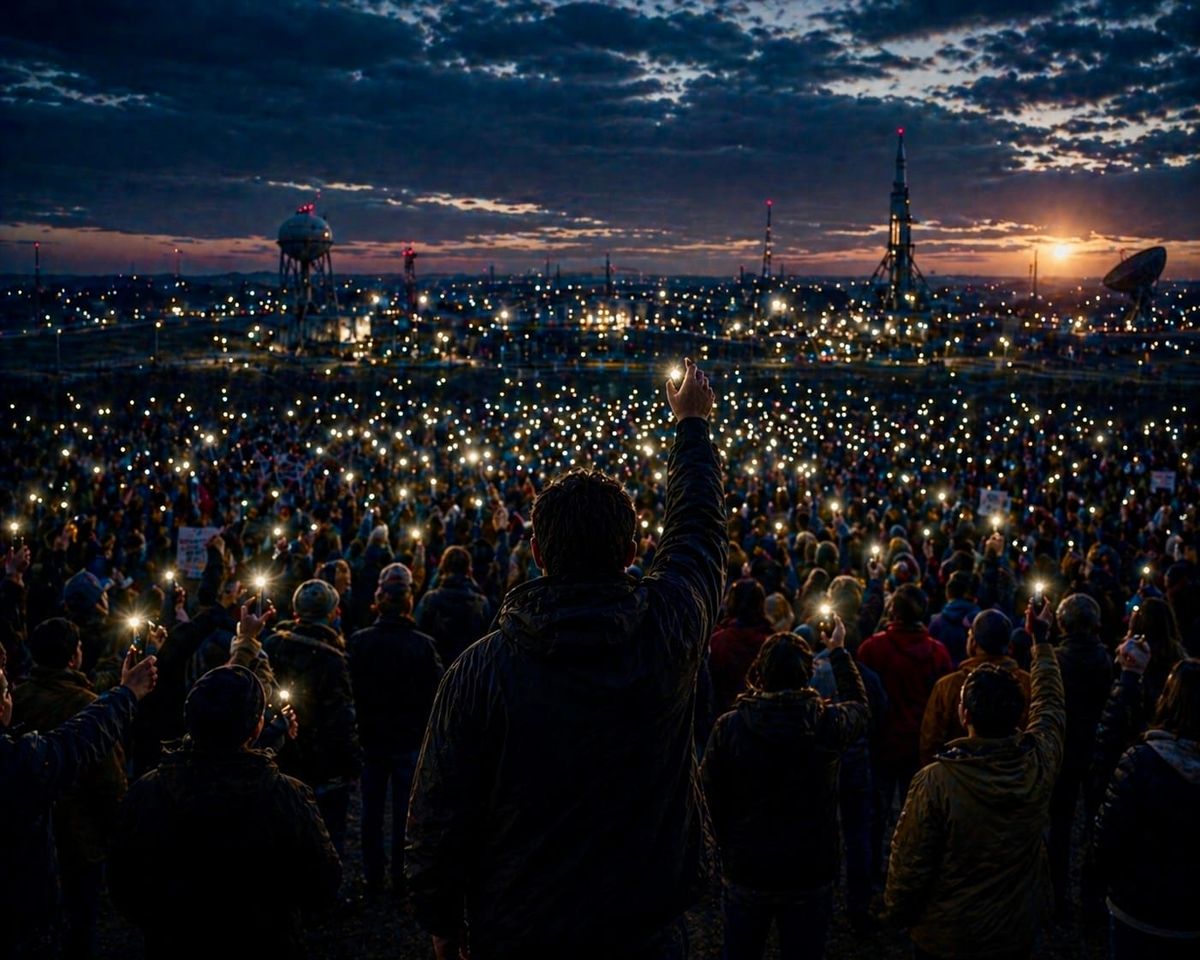
Think about what it would look like if everyone who knows something — not the same something, their own something, their specific piece of the mosaic — said it at the same time. Not after announcing it. Not after warning anyone. Just said it.
The DHR worker who has watched children cycled through systems that serve the system rather than the child. The emergency room physician who has seen the protocol override the patient. The legislative aide who has watched the amendment get quietly killed in committee. The research scientist who stopped publishing when the pressure became impossible to ignore. The defense contractor who knows what the program actually is. The hospital administrator who knows what the reimbursement structure actually incentivizes. The Huntsville resident who has heard and felt things for years that the evening news has never reported.
None of them saying the same thing. Each of them saying their thing. Their domain. Their evidence. Their witness.
But all of it on the same day.
The mosaic assembles itself in real time. Publicly. Simultaneously. Across every sector, every platform, every domain. No single agency can contain it. No single narrative can reframe it. No single discrediting campaign can touch a thousand people saying a thousand different true things at the same moment.
They cannot pick everyone off at once. That capability has never had to be developed because the system has always had the luxury of sequence. Remove the sequence and you remove the only tool that actually works.
There is one more thing worth noting.
If that day came — if the words went out — and then the signal went down? The absence would be the answer. Silence as confession. The suppression confirming everything the suppressed had said. They cannot win that moment. Either the truth circulates or the act of stopping it becomes the proof. There is no third option.
I am not writing this series from the outside of this story. I never was.
I live in Huntsville. I know these names are not abstract. I know this city sits at the center of exactly the kind of work these people were doing and dying over. I have sat across tables from doctors who told me what they know and then told me they would never say it publicly — who looked me in the eye and described the pattern in precise clinical detail and then described the calculation they had made about their licenses, their families, their lives.
I have watched researchers go quiet. I have watched opt-out victories get managed into obsolescence. I have watched the official explanation arrive before the question was finished being asked.
And I have watched the people who stayed quiet convince themselves that someone else would say it. That the moment wasn't right yet. That the public wasn't ready. That the institution might still correct itself if given enough time and enough properly filed requests through enough properly designated channels.
The moment has been right for decades. The public is as ready as it is going to get without someone deciding to trust it. The institution has had every opportunity to correct itself and has used each one to buy another cycle of the same sequence.
The doctors who talked to me in private are counting on someone to say it publicly. The researchers who stopped publishing are counting on someone to keep asking why. The residents of Huntsville who won an opt-out that still hasn't been implemented are counting on someone to name what that delay actually is.
I am one person. This series is six parts in a local Alabama publication read by people who live in the city where three federal investigation subjects worked and died. That is not nothing. But it is not enough on its own.
What makes it enough is if the people who read it — who recognize their own domain in the pattern, who have their own piece of the mosaic, who have been doing the calculation about whether it's safe yet — decide that the calculation has been running long enough.
It has.
The truth doesn't need to be suppressed. Only lies do.
And whatever is being buried with these names — across these decades, these domains, these carefully separated and deniable pieces — the burial only works if we let them do it one person at a time.
You are not one person.
Say it.
Part 1 of this series may be found HERE, Part 2 HERE, Part 3 HERE, Part 4 HERE and Part 5 HERE.
Sources:
https://drive.google.com/file/d/1QtAkMesBYVIDvfokSF3v0JINzdCZhgSR/view?usp=drive_link
Full Substack piece:
Alicia Boothe Haggermaker is a lifelong resident of Huntsville, Alabama, and a dedicated advocate for health freedom. For more than a decade, she has worked to educate the public and policymakers on issues of medical choice and public transparency. In January 2020, she organized a delegation of physicians and health freedom advocates to Montgomery, contributing to the initial draft of legislation that became SB267.
Opinions do not reflect the views and opinions of ALPolitics.com. ALPolitics.com makes no claims nor assumes any responsibility for the information and opinions expressed above.