Stop Punishing the Player Who Saved the League
Guest Opinion by Perry Hooper Jr.
Guest Opinion by Perry Hooper Jr.
Professional sports have always depended on stars. The NBA had Michael Jordan. Golf had Tiger Woods. Tennis had Serena Williams. NASCAR had Dale Earnhardt. Today, the WNBA has Caitlin Clark.
The remarkable thing is that Caitlin Clark never asked to become the face of the league. She simply showed up, worked harder than almost anyone else, treated fans with respect, elevated her teammates, and played basketball at a level that made millions of Americans suddenly care about a league they had largely ignored for decades.

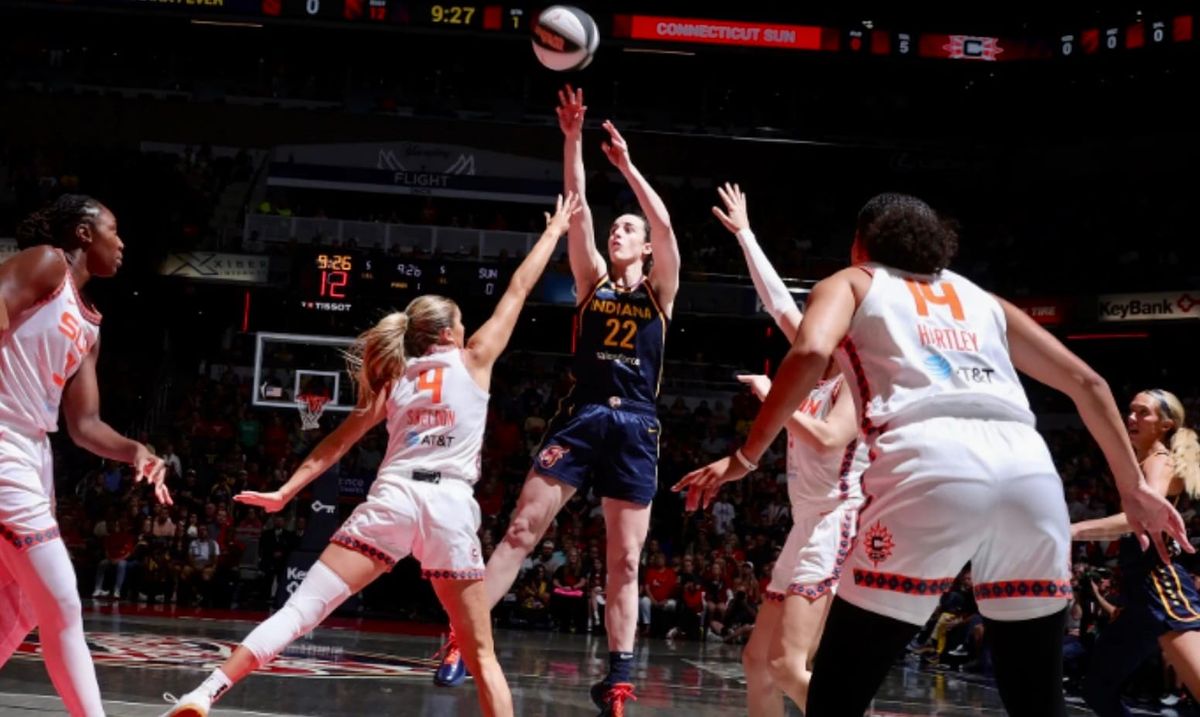
That should make her the WNBA’s greatest asset. Instead, too often it appears she has become its biggest target.
Every sports league understands one simple reality. When a player dramatically increases television ratings, fills arenas, sells merchandise, attracts sponsors, and creates millions of new fans, that player should be celebrated and protected, not left vulnerable to repeated dangerous fouls and unnecessary physical play.
Nobody is suggesting basketball become a noncontact sport. Physical defense is part of the game. Hard fouls happen, and rivalries are healthy. Intentionally targeting the league’s biggest attraction is something entirely different.
If officials consistently allow excessive contact that goes beyond legitimate basketball, the WNBA is not proving its toughness. It is risking the health of the very player responsible for much of its newfound popularity.
Michael Jordan once joked, "Republicans buy shoes, too." Jordan later explained that the famous remark was made in jest, but the business principle behind it remains timeless. A professional athlete does not build a broad national audience by insulting half the country. Republicans buy shoes. Democrats buy tickets. Conservatives watch basketball. Liberals watch basketball. Families from every background will support an athlete who gives them greatness, humility, effort, and excitement.
People do not turn on a basketball game because they want to receive a political lecture. They tune in to watch great athletes compete. They want to see impossible shots, brilliant passes, fierce defense, leadership under pressure, and the thrill of victory. Caitlin Clark understands that. She lets her game do the talking, and the American people have responded.
Too many around the WNBA have forgotten that basic lesson. They have sometimes acted as though fans are obligated to support the league regardless of how often its players or public messaging venture into divisive left-wing politics. Fans are under no such obligation. Their time and money must be earned, and Caitlin Clark has earned both by giving them something worth watching.
The WNBA should be especially careful about alienating its growing audience because, for much of its history, the league has depended on the NBA’s ownership, infrastructure, promotion, and financial support. The exact financial arrangements are not fully public, and recent revenue growth has complicated the picture, but the league has long operated with NBA backing while struggling to sustain itself independently. Reports have estimated substantial annual losses even during its recent surge in attention.
That history should produce gratitude and business discipline. A league that has required years of outside support should not look down on the new fans finally buying its tickets, watching its broadcasts, and purchasing its merchandise. It should welcome them.
The numbers demonstrate what has happened. In 2024, WNBA attendance increased 48 percent, the league recorded its highest total attendance in 22 years, and 22 regular-season broadcasts attracted at least one million viewers. The league itself reported its most-watched regular season in 24 years, record merchandise sales, and unprecedented digital engagement. Caitlin Clark was not the only talented player responsible for that growth, but there is no serious argument that her arrival was not a central force behind it.
The league’s front office should ask a simple question. How many people bought season tickets because of Caitlin Clark? How many tuned in for nationally televised games because of Caitlin Clark? How many young girls now wear WNBA jerseys because they watched Caitlin Clark play? The answer is obvious.
That success did not happen because she became a political activist. It happened because she became an extraordinary basketball player.
In an era when nearly every public figure is pressured to issue an opinion on every political controversy, Clark has largely allowed her game, work ethic, and leadership to speak for themselves. Americans admire that authenticity. They admire excellence. They admire humility. They admire competitors who understand that the court is a place to unite fans around basketball, not divide them through political propaganda.
League officials should make it unmistakably clear that flagrant fouls, repeated dangerous contact, and deliberate attempts to injure players will bring swift and meaningful consequences. That means reviewing repeat offenders, increasing fines, imposing suspensions when warranted, and instructing officials to distinguish between physical basketball and conduct intended to intimidate or injure.
Protecting the game’s best players is not favoritism. Every successful professional league recognizes that player safety protects the integrity and economic future of the sport itself. The goal should not be to give Caitlin Clark special treatment. The goal should be to give every player equal protection while making it crystal clear that intentionally trying to hurt another athlete has no place in professional basketball.
Caitlin Clark has done everything a professional league could hope for. She has elevated the quality of play, expanded the audience, inspired young athletes, generated extraordinary attention, and helped transform the WNBA into a league that more Americans want to watch.
The WNBA finally has its Michael Jordan moment, not because Caitlin Clark is Michael Jordan, but because she possesses the rare ability to change the economics and cultural reach of an entire sport. The league can embrace her example by selling great basketball to every American, or it can retreat into political activism, resentment, and lectures that drive potential fans away.
Michael Jordan understood that Republicans buy shoes, too. Caitlin Clark understands that Americans of every political persuasion buy tickets, watch games, and cheer for greatness. It is time for the WNBA to understand it as well.
Perry O. Hooper Jr. is a longtime Alabama Republican figure, former Alabama Legislator and Montgomery businessman. He served as Co-Chair of “Alabama Trump Victory” in 2016, and served as an at-large delegate to the Republican National Convention. He is a noted civic leader in Montgomery with deep family roots in Alabama’s legal and political history.
Opinions do not reflect the views and opinions of ALPolitics.com. ALPolitics.com makes no claims nor assumes any responsibility for the information and opinions expressed above.