Strong Backs Introduces to Restore TSA Security Fee Funds
Rep. Dale Strong joins bipartisan push to direct 9/11 security fees back into airport screening and aviation safety upgrades
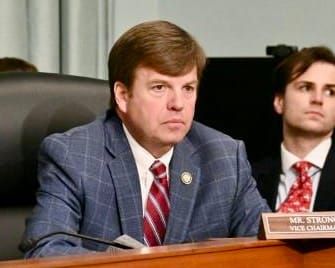
U.S. Representative Dale Strong (R-AL-05) has introduced bipartisan legislation aimed at keeping federal airline security fees focused on airport safety and screening upgrades instead of broader government spending.
The proposal, the “Spending Aviation Fees for Equipment, Guaranteeing Upgraded and Advanced Risk Detection and Safety Act,” or SAFEGUARDS Act, was introduced alongside Rep. Tim Kennedy (D-NY). The bill would require revenue collected through the federal 9/11 Passenger Security Fee to be spent on aviation and airport security projects, restoring what lawmakers say was the fee’s original purpose.
Passengers currently pay a $5.60 fee on one-way airline tickets. The fee was created after the Sept. 11 terrorist attacks to help fund airport screening and aviation security measures nationwide. According to the bill’s sponsors, roughly $15 billion collected through the fee since 2014 has been diverted to non-security spending.
Under the legislation, $500 million each year would be directed toward explosive detection systems for checked baggage. Another $250 million annually would fund checkpoint technology upgrades at airports.
Strong said the measure comes as the nation prepares for a sharp rise in international travel tied to upcoming events, including the 2026 FIFA World Cup and the 2028 Summer Olympics.
“As we prepare to host millions of visitors for major international events and continue facing evolving threats to our homeland, we must ensure TSA has the resources necessary to secure our airports with modern screening technology and upgrades that keep passengers safe. The SAFEGUARDS Act ensures that the resources are available to do just that,” Strong said.
The legislation has drawn support from members of both parties, including Homeland Security Committee Chairman Andrew R. Garbarino (R-NY) and Border Security and Enforcement Subcommittee Chairman Michael Guest (R-MS).
Kennedy said airports across the country are already feeling pressure from aging equipment and rising passenger traffic.
“The SAFEGUARDS Act is a necessary piece of legislation to provide increased funding that we rely on to keep our skies and cities safe,” Kennedy said. “As the existing screening technology in our airports falls behind modern standards and best practices, we are going to start to see real strain on systems that are essential to passenger and crew safety.”

Garbarino tied the proposal to the approaching 25th anniversary of the Sept. 11 attacks.
“For the last decade, the 9/11 Passenger Security Fee has generated over $40 billion in revenue, but billions of dollars have been diverted to unrelated purposes instead of being used to fund the cutting-edge screening technology that is essential to provide safety and security to the traveling public,” Garbarino said.
Guest said the bill would ensure airline security fees are spent where travelers expect them to go.
“The men and women of the TSA work every day to protect millions of travelers, and they deserve the resources necessary to protect the flying public,” Guest said.
The SAFEGUARDS Act also has backing from several aviation and travel groups, including Airlines for America, American Airlines, Southwest Airlines, the U.S. Travel Association, and the American Association of Airport Executives.
Officials at Huntsville International Airport also endorsed the measure.
“We appreciate Congressman Dale Strong for his efforts to support and strengthen the transportation needs of our passengers and regional community,” said Butch Roberts, CEO of the Port of Huntsville and Huntsville International Airport. “The SAFEGUARDS Act would ensure that passenger fees are returned to their intended purpose—investing in advanced technologies that enhance the safety and efficiency of air travel across the U.S.”
A companion version of the bill was introduced in the Senate by Sen. Jerry Moran (D-NJ) and has already advanced through the Senate Commerce Committee.