Tennessee Data Center Plan Spurs Health, Enviro Concerns in North Alabama
Downstream residents cite water pollution concerns as studies warn of wider health impacts from data centers
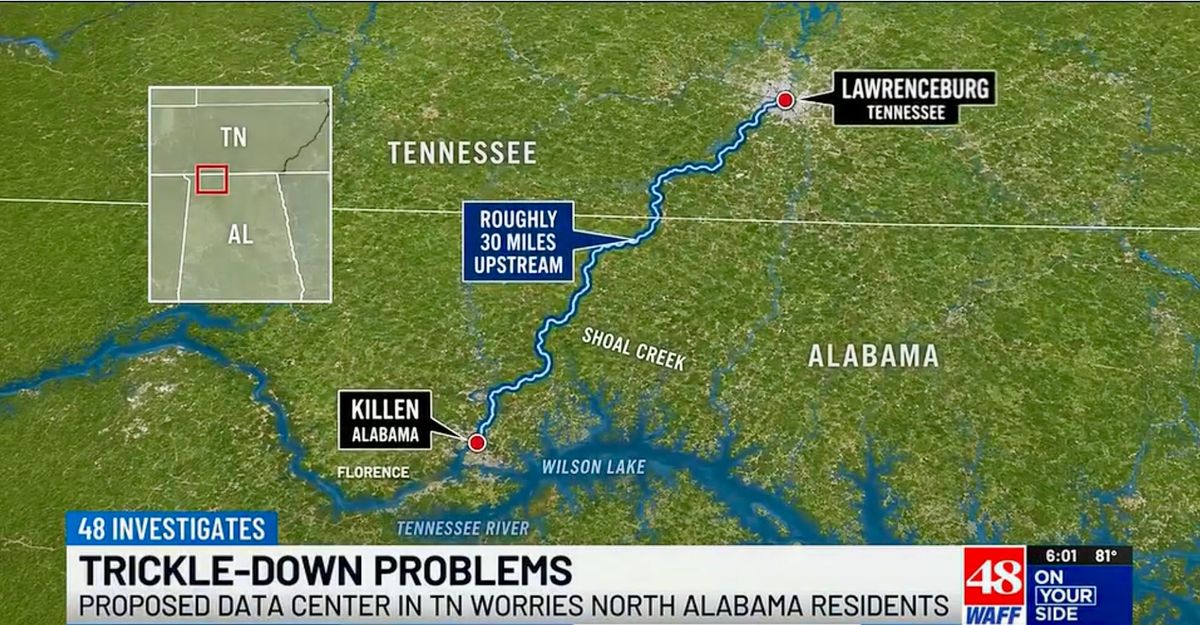
A proposed data center project in Lawrenceburg, Tennessee is drawing growing concern from North Alabama residents and environmental advocates who say its impact could extend far beyond the build site, reaching communities miles downstream and potentially affecting both water systems and public health.
A WAFF 48 Investigates report highlights worries tied to the project’s scale, including water demand and downstream effects on Shoal Creek. But broader concerns are also emerging as national attention grows on the environmental footprint of data centers, especially as artificial intelligence and cloud computing expand rapidly across the United States.
Recent reporting and research have pointed to potential “hidden” environmental and health impacts tied to large data infrastructure. One investigation summarized expert warnings that large data centers may contribute to air pollution through diesel backup generators, along with increased noise and localized environmental strain in surrounding communities.
In Europe, coverage by El País has also noted growing debate over whether governments and regulators are fully accounting for health impacts linked to data center expansion, including air quality concerns and community exposure to emissions from backup power systems.
Scientific literature has similarly examined the environmental burden of large-scale digital infrastructure. Research discussed in medical journals such as The Lancet has increasingly focused on how energy-intensive computing systems may contribute to broader public health risks through emissions, energy demand, and associated industrial activity.
Additional reporting from TrialSite News has collected examples and case studies of communities raising concerns about noise, air quality, and respiratory symptoms they associate with nearby data center operations, particularly where diesel generators are tested or used for backup power.
Against that backdrop, residents near the Tennessee project say their concerns are not abstract. They point to the possibility of round-the-clock industrial activity, including constant cooling systems and intermittent generator use that can produce fine particulate emissions. Critics argue that even limited releases, when repeated over time, may contribute to degraded air quality in rural areas where baseline pollution is typically lower.

Noise is another major issue raised by residents. Data centers often operate continuously, and large cooling systems and backup equipment can generate persistent low-frequency sound. Some residents worry that this type of steady noise could disrupt sleep, increase stress, and affect quality of life, particularly in quieter downriver communities where nighttime ambient sound is typically minimal.
Health concerns are also central to the debate. Advocates and residents say exposure to particulate matter from diesel generators, even during testing, could aggravate respiratory conditions such as asthma and other breathing-related illnesses. While project supporters argue that modern facilities are designed to meet environmental permitting standards, critics say those standards may not fully capture cumulative or long-term exposure effects.
Downstream communities, in particular, say they often feel excluded from early planning discussions even though they may still experience indirect impacts through shared waterways, regional air movement, and infrastructure strain. Some are calling for more comprehensive environmental review that includes air quality modeling, noise studies, and full disclosure of generator testing schedules.
Local officials and project representatives maintain that data centers are built to comply with existing regulations and are increasingly designed with efficiency and emissions controls in mind. However, opposition groups say compliance alone does not settle broader questions about long-term livability and environmental health.
As digital infrastructure continues to expand across the Southeast, the Tennessee proposal has become part of a wider national debate over how to balance technological growth with environmental protection and community health — and that debate is now spilling across State lines.