The Choice in Alabama’s Lt. Governor Runoff: Establishment Money or Grassroots Support?
Wes Allen has raised approximately $643,800, with $455,500 coming from PACs and special-interest groups.

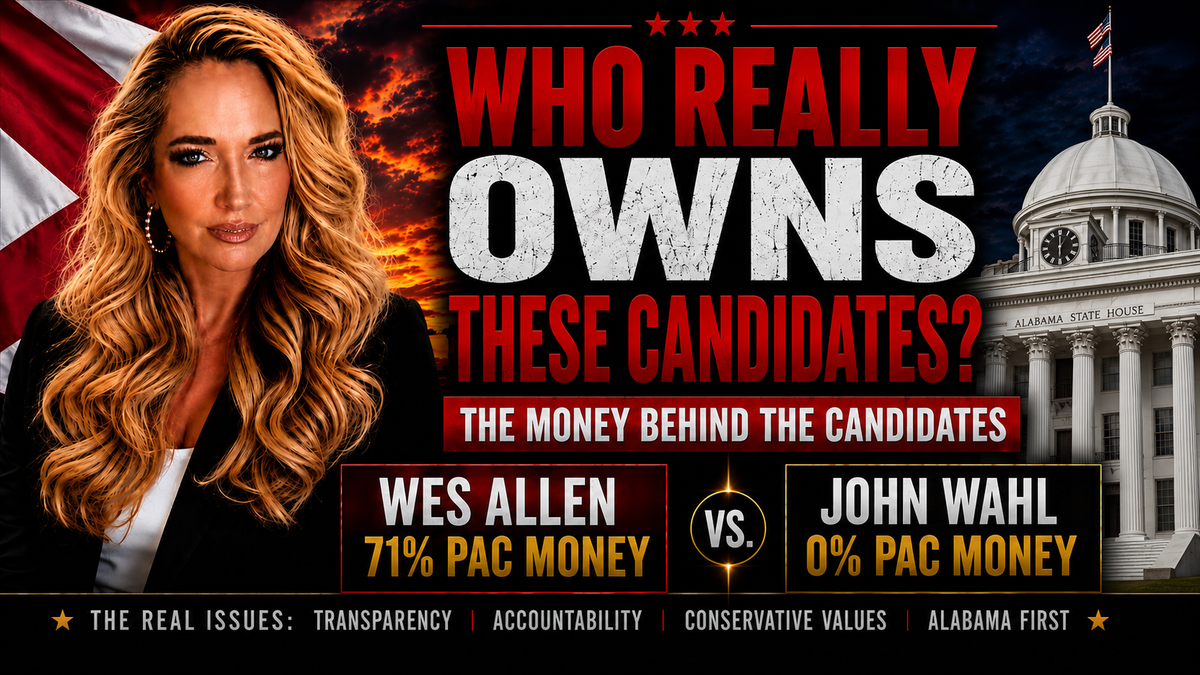
As Alabama Republicans head toward the June 16 runoff election, voters are being presented with a clear contrast between two very different campaigns.
According to campaign finance data from the runoff period following the May primary, Wes Allen has raised approximately $643,800, with $455,500 coming from PACs and special-interest groups. That means roughly 71% of his fundraising has come from PAC money, while only 29% has come from individual contributors.
By comparison, John Wahl has raised approximately $489,304, and according to the available data, those contributions have come overwhelmingly from individual supporters rather than PACs.
Those numbers tell an important story.
For years, Alabama conservatives have expressed frustration with the influence of special interests in Montgomery. Voters routinely hear promises about fighting for the people, standing up to the establishment, and resisting powerful political interests. Yet campaign finance reports often reveal who candidates depend on when election season arrives.
The question Alabama Republicans should ask is simple: Who is funding these campaigns, and what do they expect in return?
PAC contributions are legal and common in politics. However, when more than 70 percent of a candidate’s runoff fundraising comes from organized political interests rather than individual citizens, voters have every right to examine those relationships carefully.
These concerns become even more significant when viewed alongside longstanding debates over gambling expansion and gambling-related influence in Alabama politics.
Over the years, conservative activists, grassroots organizations, and election watchdogs have repeatedly raised concerns about the role gambling interests may play in campaigns throughout the state. Alabama voters have watched gambling proposals come and go for years, often accompanied by questions about money, lobbying, and political influence.
Whether those concerns ultimately prove justified in every case is not the point. The larger issue is transparency. Alabama citizens deserve confidence that public officials are willing to thoroughly investigate allegations of improper political influence, regardless of who may be involved.
When voters see a campaign heavily financed by PACs and organized interests, it is only natural to ask whether those contributors expect access and influence that ordinary citizens do not possess. Those questions become even more important when some of the same political and lobbying networks involved in state politics have been connected to controversial policy debates, including gambling legislation.
At the same time, Republican voters must also consider another factor in this race: endorsements.
President Donald Trump has built one of the most influential political operations in modern American history. His endorsement process is not casual. Candidates seeking his support face extensive scrutiny and vetting. Trump has repeatedly demonstrated that he values loyalty, conservative principles, and a commitment to advancing the America First agenda.
Supporters argue that no political figure has invested more time and effort into identifying candidates who will advance his vision for the country. They believe that when President Trump puts his name behind a candidate, voters should take that endorsement seriously.
Ultimately, this runoff election presents voters with two competing models. One campaign has relied heavily on PAC and special-interest funding. The other has relied primarily on support from individual citizens.
Alabama Republicans must decide which approach better reflects the future they want for their state.
This election is about more than personalities. It is about trust, accountability, transparency, and who candidates answer to once they take office.
On June 16, Alabama voters will have the final say.