Trump Comes to Mobile as Approval Falls to New Lows
Pres. Trump returns to Alabama Friday to rally the GOP as national polls show deep trouble on the economy and with key voting groups
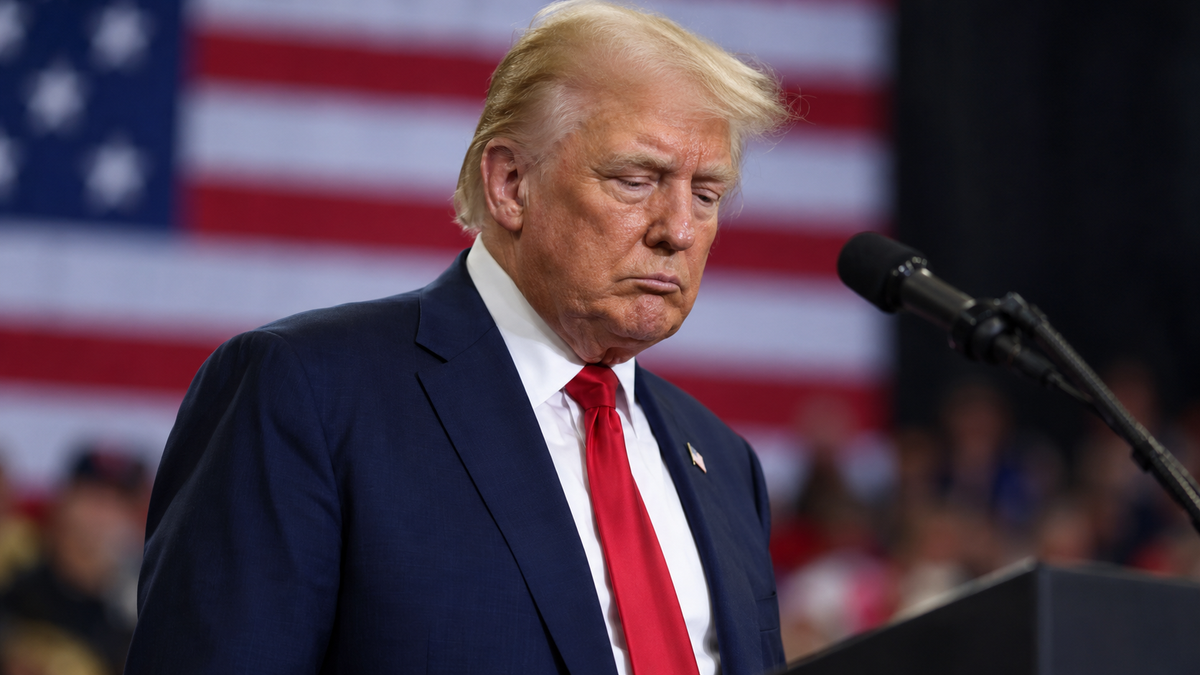
TL;DR: President Donald Trump visits Mobile Friday with his national approval rating near or at new lows. His standing has also slipped in Alabama, though recent State polls still show Republican candidates leading their Democratic rivals. The question is can Trump can fire up GOP voters without also energizing Democrats and independents.
As President Donald Trump comes to Mobile Friday to rally Alabama Republicans, he does so with his national approval ratings falling to new lows and signs of trouble among some of the same voters who put him back in the White House.
Trump will appear Friday at the University of South Alabama's Mitchell Center as part of a late campaign push aimed at firing up Republican voters before the Nov. 3 election. The visit comes amid ALGOP concerns about voter apathy following record-low turnout of just 5.24% in Alabama's summer special primary elections.
The timing of the President’s visit is…interesting.
A new AP-NORC poll puts Trump's overall approval at just 31%, down from 37% in June and 40% in January. Only 26% approve of his handling of the economy, while a mere 17% approve of his handling of the cost of living.
The survey also found 65% blame Trump's policies more than outside factors for higher prices. About six in ten Americans believe the country is worse off than when Trump began his second term.
Other polls paint much the same picture.
A recent Wall Street Journal survey put Trump at 37% approval and 61% disapproval, while CNN found him at 33% approval and 67% disapproval — his lowest rating in CNN polling across either of his terms.
A Reuters/Ipsos poll has also put Trump near a historic low, at 32%. Reuters reported Thursday that Trump's falling approval and voter anger over prices are complicating Republican campaigns even in States he carried by large margins in 2024.
Perhaps more troubling for Republicans is where Trump is losing ground.
CNN chief data analyst Harry Enten recently noted that Trump's net approval among white voters without college degrees — a core part of his coalition — had fallen to minus 2 points. His net approval on inflation among the same group stood at minus 39.
Independents are even more hostile. CNN found 56% strongly disapprove of Trump, compared with only 9% who strongly approve.
Alabama remains far more favorable territory for Trump than the country as a whole. He won the State with nearly 65% of the vote in 2024.
But even here, there are signs of erosion of support.
Recent Civiqs polling put Trump's Alabama approval at 48%, with 42% disapproving and 10% neutral. That was down from 53% approval in early August.
The Alabama Reflector also noted that recent Economist/YouGov estimates show Trump considerably weaker in Alabama than his overwhelming 2024 vote share would suggest, though he remains popular with Republicans and Trump voters.
That does not mean Alabama Republicans are suddenly in deep trouble — far from it.
A new Napolitan News Service survey conducted Sept. 21–25 among 800 registered Alabama voters found Republican gubernatorial nominee Tommy Tuberville leading Democrat Doug Jones 50% to 37%. In the U.S. Senate race, Republican Barry Moore led Democrat Everett Wess 54% to 33%. The poll was commissioned by conservative advocacy group Alabama Policy Action and had a margin of error of plus or minus 3.5 percentage points.
Those numbers point to an important distinction: Trump's personal approval can fall while Republican candidates continue to benefit from Alabama's strong GOP lean.
The big question surrounding Friday's rally is just how much Trump can help raise the turnout on November 3.
Republicans hope Trump can turn enthusiasm into votes. The RNC argues that Trump's ability to bring low-propensity Republican voters to the polls remains one of his greatest political strengths.
“The President’s ability to engage with and activate low-propensity voters is unmatched,” RNC spokesperson Natalie Baldassarre told the Associated Press. “That’s why he’ll be barnstorming the country to activate the voters we need to win in November.”
Republican Senate nominee Barry Moore was even more direct, saying Trump's Mobile appearance “will be the jet fuel we need to win big in Alabama.”
The clearest potential benefit may be turnout rather than persuasion.
Trump-backed Republicans already have sizable leads in recent Statewide polling. Getting irregular Trump voters to actually cast ballots could help GOP candidates up and down the ticket.
The more interesting test could come in the 2nd Congressional District, where Democratic Rep. Shomari Figures faces Republican Rhett Marques. The redrawn district is considerably more competitive than most of Alabama, and both parties are spending heavily in the race. The Mobile media market also reaches into the Florida Panhandle, giving the rally an audience beyond Alabama.
There is also a possible downside for Republicans: a Trump rally could energize Democrats and Trump-skeptical independents at the same time it excites his base. That possibility has been raised by Democratic campaigns and political analysts, but its actual effect won’t be known until voters cast their ballots.
Nationally, Trump's decision to begin his final campaign blitz in deep-red Oklahoma and Alabama has itself drawn attention. Trump had previously said he planned to campaign in 35 competitive areas. Instead, he is starting October in States he carried overwhelmingly in 2024. The Associated Press noted that Republicans are now spending time and money in territory once viewed as safely red.
Alabama is still Red State Alabama. Republicans remain ahead in all of the available Statewide polling, and Trump's support among the GOP base remains much stronger than his national numbers.
But Friday's Mobile rally comes under very different conditions from the massive Mobile event that helped launch Trump's political rise in 2015.
Eleven years later, Trump is back in Mobile — this time trying to transfer his remaining pull with Republican voters to candidates further down the ballot while his own national approval numbers scrape new lows.