Trump Was Right: Everything Is on the Line
Guest Opinion by Perry Hooper Jr.
Guest Opinion by Perry Hooper Jr.
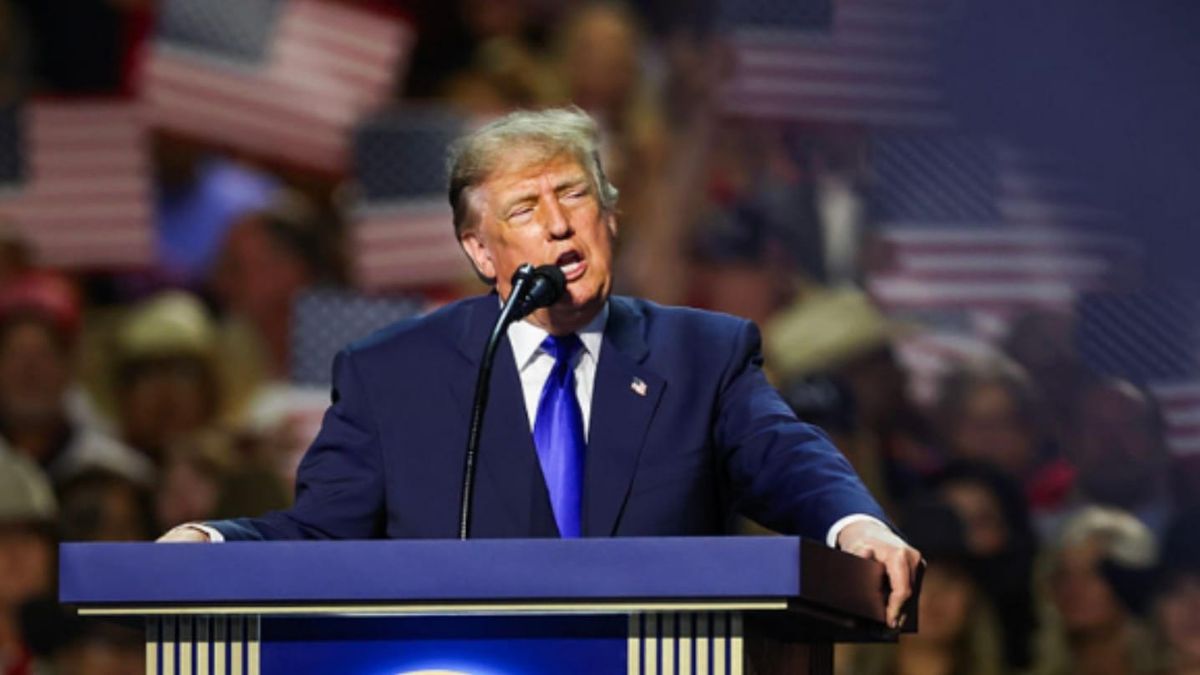
President Donald Trump did not travel to Dallas Wednesday night merely to celebrate the remarkable accomplishments of the past two years. He went there to sound an alarm. The progress he and the Republican Congress have achieved is real, but it is not permanent. If Democrats regain control of Congress, they will have the power and the determination to obstruct, weaken and attempt to dismantle the very policies that have made America safer, stronger and more prosperous.
“If we lose, you’re going to lose your border, you’re going to lose your tax cuts, you’re going to lose your safety and security,” President Trump warned. “You’re going to lose your wealth.”
President Trump was right. This is not ordinary political exaggeration. The Democrats’ own votes prove it, they voted against the Big Beautiful Bill.
Every Democrat in Congress voted against the final 2025 reconciliation legislation that enacted President Trump’s tax provisions and major elements of his economic and border agenda. The legislation passed the Senate 51–50 only because Vice President JD Vance cast the deciding vote. It then passed the House by the razor-thin margin of 218–214.
Think about how close America came to losing all of it. A shift of only a few votes would have defeated the legislation, and the tax relief, border investments and economic policies President Trump discussed Wednesday night would never have become law. The Republican majority was not merely helpful. It was decisive.
The same unmistakable division appeared when Congress considered the Protection of Women and Girls in Sports Act. The House passed it 218–206, but only two Democrats voted for it. Senate Democrats then prevented the legislation from receiving the 60 votes necessary to advance.
How did protecting women’s sports ever become controversial in America? Women and girls should not be forced to compete against biological men. They should not lose scholarships, championships, roster positions or opportunities because political activists have decided that biology no longer matters. President Trump and congressional Republicans defended fairness, safety and common sense. Nearly every Democrat who voted on the legislation chose the other side.
The border record tells much the same story, although some Democrats finally recognized the public’s demand for action. The House passed the Laken Riley Act 264–159, with 48 Democrats joining Republicans while most House Democrats opposed it. The Senate approved the amended legislation 64–35. I welcome every Democrat who supported it, but bipartisan support from a minority cannot erase the reality that most congressional Democrats voting on the legislation opposed this fundamental border-enforcement measure.
Laken Riley should still be alive. Americans have every right to demand that their government detain dangerous illegal immigrants and protect innocent citizens before another family suffers such an unimaginable loss. That should never have been a partisan question.
President Trump also explained what a Democratic-controlled House or Senate could do during the remainder of his term. Democrats could block his legislation, deny funding for his priorities, bury important bills in committee and use congressional investigations to paralyze his administration. They could turn Washington away from securing the border, preserving tax relief, supporting law enforcement and defending women’s sports.
President Trump would retain his veto, and Democrats could not erase every achievement with the stroke of a pen. But losing either chamber would severely restrict his ability to complete the work the American people elected him to perform. Instead of building upon two years of progress, the administration would be forced to spend its time defending that progress from a Congress determined to stop it.
Congressional elections have consequences. The majority decides which bills receive hearings and votes. It controls the committees, the appropriations process and the investigative machinery of Congress. The Senate determines which nominees are confirmed. These powers can be used to advance an agenda or bring it to a grinding halt.
I have spent much of my life in public service and politics, and I have learned that voters should judge politicians by their records rather than their promises. The record before us could not be clearer. Democrats opposed President Trump’s tax package. Most opposed the Laken Riley Act. Nearly all opposed legislation protecting women’s sports. Democratic leaders have publicly condemned central elements of President Trump’s agenda and have made no secret of their desire to reverse them.
President Trump’s speech was not simply about what his administration has accomplished. It was about whether America will protect those accomplishments. A secure border, lower taxes, safe communities, growing prosperity and fair competition for women and girls are not abstract campaign issues. They directly affect American families and the future we leave our children.
President Trump closed with the most powerful line of the night: “On election night, it will not belong to the people who hate America. It will belong to the people who love America.”
That is the great choice before our country. The future will be decided by Americans who believe this nation is worth defending, its laws are worth enforcing, its prosperity is worth protecting and its founding principles are worth preserving. President Trump has sounded the alarm. America should listen.
Perry O. Hooper Jr. is a longtime Alabama Republican figure, former Alabama Legislator and Montgomery businessman. He served as Co-Chair of “Alabama Trump Victory” in 2016, and served as an at-large delegate to the Republican National Convention. He is a noted civic leader in Montgomery with deep family roots in Alabama’s legal and political history.
Opinions do not reflect the views and opinions of ALPolitics.com. ALPolitics.com makes no claims nor assumes any responsibility for the information and opinions expressed above.