Tuberville Calls for Stronger Civics Education in Alabama Schools
Tuberville believes that civics education should begin well before high school.

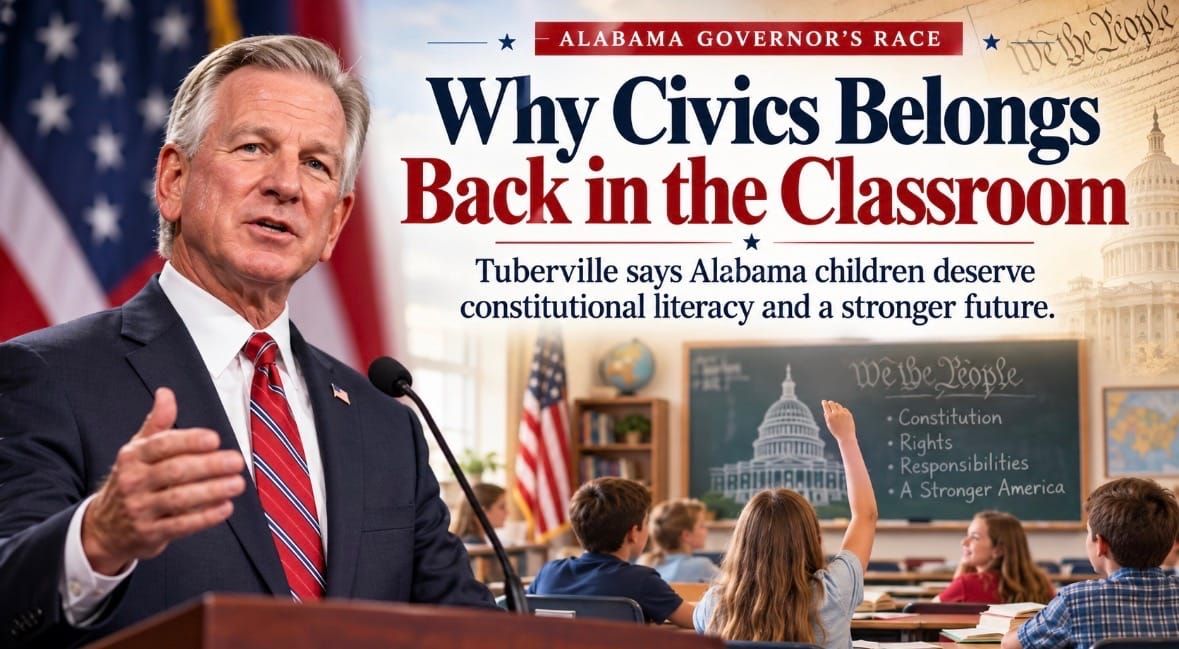
As Alabama’s gubernatorial election approaches, Republican candidate U.S. Senator Tommy Tuberville is calling for a renewed emphasis on civics education in public schools, arguing that students should begin learning about the Constitution, American government, and their responsibilities as citizens at an early age.
During a recent campaign appearance in Mobile, Tuberville stressed the importance of teaching children how America was founded, why constitutional principles matter, and how to evaluate political information independently.
His remarks highlight growing concerns about civic literacy among young Americans and whether schools are adequately preparing students for responsible citizenship.
According to the 2022 National Assessment of Educational Progress (NAEP), only 22% of American eighth-graders performed at or above the Proficient level in civics, while just 2% achieved an Advanced score.
The knowledge gap extends beyond the classroom. The University of Pennsylvania’s September 2026 Annenberg Constitution Day Civics Survey found that 35% of American adults could not identify all three branches of the federal government.
Education researchers have long emphasized that understanding constitutional rights, the separation of powers, and the responsibilities of citizenship helps individuals participate more effectively in government and recognize when their freedoms may be threatened.
Tuberville believes that civics education should begin well before high school, when children are developing critical thinking skills and learning concepts such as fairness, personal responsibility, and the importance of laws.
The NAEP assessment also found that only 49% of eighth-graders in 2022 reported taking a class primarily focused on civics during that school year.
With social media increasingly exposing young people to political information, advocates for stronger civic instruction argue that schools should help students distinguish constitutional facts from political opinions and misinformation.
The objective, supporters say, should be teaching children how to think independently rather than telling them what to believe politically.
Research published in 2014 identified connections between civic engagement during adolescence and positive educational and civic outcomes later in life. Other studies have linked civic knowledge and participation with a greater willingness to engage in elections and community affairs.
Tuberville, who spent decades working with young people as a college football coach, has also emphasized workforce development, skilled trades, and practical education as priorities for Alabama’s future.
During his Mobile appearance, he connected his educational concerns to what he described as 35 years of experience in education, suggesting that civic literacy and career readiness should work together to prepare students for adulthood.
Alabama already includes civics in its educational requirements, but Tuberville’s comments raise questions about whether existing instruction is sufficiently comprehensive, consistent, and introduced early enough.
Today's students will eventually become voters, business owners, jurors, community leaders, and elected officials responsible for decisions affecting Alabama's future.
While political disagreements over education policy are inevitable, the importance of understanding the Constitution and the responsibilities of American citizenship remains central to the nation's system of government.
As the governor's race continues, Tuberville's emphasis on civics education brings renewed attention to whether Alabama schools are doing enough to prepare the next generation for the responsibilities of freedom.