USDA grants Forest Service officer Sabbath accommodation
Agency reverses course after religious liberty lawyers challenge its denial of a Colorado officer’s request to keep Sundays free

The U.S. Department of Agriculture has granted a religious accommodation to a Forest Service law enforcement officer who sought to keep Sundays free to observe the Christian Sabbath.
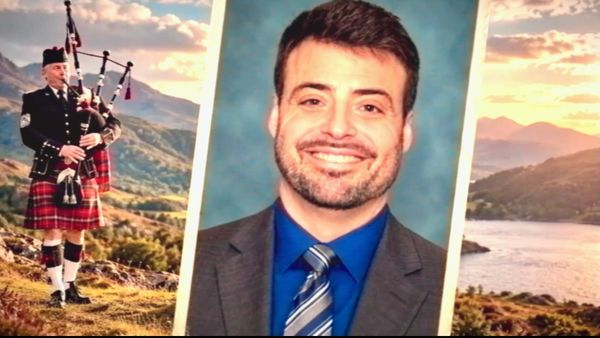
First Liberty Institute announced Wednesday that the USDA had reversed its prior denial of Adam Diemert’s request. Diemert, a U.S. Forest Service law enforcement officer based in Glenwood Springs, Colorado, had asked to be excused from routine Sunday duties while remaining willing to respond to emergencies.
The decision came after First Liberty and the law firm Davis Graham & Stubbs LLP challenged the Forest Service’s handling of Diemert’s request.
“We are grateful for the leadership of Secretary Brooke Rollins, Deputy Secretary Stephen Vaden, and the rest of the leadership team at the Department of Agriculture, and for their protection of religious liberty for all Americans,” said Cliff Martin, Senior Counsel for First Liberty. “The Department’s decision is in line with the Supreme Court’s conclusion that reasonable adjustments to the work environment often must be made to allow an employee to practice his or her religion when there is no substantial disruption or cost to the organization.”
Diemert is a devout Presbyterian who attends church twice each Sunday, according to First Liberty. His job requires him to work long hours during the week while providing law enforcement coverage across a large area of National Forest land.
Diemert submitted two requests for a religious accommodation as a Christian Sabbatarian. Both sought Sundays off. Both were denied, according to First Liberty, even though Diemert said he remained willing to work Sundays when emergencies or other needs made it necessary.
First Liberty said Diemert's position had been vacant from 2020 through 2024 before he took the job, meaning no officer in that position had been working Sundays during those years.
Beginning in March 2024, Diemert used approved personal leave each Sunday for about 10 months without incident, according to the group. He also voluntarily worked on two Sundays when a need arose.
The Forest Service initially maintained that granting the accommodation would cause an “undue hardship.”
That term carries greater weight under federal employment law following the U.S. Supreme Court's unanimous 2023 decision in Groff v. DeJoy.
The case involved Gerald Groff, an evangelical Christian and former U.S. Postal Service employee who sought an accommodation from Sunday work. Lower courts had relied on a long-used test under which an employer could establish an undue hardship if accommodating an employee imposed more than a minimal cost.
The Supreme Court rejected that reading.
Writing for the court, Justice Samuel Alito said Title VII requires an employer denying a religious accommodation to show that granting it “would result in substantial increased costs in relation to the conduct of its particular business.”
The ruling did not create an automatic right to Sundays or other religious days off. Instead, employers must weigh each request based on the facts, including the type of accommodation, its practical effect and the size and operating costs of the employer. The Equal Employment Opportunity Commission has since updated its guidance to reflect the higher standard.
In Diemert's case, First Liberty argued that his history of taking Sundays off without incident — combined with his willingness to respond when needed — undercut the Forest Service's claim of undue hardship.
The USDA ultimately agreed to place Diemert in a position with no regular Sunday duties, allowing him to observe the Sabbath while remaining available when circumstances require him to work.
The resolution is another practical test of the Supreme Court's Groff ruling and its effect on religious accommodation disputes in the workplace.
The Supreme Court decided Groff 9-0 on June 29, 2023, vacating the lower court ruling and sending the case back for further proceedings.