
Virginia Redistricting Plan Struck Down by High Court
Supreme Court leaves Virginia’s current congressional map in place after rejecting Democrats’ emergency appeal
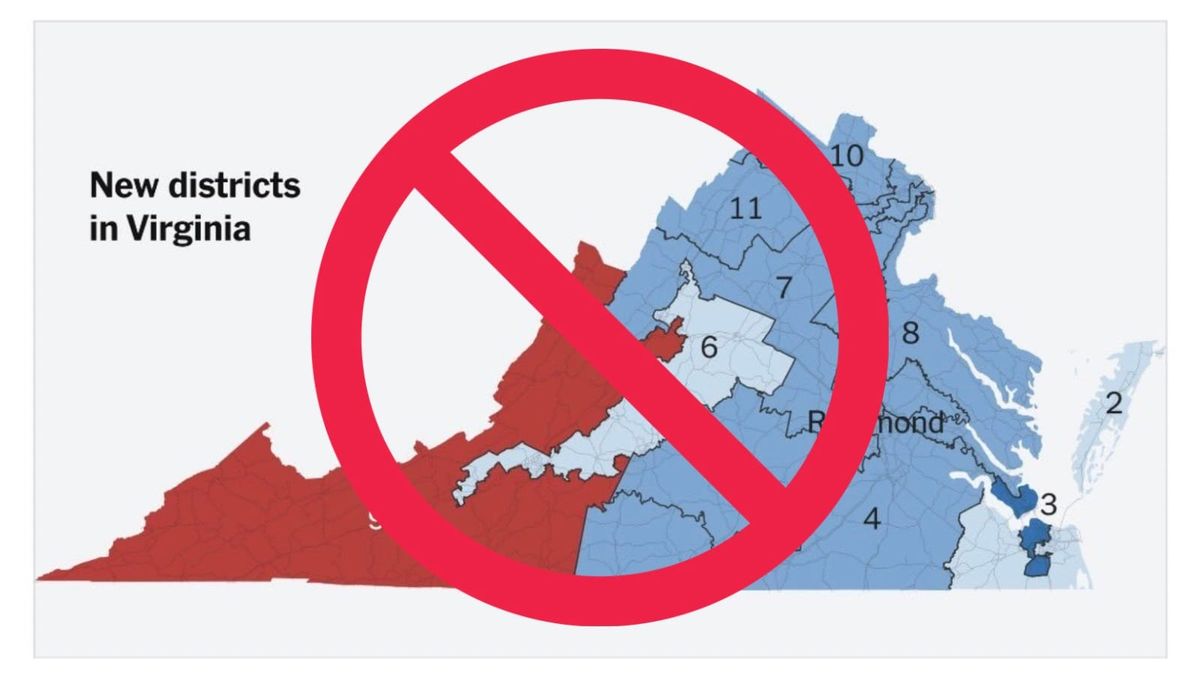
The U.S. Supreme Court has declined to revive a Virginia congressional redistricting plan that Democrats hoped would reshape the balance of power in the U.S. House ahead of the 2026 midterm elections.
The decision leaves in place the congressional map drawn in 2021 after Virginia’s bipartisan redistricting commission failed to agree on new district lines. Under that process, the Supreme Court of Virginia appointed special masters to create the current map.
The legal fight began after Virginia voters narrowly approved a constitutional amendment in April that would have allowed lawmakers to redraw congressional districts mid-decade. Democrats argued the new map — which would have eliminated all but one Republican-favored district — could help their party gain as many as four additional seats in Congress.
But earlier this month, the Supreme Court of Virginia struck down the amendment, ruling lawmakers failed to follow the constitutional process required to place it before voters.

Democratic leaders appealed to the nation’s highest court, asking the Justices to restore the referendum results and allow the new district lines to take effect before November’s elections. On Friday, the U.S. Supreme Court rejected that request without comment or recorded dissent.
The ruling is another major chapter in a growing national battle over congressional maps and voting rights. Recent court decisions have weakened parts of the federal Voting Rights Act, opening the door to renewed redistricting fights across several States, especially in the South. Alabama, of course, is one of those States.
Virginia had become one of the most closely watched States in that fight because Democrats viewed the proposed map as a chance to offset Republican gains elsewhere. Political analysts said the rejected plan could have significantly changed several competitive districts.
Virginia currently has 11 congressional districts, with Democrats holding a narrow 6-5 advantage in the State’s House delegation.
Republicans praised the court rulings as a defense of constitutional procedure and judicial authority, while Democrats argued the decisions blocked the will of voters who approved the amendment in April.
The outcome means Virginia’s 2026 congressional elections will proceed under the existing district map unless lawmakers pursue another constitutional amendment or future court action changes the process again.