We Have More in Common Than We Think
Guest opinion by Keith O. Williams, Independent candidate for Alabama State House District 55
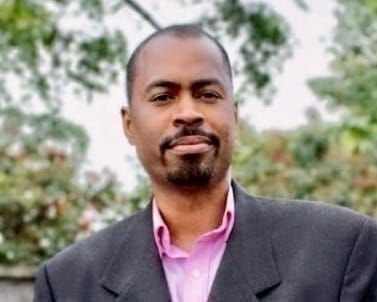
Guest opinion by Keith O. Williams
If you listen to politics long enough, you might believe we have absolutely nothing in common.
We are constantly divided into groups: Democrat and Republican. Liberal and conservative. Urban and rural. Black and white. Rich and poor. Religious and nonreligious.
Every issue seems to require us to pick a side.
But I don't believe most people live their everyday lives that way.
When the utility bill comes, it doesn't ask whether you're a Democrat or Republican.
When grocery prices go up, everybody notices.
When rent increases, when insurance costs more, when a neighborhood loses businesses, when a school struggles, or when someone can't find a good-paying job, political labels don't make those problems disappear.
That's why I believe voters have more in common than what divides us.
Start With What We Share
Most people want to be able to afford a decent life.
We want safe communities.
We want good schools.
We want opportunities for our children.
We want businesses to succeed and jobs to be available.
We want clean water, reliable utilities and infrastructure that works.
We want our parents and grandparents to be able to live with dignity.
We want government to spend our money responsibly.
And when elected officials make decisions that affect our lives, we want them to tell us what they're doing and why.
We may disagree considerably about how to accomplish those things.
That's where politics comes in.
But disagreement over the solution doesn't necessarily mean disagreement over the problem.
Remember, politics comes from the Greek term politika meaning taking care of the affairs of the people. If what we say and do involving taken care of the needs of the people, then we have fulfilled politics in its proper context.
Disagreement Doesn't Make Us Enemies
I have no expectation that everyone will agree with me.
That's not realistic, and frankly, I wouldn't want a government where disagreement disappeared.
There will be people who disagree with me about taxes.
There will be people who disagree with me about policing and criminal justice.
We'll disagree about immigration, healthcare, education, economic development, environmental protections and the appropriate role of government.
Those disagreements can be serious.
But somewhere along the way, politics began teaching us that disagreement isn't enough. The person on the other side also has to be the enemy.
I reject that.
You can disagree with me and still have something valuable to say.
You can challenge my position and still deserve to be heard.
You can vote differently from me and still be my neighbor.
And if I'm representing you, you shouldn't have to agree with me before I'll listen to you.
People Don't Fit Neatly Into Political Boxes
This is something we don't acknowledge enough.
A person can support law enforcement while also believing officers should be held accountable when misconduct occurs.
A person can believe those who commit crimes should face consequences while also supporting rehabilitation and successful reentry.
A person can support economic development while asking whether a project will raise utility costs, consume significant natural resources or negatively affect surrounding neighborhoods.
A person can support businesses while believing ordinary citizens deserve the same access to elected officials that corporations and lobbyists receive.
A person can want immigration laws enforced while also believing people deserve due process.
Real life is complicated.
People are complicated.
Public policy is complicated.
Our politics should be mature enough to recognize that.
Listen Before You Label
One thing I believe we've lost in politics is the ability to listen without immediately trying to categorize the person speaking.
Sometimes we are so busy deciding whether someone is conservative, liberal, Republican, Democrat or something else that we never hear what they're actually saying.
I'd rather ask:
What's happening in your neighborhood?
What are you paying for groceries?
What's happening with your utility bill?
Do you feel safe where you live?
Are there opportunities for your children?
Can you find affordable healthcare?
Is your small business struggling?
Do you believe government listens to you?
Those questions tell me much more about someone's life than a political label ever could.
This Is What Representation Should Look Like
I've talked about Accountability, Community Engagement and Transparency—ACT because I believe those principles should apply regardless of political affiliation.
Accountability shouldn't be Republican or Democratic.
Transparency shouldn't be Republican or Democratic.
Listening to constituents shouldn't be Republican or Democratic.
Those are basic responsibilities of representative government.
If someone disagrees with me, I don't want them pushed out of the conversation.
I want them at the table.
Tell me why you disagree.
Bring the facts.
Bring your experiences.
Ask the difficult questions.
And give me an opportunity to explain why I believe what I believe.
We still may walk away disagreeing.
That's okay.
At least we heard each other.
We Can Find Common Ground Without Giving Up Our Principles
Common ground doesn't mean abandoning your convictions.
It doesn't require pretending important differences don't exist.
And it certainly doesn't mean everybody has to meet exactly in the political middle.
Sometimes one side will be right. Sometimes the other side will be right. Sometimes both sides will have part of the answer. And sometimes we'll have to admit that none of us has figured it out yet.
What matters is whether we're willing to work on the problem.
Because while politicians argue about who gets credit and who gets blamed, families still have bills to pay.
Children still need an education.
Communities still need investment.
People still need jobs.
Neighborhoods still need to be safe.
And government still has work to do.
We're Still Neighbors
An election eventually ends.
Campaign signs come down.
Commercials stop running.
Votes are counted.
But the people who disagreed with each other on Election Day still have to live together the next morning.
We'll shop at the same stores.
Drive the same roads.
Send children to the same schools.
Pay many of the same bills.
Depend on the same infrastructure.
And call many of the same communities home.
That's something worth remembering.
We don't have to think alike.
We don't have to vote alike.
We don't even have to agree on what government should do about every problem.
But we should be able to recognize the humanity, concerns and experiences we share.
Because when you get beyond the political labels and get down to the everyday lives of ordinary people, I believe something becomes clear:
We have far more in common than what divides us.
And maybe that's a better place to begin.
Keith O. Williams
Independent Write-In Candidate for Alabama House District 55
Keith O. Williams is an independent candidate for Alabama State House of Representatives District 55. He is a nonprofit leader, a community advocate, a certified counseling practitioner, and a peer support specialist.
To learn more about the campaign, please visit https://keithforalhd55.keithowilliams.com and follow on Facebook, Twitter, and Instagram @kowilliamspc.
Opinions do not reflect the views and opinions of ALPolitics.com. ALPolitics.com makes no claims nor assumes any responsibility for the information and opinions expressed above.