What This Campaign Has Taught Me About Representation
Guest Opinion by Keith O. Williams, write-in candidate in AL House District 55
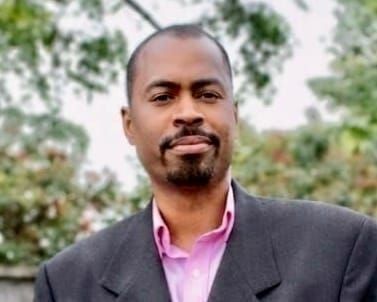
Guest Opinion by Keith O. Williams, write-in candidate in AL House District 55
Running for Alabama House District 55 has taught me something I already believed, but now understand even more clearly: representation is about more than elections.
It is about listening.
It is about showing up.
It is about knowing how legislation affects people after the speeches, press releases, and campaign events are over.
Throughout this campaign, I have talked with people at neighborhood meetings, community events, bus stops, public hearings, churches, rallies, and sometimes simply while walking through our communities. The conversations have not been complicated.
People are concerned about what it costs to live.
Groceries cost more. Utility bills matter. Gas prices matter. Housing matters. Transportation matters. Healthcare matters. For seniors, working families, veterans, people with disabilities, and families already living close to the edge, even a relatively small increase can make a real difference.
That is why affordability became the central issue of my campaign.
But affordability is also connected to accountability.
One example is utility regulation.
During the 2026 legislative session, HB475 began as legislation that would have required formal utility rate cases every three years. The Senate substantially changed the legislation, and the final version no longer included that automatic requirement. The majority of the Alabama State Legislature voted for that version, including my opponent, Representative Travis Hendrix.
That difference matters.
There is a difference between having a public meeting and having a formal proceeding where evidence can be examined, testimony can be given under oath, and assumptions behind utility rates can be challenged.
The recent Alabama Supreme Court decision involving Energy Alabama and Alabama Power reinforces that distinction. The Court did not rule that Alabama Power's billing formula was correct or beyond challenge. The case dealt with whether advocates could intervene when there was no formal proceeding underway.
Additionally, why did the Jefferson County Delegation of the Alabama State Legislature allowed a local bill (SB330) get hijacked by the entire legislative body? Over 90 percent of the ratepayers live in Jefferson County, but we have two representatives out of seven. One of those members is Bill Morris, who is also a member of the Leeds Water Works Board and the Republican nominee for Alabama House District 50 (Alan Thomas, the Democratic nominee is his challenger). Since the takeover of the Birmingham Water Works (now Central Water Works), about 200 lost their jobs, customers have phone in their payments or visit an authorized location with extra fees being added. Recently, there's talk of a rate increase for 2027. With utility rates already high above the national, for some families, keeping the lights on and the water running will be a challenge. Representative Travis Hendrix abstained without explanation.
That raises an important question for Alabama:
How meaningful is public oversight if the public does not always have a meaningful way to participate?
I believe Alabama should have regular formal reviews of utility rates, stronger consumer representation before the Public Service Commission, greater transparency surrounding rate formulas, and clear opportunities for qualified ratepayer advocates to participate.
That is not about assuming every utility increase is wrong.
It is about requiring the evidence to be available and understandable before families are asked to pay the bill.
This campaign has also reminded me that voters should look beyond political labels and scorecards.
Organizations have every right to evaluate legislators according to their own priorities. Those scorecards can provide useful information. But no single number tells the complete story of a legislator's record.
An 81 out of 100, a 90 out of 100, or any other rating tells voters how someone performed according to the bills and standards selected by that particular organization.
It does not automatically tell voters how that person handled every issue involving utilities, public safety, environmental protection, Water Works governance, cannabis policy, transportation, education, or other concerns affecting a district.
That is why I encourage people to look at the actual votes.
Read the legislation.
Ask questions.
Attend public meetings.
Listen to explanations from elected officials.
And when the public record and an elected official's explanation appear to conflict, ask for clarification rather than immediately assuming bad intentions.
Transparency requires more than putting information online. It requires making sure ordinary people can understand what happened and why.
Accountability does not mean attacking somebody.
It means being willing to answer questions about decisions made in public office.
My own campaign has been built around three ideas: accountability, community engagement, and transparency.
Those words mean very little unless they become practice.
Accountability means taking responsibility for decisions.
Community engagement means listening before making assumptions about what people need.
Transparency means giving people enough information to understand what their government is doing.
Those principles are bigger than one candidate and bigger than one election.
They are standards that should apply to anyone entrusted with public office, including me.
This campaign has never been about pretending that one person can solve every problem facing District 55.
It has been about asking whether we can expect more openness, more participation, and more attention to the everyday concerns affecting our communities.
Whatever happens in an election, those questions will still be here the next morning.
And so will the work.
What are you going to do. It's #TimetoACT!
Williams is a community advocate and nonprofit leader running as a write-in candidate for Alabama House District 55. His campaign platform focuses on affordability issues, community engagement, transparency in government, and long-term economic opportunity for residents throughout the district.
To learn more about William’s campaign, visit https://keithforalhd55.keithowilliams.com, or follow him on Facebook, Twitter, and Instagram @kowilliamspc.