You Are Somebody
The Reality of Grassroots Advocacy in Alabama — Guest Opinion by H. Marty Schelper, Founder and President, Alabama Cannabis Coalition
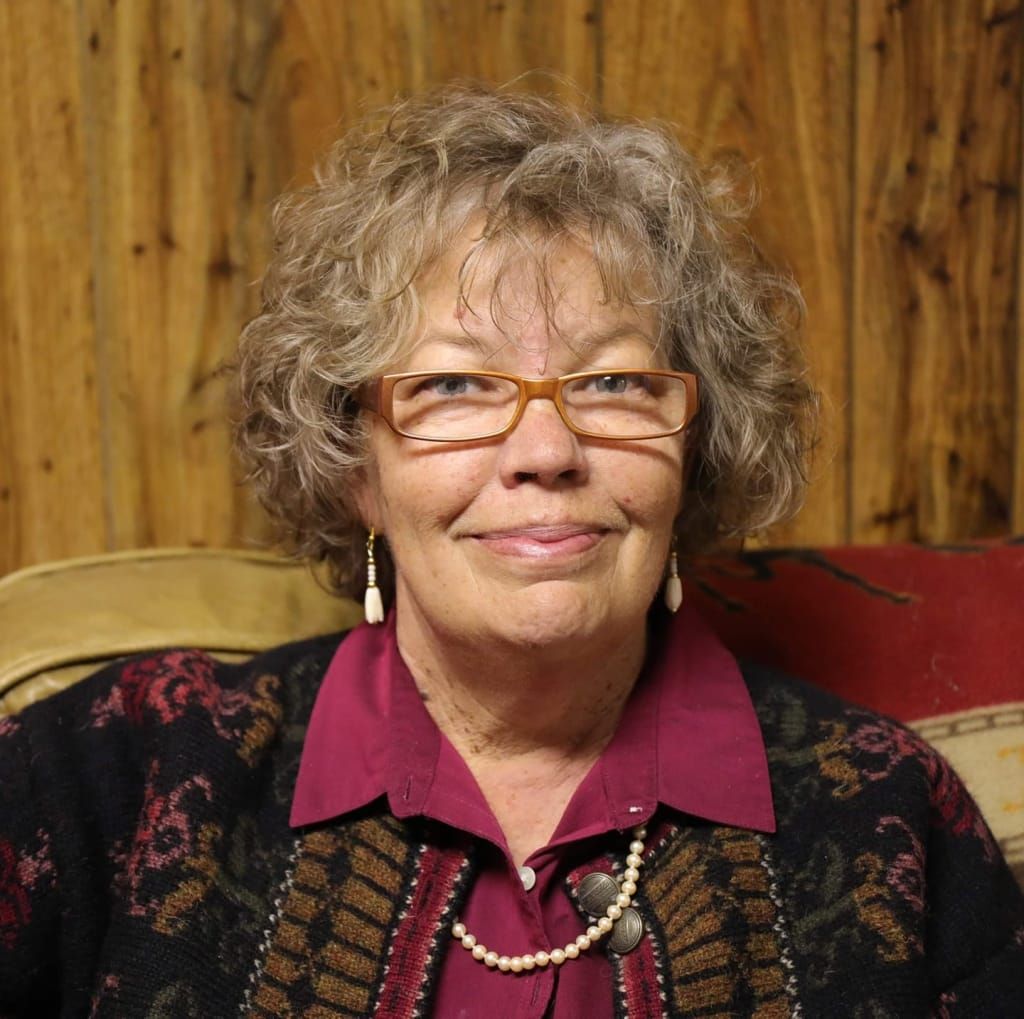
Guest Opinion by H. Marty Schelper, Founder and President, Alabama Cannabis Coalition
There is a question I have heard countless times during my 14 years of cannabis advocacy in Alabama:
“Why doesn't somebody do something?”

After 14 years, my answer has become very simple.
You are somebody.
Change has rarely required the participation of an entire population.
History repeatedly demonstrates that relatively small groups of determined people can create extraordinary change.
But there is another side of grassroots advocacy that most citizens never see.
Someone has to organize the events. Someone has to make the telephone calls, send the emails, research the legislation, drive to Montgomery, sit through committee hearings, testify before lawmakers, answer questions, correct misinformation, maintain websites, communicate with reporters and educate the public.
Someone has to keep showing up when many of the people who said they would be there don't.
Eventually, that becomes exhausting.
Grassroots advocacy requires physical, mental, emotional and financial sacrifice.
I don't say that with bitterness.
I say it as testimony from someone who has lived it for 14 years.
Alabama's medical cannabis program provides an extraordinary example of what can happen when responsibility for informing the public falls through the cracks.
The Alabama Legislature completed passage of SB46, the Darren Wesley “Ato” Hall Compassion Act, on May 6, 2021.
Governor Kay Ivey signed it into law on May 17, 2021.
Alabama patients then waited approximately five years before legal access finally began becoming a reality.
Alabama's first medical cannabis dispensary opened on June 4, 2026. More than 60 Alabama physicians have qualified to participate in the program.
After five years of waiting, where was the comprehensive statewide public-awareness campaign telling Alabama citizens that the program was finally becoming operational?
Where was the campaign explaining—in language ordinary citizens could easily understand—how a prospective patient begins the process?
The Alabama Cannabis Coalition repeatedly contacted the Alabama Medical Cannabis Commission asking about its plans for public education.
We received responses.
What we did not see was the kind of comprehensive statewide public-information campaign that we believe Alabama patients needed after waiting five years for this program.
The Commission now provides patient registration instructions, frequently asked questions and contact information through its website.
But having information available somewhere and actively educating the citizens of an entire state are two very different things.
So the Alabama Cannabis Coalition did what grassroots organizations frequently do when government leaves a void.
We tried to fill it.
We created a dedicated section of our website explaining, in plain language, how Alabama citizens can begin the process of obtaining a medical cannabis card.
We did it because people needed the information.
We did not do it because we were funded or staffed to become the State of Alabama's public-information department.
We aren't.
The Alabama Cannabis Coalition is a grassroots organization operating with essentially no funding.
Now consider the contrast.
For Fiscal Year 2026, Alabama appropriated $3 million to the Alabama Medical Cannabis Commission: $1.5 million from the State General Fund and $1.5 million from the Medical Cannabis Commission Fund.
When John McMillan was hired as the Commission's first Executive Director in 2021, the Commission approved an annual salary of approximately $209,877.60.
Meanwhile, an essentially unfunded grassroots organization has found itself trying to help explain to Alabama citizens how to participate in the program.
Something is wrong with that picture.
And the consequences extend far beyond patient inconvenience.
A medical cannabis program cannot succeed without patients.
Cultivators need patients.
Processors need patients.
Dispensaries need patients.
Integrated facilities need patients.
If prospective patients don't know the program is operational, don't understand whether they qualify, or cannot figure out how to navigate the process, every other component of the system eventually suffers.
Public education isn't an optional accessory to implementation. Public education IS part of implementation.
Alabama created the law.
Alabama created the Commission.
Alabama appropriated the resources.
Alabama patients should not have to depend upon an essentially unfunded grassroots advocacy organization to make them aware that their medical cannabis program is operational or to help them understand how to participate in it.
But there is a much larger lesson here.
This isn't exclusively about cannabis.
During 14 years of advocacy, I have watched people complain passionately about public policy on social media while refusing to make a telephone call, send an email, attend a public meeting or communicate with their elected representatives.
I've watched people enthusiastically promise to attend advocacy events, only for organizers to arrive and discover nearly empty rooms.
I've watched citizens become intensely interested in prohibition only after prohibition personally affected them, their families, their freedom or their businesses.
And I've repeatedly heard the question:
“Why doesn't somebody do something?”
Government doesn't change simply because citizens are angry.
Government changes when citizens participate.
Legislators need to hear from the people they represent. Public officials need to know citizens are paying attention.
Government agencies should expect questions when citizens believe those agencies are failing to adequately serve the public.
That responsibility cannot permanently be outsourced to a handful of advocates.
August 2, 2026 marked 89 years since President Franklin D. Roosevelt signed the Marihuana Tax Act of 1937, beginning the 90th year since that watershed moment in federal cannabis prohibition.
Think about that.
Nearly nine decades.
And Americans are still debating prohibition, criminalization, taxation, regulation and who should be permitted access to cannabis.
Generations of advocates have come and gone during those decades.
Some lived long enough to see progress.
Many did not.
And still we ask:
“Why doesn't somebody do something?”
Perhaps we've been asking the wrong question.
There are more citizens than politicians.
There are more constituents than lobbyists.
There are more ordinary people affected by public policy than there are people making it.
Grassroots organizations can educate. We can organize. We can testify. We can sound the alarm. We can provide citizens with tools and information.
But we cannot manufacture citizen participation.
That part belongs to you.
So the next time you find yourself frustrated with government and asking why somebody doesn't do something, remember:
You are somebody.
Find your voice.
History does not change because people agree.
History changes because people participate.
H. Marty Schelper is Founder and President of the Alabama Cannabis Coalition and has advocated for cannabis policy reform in Alabama for 14 years.
Opinions do not reflect the views and opinions of ALPolitics.com. ALPolitics.com makes no claims nor assumes any responsibility for the information and opinions expressed above.
SOURCES
Alabama Medical Cannabis Commission — 2025 Annual Report https://amcc.alabama.gov/wp-content/uploads/2026/01/AMCC-Annual-Report-2025.pdf
Alabama Medical Cannabis Commission — September 9, 2021 Meeting Minutes Documents John McMillan's appointment and original annual salary of approximately $209,877.60. https://amcc.alabama.gov/wp-content/uploads/2021/10/Meeting-Minutes-September-9-2021.pdf
State of Alabama — FY2026 General Fund Appropriation Act Documents the $3 million appropriation for the Alabama Medical Cannabis Commission. https://budget.alabama.gov/wp-content/uploads/2026/01/FY26-General-Fund-Appropriation-Bill-Act-2025-251-Signed.pdf
Alabama Medical Cannabis Commission — Patient Information https://amcc.alabama.gov/patients/
Alabama Medical Cannabis Commission — Dispensary Information https://amcc.alabama.gov/faq/where-will-dispensaries-be-located/
Alabama Medical Cannabis Commission — Staff https://amcc.alabama.gov/about/staff/
H. Marty Schelper Founder/President Alabama Cannabis Coalition https://www.alabamacannabiscoalition.org