Alabama Groups Ask SCOTUS to Reject Map Appeal
Plaintiffs say lower court findings of racial discrimination remain valid and urge Supreme Court to keep Alabama's current map
The plaintiffs challenging Alabama's congressional redistricting plan are urging the U.S. Supreme Court to leave in place a lower court ruling that blocked the State's 2023 congressional map, arguing the decision rests on extensive evidence of racial discrimination.
The filing, submitted Monday, June 1, comes just days after Alabama Attorney General Steve Marshall and Secretary of State Wes Allen asked the nation's highest court to intervene and allow the State to use the Legislature's 2023 map in the 2026 elections.
The dispute is the latest chapter in a redistricting battle that has stretched on for years and already produced multiple trips to federal court and the Supreme Court.
According to SCOTUSblog, attorneys representing Black voters and civil rights groups told the justices that the lower court's findings remain unchanged despite Alabama's latest appeal.
One group of plaintiffs argued that the three-judge federal panel "made findings on a full record that remains the definitive account of Alabama's racial geography, racialized politics, and racially discriminatory policymaking." They urged the Court to reject Alabama's request to revive the map.
A separate group of plaintiffs warned that changing district lines again would create confusion for voters and election officials because the 2026 election cycle is already underway. They also noted that Alabama has already conducted primary elections using the court-approved map currently in effect.
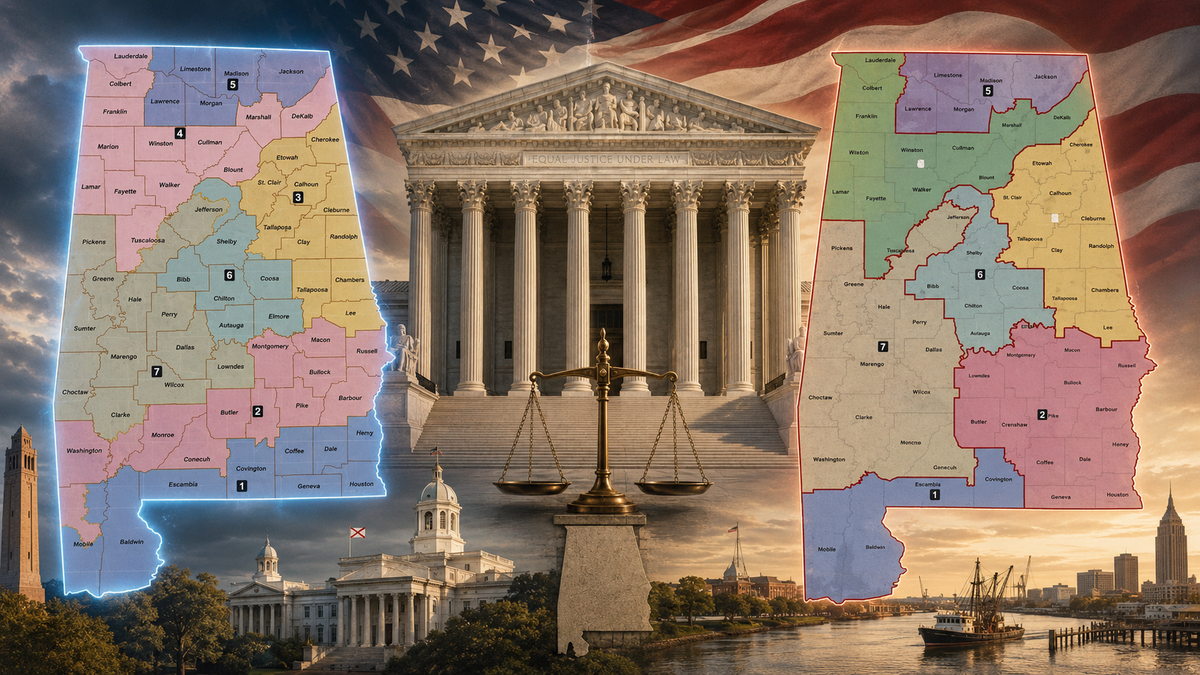
The controversy centers on Alabama's 2023 congressional plan, which includes one majority-Black district among the state's seven congressional seats. Federal judges previously concluded that the plan failed to provide Black voters with an equal opportunity to elect candidates of their choice, leading the court to implement a different map that created a second district where Black voters have a substantial opportunity to influence election outcomes.
On May 26, a three-judge federal panel again blocked Alabama from using the 2023 map, finding that lawmakers had intentionally discriminated against Black voters when drawing district boundaries. The court ordered the State to continue using the court-approved map that was used during the 2024 elections.

State officials quickly appealed. In an emergency filing, Alabama Solicitor General A. Barrett Bowdre argued that preventing use of the Legislature's plan would cause harm to the State and voters. Bowdre wrote that if the ruling remains in place, "voters will be forced to vote under a court-drawn racially gerrymandered map that does not meet Alabama's legitimate districting goals."
Alabama's appeal relies in part on the Supreme Court's recent decision in Louisiana v. Callais, a ruling that State officials contend changed the legal standards governing redistricting disputes. However, the lower court concluded that its finding of intentional discrimination remained valid even under the updated legal framework.
The case traces its roots to the State's post-2020 Census congressional map. In 2023, the Supreme Court ruled in Allen v. Milligan that Alabama likely violated Section 2 of the Voting Rights Act by diluting Black voting strength. The decision led to the adoption of a court-ordered map featuring two districts with majority or near-majority Black populations.
Alabama officials have repeatedly sought to restore the Legislature's 2023 map. Earlier this year, the Supreme Court temporarily cleared the way for additional litigation following the Louisiana decision, but the federal district court again found that the map could not be used because it was tainted by intentional racial discrimination.
The Supreme Court has not yet indicated when it will rule on Alabama's emergency request. Responses to the State's appeal were due June 1.