SCOTUS Clears Way for Alabama Map Change
High Court sends Alabama redistricting fight back to lower courts after major ruling tied to Louisiana case
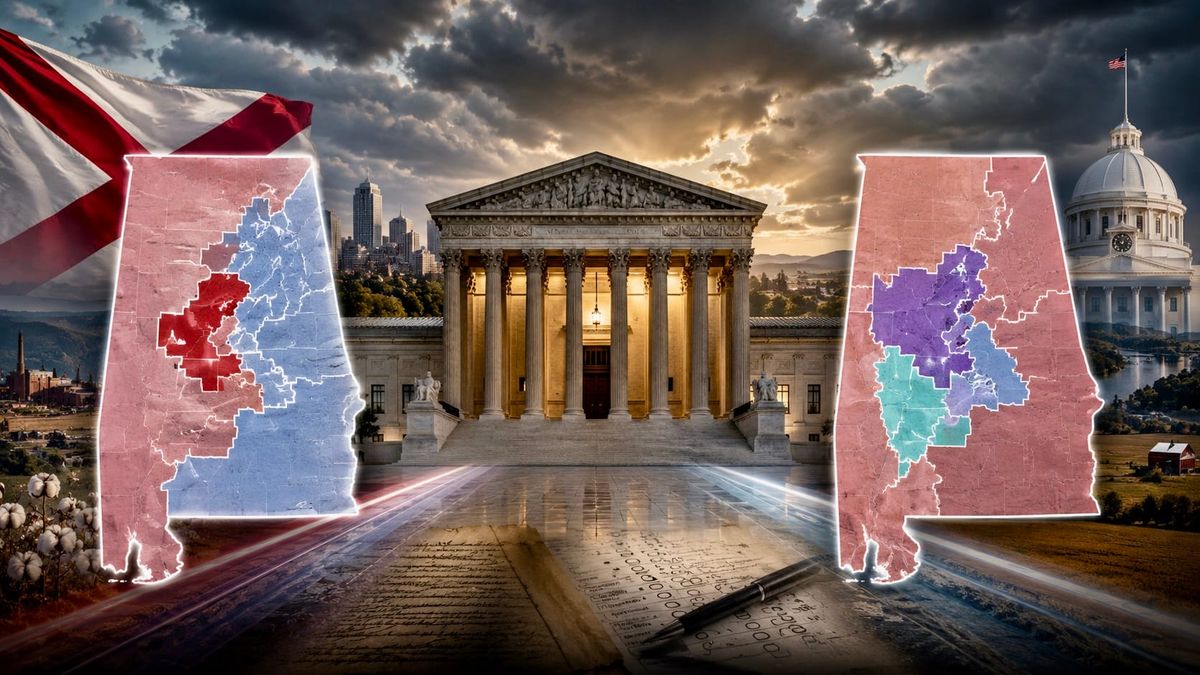
The U.S. Supreme Court on Monday cleared the way for Alabama to move forward with a congressional map that could eliminate one of the State’s two majority-Black districts before the 2026 midterm elections, marking a major turn in the State’s long-running redistricting fight.
But the Court’s action stopped short of fully resolving the case.
In an unsigned 6-3 order, the justices halted a lower court injunction that had required Alabama to continue using a court-drawn congressional map containing two districts where Black voters had an opportunity to elect candidates of their choice. The Supreme Court then sent the case back to both the federal district court and the 11th U.S. Circuit Court of Appeals for reconsideration in light of the Court’s recent ruling in Louisiana v. Callais.
That distinction could prove critical.
The Court did not formally declare Alabama’s 2023 congressional map constitutional. Instead, the majority directed lower courts to revisit their earlier rulings using the legal framework announced in Callais, a decision that narrowed how race may be considered in congressional redistricting cases.
The ruling follows the Supreme Court’s April decision in the Louisiana case, which struck down a majority-Black congressional district there as an unconstitutional racial gerrymander and weakened part of the federal Voting Rights Act used in earlier Alabama litigation.
Alabama officials had argued that the Louisiana ruling justified ending the lower court order that locked the State into using a court-imposed map through the 2030 census cycle. The Supreme Court agreed to lift that order and instructed the lower courts to reconsider the Alabama dispute under the new legal standard.
The map at the center of the case was approved by the Republican-led Alabama Legislature in 2023 and contains only one majority-Black district. Federal judges previously ruled the plan likely violated the Voting Rights Act by diluting Black voting strength. A court-drawn replacement map was later used during the 2024 election cycle and resulted in the election of Democrat Shomari Figures in Alabama’s newly configured 2nd Congressional District.
Before Monday’s ruling, a three-judge federal panel had also concluded Alabama lawmakers likely engaged in intentional racial discrimination when they refused to create a second district in which Black voters could elect their preferred candidate.
Now, those same judges must determine whether their earlier findings can survive under the Supreme Court’s revised guidance in Callais.

Legal observers say several outcomes remain possible.
The lower courts could uphold parts of their earlier rulings by finding Alabama’s map violated the 14th Amendment through intentional discrimination, independent of the Voting Rights Act claims weakened by Callais. They could also conclude the Supreme Court’s new standards effectively foreclose the earlier challenge and allow Alabama’s Legislature to restore its preferred map. Another possibility is additional litigation over any revised congressional plan adopted during the special session.
Anticipating a favorable ruling from the High Court, Alabama lawmakers returned to Montgomery during a special session earlier this month and passed legislation designed to prepare for possible redistricting changes before the May 19 primary election. Governor Kay Ivey later signed those bills into law.
One measure — HB1 — allows the State to void primary election results in congressional districts affected by redistricting changes and conduct new special primary elections under revised district lines. State law now permits those replacement primaries to occur as late as August. (wtop.com)
Alabama Attorney General Steve Marshall and Secretary of State Wes Allen had earlier asked the Supreme Court to intervene after federal judges blocked the State from using its preferred map through 2030.
Supporters of the ruling called it a victory for legislative authority and State control over congressional redistricting.
Critics argued the decision weakens protections for minority voters and injects uncertainty into an election cycle already underway.
Justice Sonia Sotomayor, joined by Justices Elena Kagan and Ketanji Brown Jackson, sharply dissented from the Court’s order.
Sotomayor argued the majority moved too quickly and ignored key portions of the lower court’s findings. She wrote that Callais “reversed only one of the grounds” supporting the injunction against Alabama’s map, noting the district court had separately found evidence of intentional discrimination under the Constitution itself.
She also warned the Court was disrupting election procedures after voting activity had already begun in Alabama’s primary cycle.
The dissent further argued the lower court should have been allowed to determine “in the first instance” how much impact Callais should have on the Alabama litigation before the Supreme Court stepped in.
For now, Alabama officials appear positioned to move ahead with plans to restore maps approved during prior legislative sessions, though additional court fights are almost certain before congressional district lines are fully settled for the 2026 election cycle.