Birmingham Adopts Sweeping Data Center Regulations
New ordinance sets 20 safeguards for future data centers, including noise, water, energy, and neighborhood protections
The Birmingham City Council has approved a new zoning ordinance establishing what city officials describe as one of the strongest regulatory frameworks for hyperscale data centers in Alabama and the Southeast.
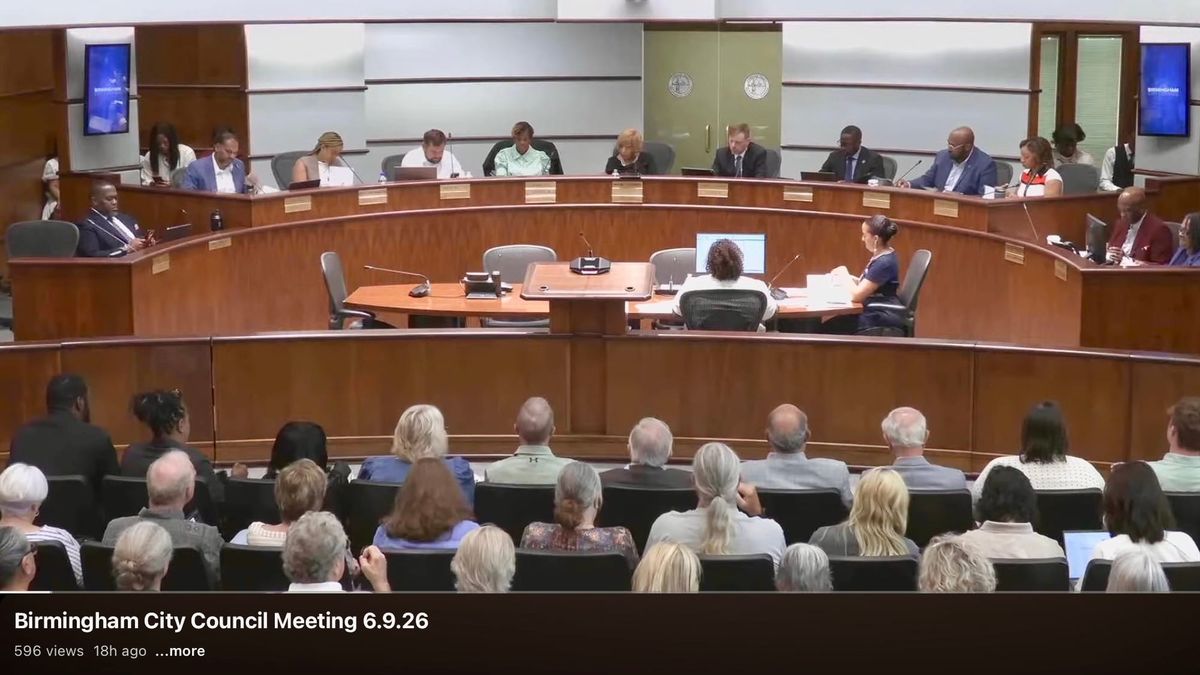
The ordinance, approved by a 6-3 vote on June 9 after nearly five hours of public comment, creates 20 conditions that future hyperscale data center projects must meet before receiving approval. City leaders said the regulations are designed to address concerns about noise, water use, energy demand, land compatibility, and neighborhood impacts while providing clear standards for future development.
The action follows months of study, public meetings, and revisions to the proposed ordinance. Birmingham officials began reviewing data center regulations earlier this year as interest in large-scale digital infrastructure projects increased across the region. The City Council also enacted a temporary moratorium on new hyperscale data center applications while the regulations were being developed.
According to city officials, Birmingham's electrical infrastructure, industrial capacity, and available land have made the city an attractive target for data center investment. The new ordinance is intended to ensure future projects remain compatible with surrounding neighborhoods and community priorities.
During a presentation to the council, Deputy Director of Resilience and Sustainability Hunter Garrison said the regulations are designed to work as a complete package rather than a collection of individual requirements.
Garrison said the regulations are “unmatched” in the Southeast and emphasized that “no single protection stands alone — each condition works in tandem to regulate environmental impacts, energy use, noise, land compatibility, and community notification.”

Key Features of the Ordinance
The newly approved regulations include:
- Strict location requirements, including a 500-foot setback from residential and urban neighborhood districts.
- A 1,000-foot separation requirement from high-capacity transit facilities.
- A minimum site size of five acres.
- Closed-loop cooling systems designed to limit water use to levels comparable with a similarly sized office building.
- Water source identification and conservation planning requirements.
- Restrictions on onsite power generation, including prohibitions on gas turbines and continuous diesel generator operations.
- Permission for certain alternative energy technologies, including solar systems, fuel cells, and battery storage subject to emergency-response review.
- Noise mitigation measures, including acoustical barriers and pre- and post-construction sound studies.
- Detailed site planning standards covering landscaping, screening, setbacks, and utility infrastructure.
- Enhanced disclosure requirements for electrical demand, development phases, and utility providers.
- Mandatory certified-mail notification to all property owners within 500 feet of any new or expanded hyperscale data center.
The ordinance also requires developers to provide additional information about expected power consumption and infrastructure needs before projects move forward.
While city officials praised the ordinance, many residents and advocacy groups argued during the public hearing that additional protections were needed.
One of the most debated provisions involved the removal of a special-exception requirement for hyperscale data centers that comply with all 20 conditions. Under previous proposals, certain projects would have required additional approval through public hearings before the zoning board.
Critics argued that eliminating the special-exception process could reduce opportunities for public input. Supporters countered that the ordinance's extensive conditions provide a clear and predictable review framework while still requiring notification of nearby property owners.
The approved ordinance takes effect as Birmingham's temporary moratorium on new hyperscale data center applications comes to an end. Future projects will be required to comply with the new standards established by the city.
Residents can review the complete ordinance through the City of Birmingham's data center information portal and public records website.
The Birmingham City Council meeting stream may be seen on YouTube and below: