Marshall warns of China-linked GLP-1 drug threat
Alabama leads 20 States urging federal action after FDA found a Chinese supplier relabeled and shipped suspect GLP-1 ingredients
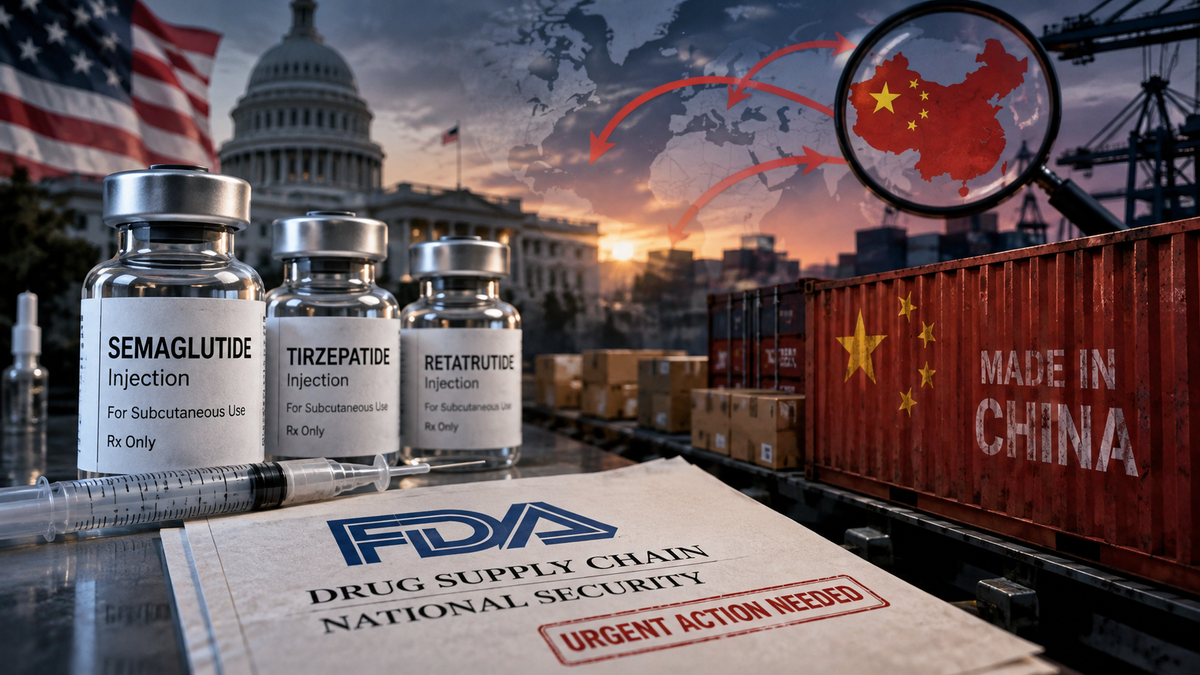
TL;DR: Alabama Attorney General Steve Marshall is leading a 20-State coalition warning the Trump administration that gaps in federal oversight may allow suspect Chinese-made GLP-1 drug ingredients into the United States. The warning follows an FDA investigation that found a Chinese supplier on an agency “Green List” had repackaged and relabeled semaglutide from other facilities before shipping it to the U.S. Marshall wants tighter federal oversight or restrictions on the imports.
Alabama Attorney General Steve Marshall is leading a coalition of 20 States warning the Trump administration that China-linked suppliers are exploiting gaps in the nation’s drug supply chain to move questionable weight-loss drug ingredients into the United States.
In a Sept. 17 letter to Secretary of State Marco Rubio, Marshall and 19 other State Attorneys General asked the National Security Council to treat the issue as more than a routine drug enforcement problem.
At issue are active pharmaceutical ingredients (APIs) used in compounded versions of popular GLP-1 drugs such as semaglutide and tirzepatide, as well as retatrutide. Retatrutide remains in Phase 3 clinical trials and has not been approved by the FDA.
“Chinese businesses quickly found and exploited a gap in the system that happens to be a direct line to Americans who use these popular injectable drugs,” Marshall said in announcing the letter. “This is a direct and immediate risk to consumers’ health and safety, as well as a national security risk. Our coalition is urging Secretary Rubio and the National Security Council to immediately establish greater oversight on the Green List program, or halt these potentially deadly ingredients from entering the country under the guise of helpful products.”
The dispute centers on the FDA’s Import Alert 66-80 and its so-called “Green List.”
The FDA created the system in 2025 as part of an effort to keep questionable foreign GLP-1 ingredients out of the U.S. supply chain. Foreign GLP-1 APIs from firms that are not on the Green List can be detained without physical examination. Companies that meet FDA criteria can be placed on the list and avoid that automatic detention.
The FDA says the program is intended to protect consumers from poor-quality foreign APIs while allowing imports from manufacturers that appear to meet federal manufacturing standards.
Marshall and the other Attorneys General argue that the system can be gamed.
Their strongest evidence comes from the FDA itself.
In May, the FDA issued a warning letter to Harbin Jixianglong Biotech Co. Ltd., a Chinese maker of peptide ingredients. FDA inspectors found serious problems after inspecting the facility in November 2025.
According to the FDA, Harbin purchased semaglutide from outside suppliers, repackaged and relabeled it and identified itself as the manufacturer. In one case, the actual supplier was not on Harbin’s approved supplier list. The company also changed manufacturing and retest dates without adequate supporting data, according to the agency.
Most troubling for the Green List program, the FDA said Harbin bought semaglutide from a facility that was not on the list and then labeled the product as if Harbin had made it.
The FDA said that conduct “may have been an attempt to circumvent safeguards” put in place under the import alert. The two batches were shipped to the United States in 2025. Harbin later agreed to voluntarily recall them.
Harbin was removed from the Green List in February 2026 and placed on another import alert covering drug firms that have failed to meet good manufacturing practices.
For Marshall and the other Attorneys General, the episode shows a basic weakness in the system: a trusted foreign supplier can potentially become a middleman for products made somewhere else.
“If the government cannot verify the true source, chain of custody, and downstream use of these ingredients in real time, a Green List can quickly become a laundering channel rather than a safeguard,” the Attorneys General wrote.
The coalition also raised a much broader national security concern.
The letter cites reporting that some Chinese chemical companies previously linked to fentanyl precursor supply chains have moved into the growing U.S. market for peptides.
Axios reported in July that cryptocurrency payments tied to U.S. peptide sales were flowing to Chinese chemical firms previously identified with the fentanyl precursor trade. One company was reportedly marketing cosmetic and weight-loss peptides while still appearing to facilitate sales of fentanyl precursors.
The Attorneys General did not claim that Harbin itself was tied to fentanyl production. Instead, they argued that overlap between the Chinese peptide market and companies associated with fentanyl precursors warrants a wider federal investigation.
“This is not simply an FDA compliance issue,” the letter States. “It implicates foreign chemical networks, illicit finance, customs enforcement, intelligence collection, State consumer protection, and the integrity of injectable medicines used by American citizens.”
The coalition wants federal agencies to share more information with State Attorneys General about foreign peptide and GLP-1 supply chains, including any links to companies involved with fentanyl production.
Alabama has already seen problems with these compounds.
In January, Marshall’s office settled a lawsuit against Aurora IV and Wellness in Cullman after investigators said the clinic gave patients research-grade semaglutide and tirzepatide while advertising the drugs as “pharmaceutical-grade.”
According to the Attorney General’s Office, the manufacturer specifically labeled the chemicals for laboratory research rather than human use. The settlement permanently closed the clinic, required restitution and penalties and barred its owners from providing direct patient treatment.
“Exploiting the need for medical GLP-1 weight-loss medication by using unapproved, research-grade chemicals on unsuspecting patients is an extremely reckless form of consumer deception,” Marshall said. “This type of dangerous disregard for patient safety will not be tolerated in Alabama.”
The issue has been building for more than a year.
As ALPolitics.com previously reported, 37 State Attorneys General wrote the FDA in February 2025 seeking stronger action against counterfeit and illicit GLP-1 drugs entering the U.S. market.
Marshall was not among the Attorneys General who signed that earlier letter.
Alabama medical professionals have also raised the alarm over these counterfeit compounds.
In an ALPolitics.com guest column last year, Alabama physician assistant Kendall Roper warned that patients buying unapproved weight-loss drugs online often have little way to know what they are injecting.
“When people turn to online pharmacies for versions of weight loss drugs that are not approved by the FDA, they often don’t know exactly what they are getting,” Roper wrote. “There's a higher risk that the medication may contain impurities or that the amount of active ingredient isn't accurately labeled.”
Birmingham orthopedic surgeon Dr. Adam Lukachevitz made a similar argument in a recent ALPolitics.com column on counterfeit medicines, warning that patients may be sold a false sense of security by polished websites and social media ads offering cheap versions of popular weight-loss drugs.
The FDA now reports substantial numbers of adverse-event reports involving compounded GLP-1 drugs. As of May 31, the agency had received 990 reports associated with compounded semaglutide and more than 730 involving compounded tirzepatide. The FDA cautions that those reports do not by themselves prove that a compounded drug caused the reported medical problem.
The agency also warns that unapproved GLP-1 products do not undergo its premarket review for safety, effectiveness and quality. It recommends that patients obtain prescriptions through licensed health care providers and fill them through State-licensed pharmacies.
The new Alabama-led letter takes that public health concern one step further.
Marshall and the other Attorneys General believe that when the ingredients come through opaque foreign supply chains — particularly supply chains that may overlap with companies involved in fentanyl precursors — the problem becomes one of national security as well as consumer safety.
The letter was joined by Attorneys General from Arkansas, Georgia, Idaho, Indiana, Iowa, Kansas, Kentucky, Louisiana, Mississippi, Missouri, Montana, Nebraska, North Dakota, Ohio, Oklahoma, South Carolina, Tennessee, Utah and West Virginia. Copies were also sent to Health and Human Services Secretary Robert F. Kennedy Jr. and leaders of the House Select Committee on the Strategic Competition Between the United States and the Chinese Communist Party.
The Sept. 17 letter to Secretary Rubio may be read HERE.