Moody Flock Cameras Fuel Privacy, Oversight Debate
An officer’s firing puts scrutiny on search rules, quarterly audits and public access to records of Moody’s camera use
TL;DR: Moody’s Flock debate has sharpened after an officer was fired for misuse. Police defend the cameras, while critics seek more public oversight.
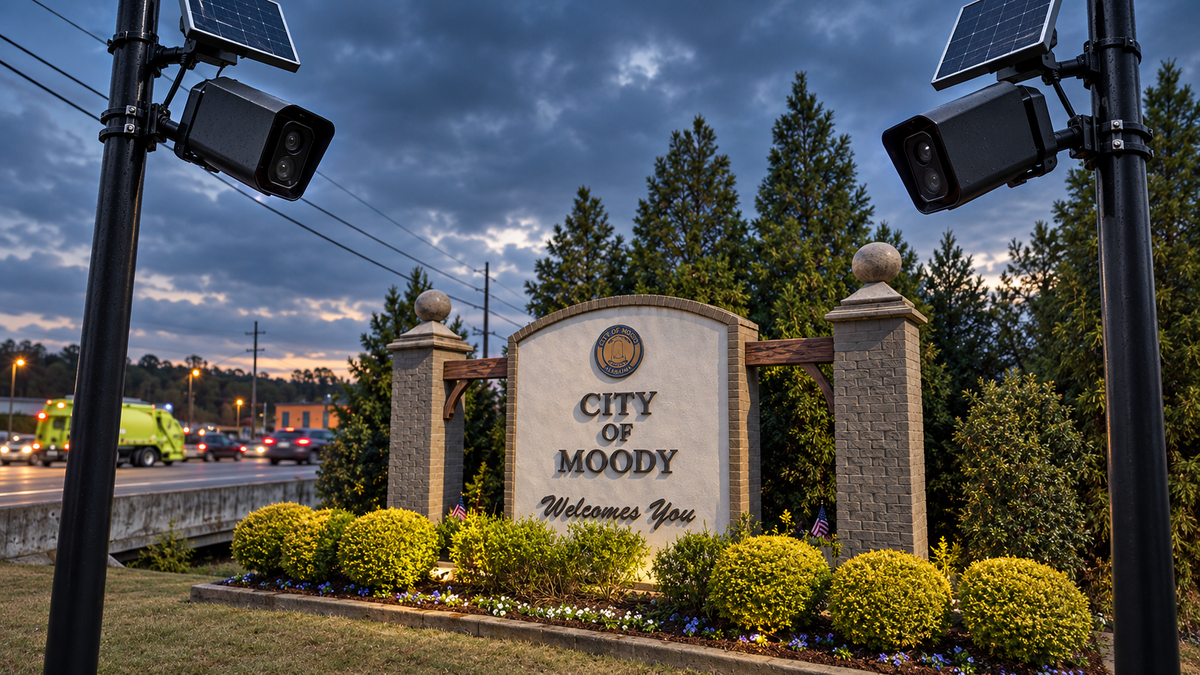
Moody’s Flock cameras are drawing fresh scrutiny after an officer’s firing, with residents pressing city leaders over privacy and police oversight.
At Monday’s council meeting, resident Chris Pridmore challenged Mayor Nick Rutledge over safeguards following the July dismissal, ABC 33/40 reported.
Pridmore wants more public scrutiny and access to audit logs. Rutledge defended the firing as evidence that safeguards worked.
Police Chief Reece Smith said the officer searched for a non-law-enforcement reason. He supports stronger laws but opposes scrapping the system. Smith credited Flock with helping officers find a 13-year-old girl safe near Bessemer before an Amber Alert could be issued.
The Moody Police Department’s written policy lays out several checks on the use of license plate readers.
Searches must serve a criminal justice or public safety purpose. Each must include a dispatch-generated case number. Access logs must record the user’s name, the date and time, and the reason for the search.
The policy bars selling plate-reader data or sharing it for purposes outside criminal justice or public safety. When records go to another agency, police must log what was shared, when, with whom and why.
It also requires audits at least quarterly to check whether access and searches comply with department rules and the law. The chief can order added audits. Findings and policy violations must be documented and addressed.
Those rules provide a way to review searches after they occur. The written policy does not explain whether the required case number is checked against a valid case before access is granted.
The retention rule merits attention, as well. Moody’s policy sets a five-year ceiling for keeping plate-reader data and access logs. Records tied to an active investigation or pending case can remain longer. That is a maximum, not proof that every camera image stays in the system for five years.
Officers must receive training before operating or accessing the system. The policy also covers vendors and requires a security agreement before a contractor can capture data.
Smith said that the records are restricted to law enforcement.
“The data is for law enforcement use only,” he said. “As are multiple other systems that law enforcement uses, such as NCIC or LITS or anything like that.”
He also defended the cameras, saying, “Is there times that it gets misused? Yes, and we've got to make sure that we take action as we did. We've had an officer violate Flock policy and do it for a non-law enforcement reason. And I think those officers should be fired. And I also think that I would support any type of strengthening of a law or anything like that. But to get rid of it is the wrong choice.”
Alabama House District 50 candidates also weighed in. Democrat Alan Thomas questioned tracking residents’ movements, asking “What purpose does collecting information on the movements and habits of your citizens serve?”
Republican candidate Bill Morris expressed his strong support for both the police chief and the departmental policy. “I support you at 100%, chief. And it's policy and procedure. I'm not here to tell y'all how to do policy,” he said.
The debate reaches beyond Moody. ABC 33/40’s review of ALDOT records found 872 approved permanent public-safety sensors in State rights-of-way Statewide. Its viewing area accounted for 430, including 356 license plate readers and 74 public-surveillance sensors.
St. Clair County had 34 approved sensors. Those figures cover State rights-of-way, not every camera on every local road. They also do not establish that all approved devices are operating or use Flock.
Moody’s Police Policy & Procedure for License Plate Readers is attached: