Moore Applauds $2.5B Loan for Mobile Bay bridge
Federal financing clears a major hurdle for the long-delayed I-10 Mobile River Bridge, with full construction set to begin Oct. 1
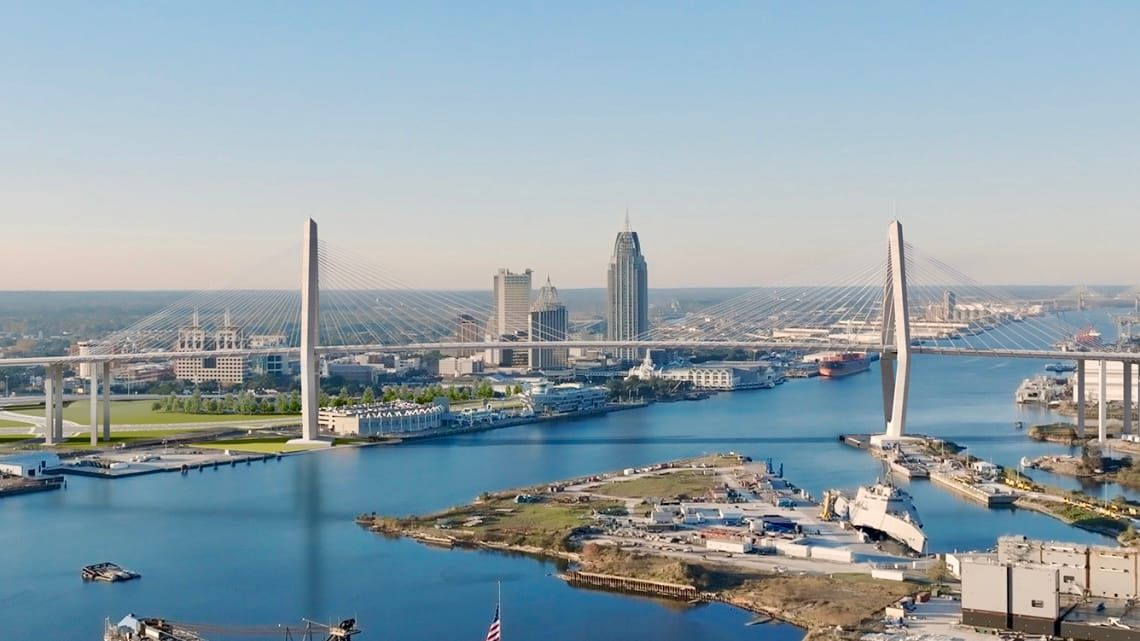
Representative Barry Moore (R-AL-01) is praising the Trump administration’s approval of a $2.52 billion federal loan for the long-planned I-10 Mobile River Bridge and Bayway Project, clearing one of the final major hurdles before full construction begins.
The U.S. Department of Transportation announced Friday that the Alabama Toll Road, Bridge and Tunnel Authority will receive up to $2.52 billion through the Transportation Infrastructure Finance and Innovation Act (TIFIA) program. The low-cost federal financing will help pay for the first phase of what USDOT calls the largest infrastructure project in Alabama history.
Moore said getting the project moving has been a priority since he began representing the Mobile and Baldwin County area.
“From day one of representing Alabama’s First District, this project has been a top priority for me,” Moore said. “Today marks a milestone that many Alabamians have waited decades to see. I appreciate President Trump, Secretary Duffy, Susie Wiles, the Alabama delegation, and our state and local partners for working with us to make this project a reality. This investment will improve travel across our region and strengthen the Gulf Coast for generations to come.”
The federal loan is part of a larger financing package that ALDOT says will fully fund the $3.2 billion first phase of the project. That package also includes bonds sold to investors, a $550 million federal Bridge Investment Program grant and a $125 million INFRA grant.
With the financing now in place, ALDOT plans to authorize full construction beginning Oct. 1.
Phase One will build a new six-lane, cable-stayed bridge across the Mobile River. The existing Bayway will be restriped to provide three lanes in each direction, while about one mile of the Bayway will be rebuilt to connect with the new bridge. The work also includes interchange and traffic-flow upgrades in Mobile and Baldwin counties.
A full replacement of the Bayway has been moved to a second phase as more funding becomes available. ALDOT changed the plan after rising construction costs, labor and material prices, engineering problems and other costs made building the new bridge and a completely new Bayway at the same time financially unworkable.
The new bridge will also give hazardous-material trucks an Interstate route across the Mobile River. Those trucks cannot use the Wallace Tunnel and now must leave I-10 and travel on local roads.
USDOT says the project is expected to cut some travel times by as much as 30 minutes while easing one of I-10’s major bottlenecks and improving freight access to the Port of Mobile.
The project will eventually be tolled, but drivers will not pay tolls during construction. Toll collection is expected to begin when the new bridge and Phase One improvements open, currently projected for late 2031.
Under the current plan, passenger vehicles using an ALGO Pass would pay $3 per crossing. Frequent users could instead buy a $60 monthly pass for unlimited crossings. The Wallace Tunnel, Bankhead Tunnel, Africatown Bridge and Causeway will remain toll-free alternatives.
The bridge has been discussed in one form or another for decades. Federal environmental work dates back more than 20 years, while the previous development effort collapsed in 2019 amid public opposition to its toll plan. The project was revived in 2021 at the request of the Mobile and Eastern Shore metropolitan planning organizations.
Some early work is already underway, including test piles, site preparation, geotechnical work and the purchase of materials that take longer to obtain.
With the $2.52 billion federal loan and bond financing now closed, however, the project moves from years of planning and financing into full-scale construction.
“This is the point where years of planning become construction,” Alabama Transportation Director John Cooper said. “The financing is in place, the construction price is established, and we’re ready to build. The support and flexibility provided at the federal level have been extraordinary and were essential to getting us here.”